Question
Explain the following:
  1. Speciation.
  2. Natural Selection.

Answer

SPECIATION: The process of formation of one or more new species from the existing one by evolutionary means is known as speciation.
NATURAL SELECTION: The process in nature by which, according to Darwin's theory of evolution, only the organisms best adapted to their environment tend to survive and transmit their genetic characteristics in increasing numbers to succeeding generations while those less adapted tend to be eliminated.

Need a full question paper?

Generate a complete, print-ready paper with questions like this in minutes — across 16+ boards, with answer keys.
Start Generating Free

Similar questions

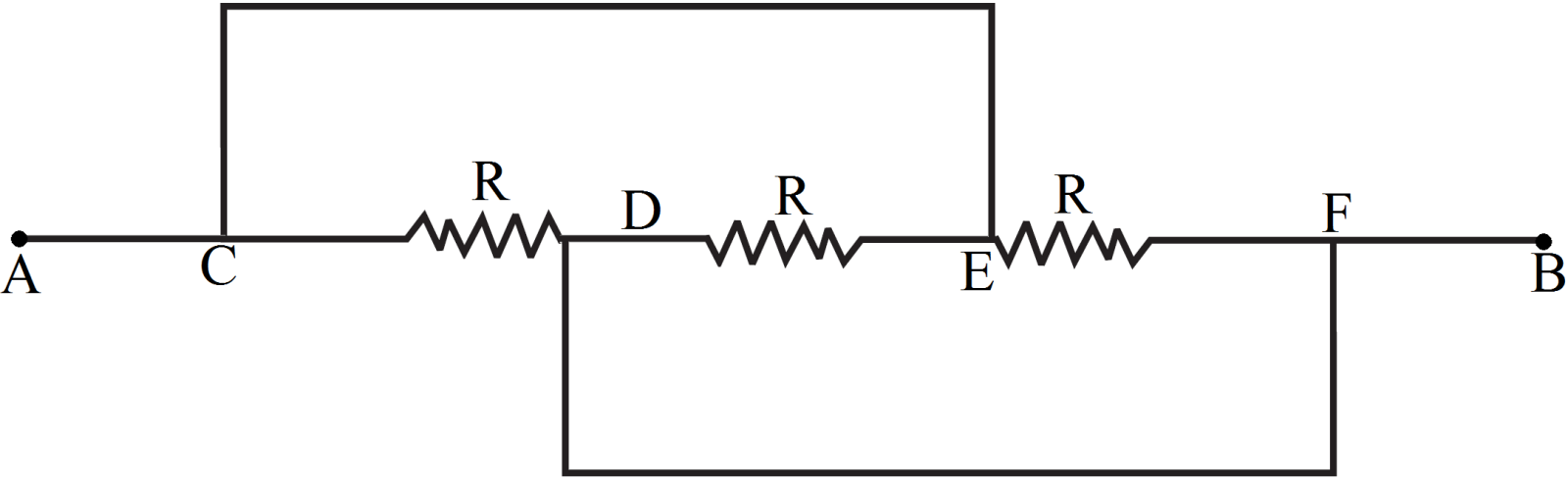
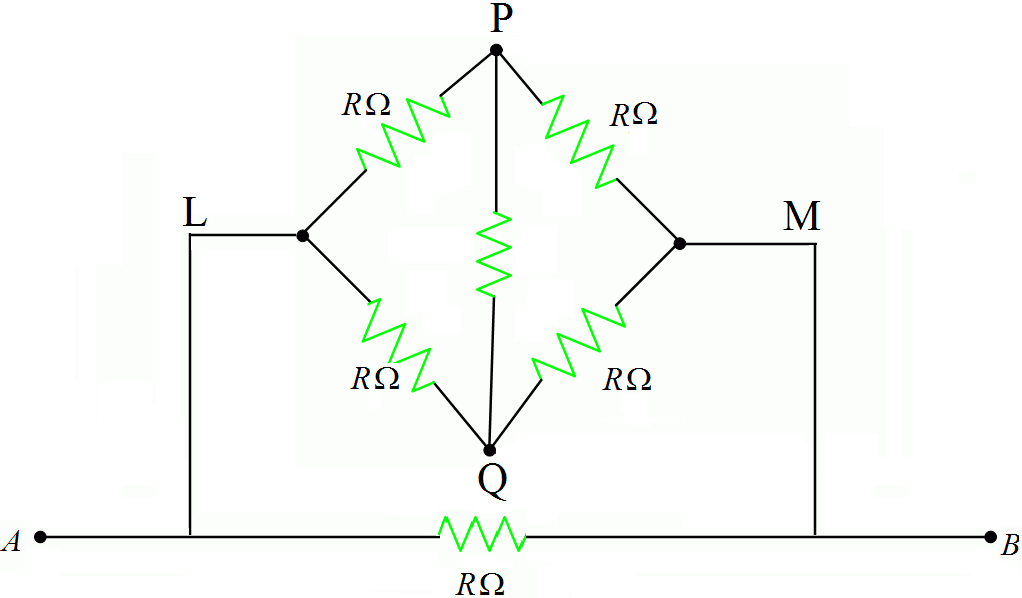
Find the equivalent resistance across the two ends A and B of the following circuits.
A non-metal gains electrons to form anions. What do you mean by this statement?
A sulphate salt of Group 2 element of the Periodic Table is a white, soft substance, which can be moulded into different shapes by making its dough. When this compound is left in open for some time, it becomes a solid mass and cannot be used for moulding purposes. Identify the sulphate salt and why does it show such a behaviour? Give the reaction involved.
A green stemmed tomato plant denoted by (GG) is crossed with a tomato plant with purple stem denoted by (gg).
a. What colour of the stem would you expect in their $F_{1}$ progeny?
b. In what ratio would you find the green and purple coloured stem in plants of $\mathrm{F}_{2}$ progeny?
c. What conclusion can be drawn for the above observations?
i. Several electric bulbs designed to be used on a 220V electric supply line are rated 10W. How many lamps can be connected in parallel with each other across the two wires of 220V line if the maximum allowable current is 5A?
ii. Calculate the cost of seeing 2 movies on colour T.V. daily for the month of September. Given wattage of colour T.V. = 60 W, duration of each movie is 2 hours 30 min and 1kWh costs Rs. 4
Explain how tidal energy can be used to generate electricity.
What would be observed on adding a 5% alkaline potassium permanganate solution drop by drop to some warm ethanol in a test-tube? Write the name of the compound formed during the chemical reaction. Also write chemical equation of the reaction which takes place.
  1. Match the terms given in column I with the terms given in column II and column III having the same meaning:
  Column I Column II Column III
(i)
Secondary consumer
Herbivore
$1^{\text {st }}$ trophic level
(ii)
Primary consumer
Autotroph
$3^{\text {rd }}$ trophic level
(iii)
Producer
Carnivore
$4^{\text {th }}$ trophic level
(iv)
Tertiary consumer
Large carnivore
$2^{\text {nd }}$ trophic level
  1. Give one example of a food chain having four organisms. Below each organism write the three appropriate terms from the part (a) above which you think it represents.
i. In humans, if gene B gives brown eyes and gene b gives blue eyes, what will be the colour of eyes of the persons having the following combination of genes? (a) Bb (b) bb (c) BB
ii. What do you class this trait of eye colour in human? Explain.
What is meant by positive tropism and negative tropism? Explain with examples.