Question
Explain the Term :
Tubectomy

Answer

Tubectomy: It is a surgical procedure performed on females for permanent contraception, commonly known as female sterilisation. During tubectomy, the fallopian tubes are surgically cut, tied, or blocked to prevent the eggs from traveling from the ovaries to the uterus. This means that the sperm cannot meet the egg, and fertilisation cannot occur.

Need a full question paper?

Generate a complete, print-ready paper with questions like this in minutes — across 16+ boards, with answer keys.
Start Generating Free

Similar questions

Name the hormone produced by the following gland giving one function: Adrenal medulla
The leaflets of Mimasa pudica droop on being touched by a finger or an object. Give reason.
Photosynthesis in green plants is directly and indirectly dependent on so many plant structures.
Explain briefly the role of the following structures in this process is Stomata.
Explain the Term :
Cretinism
If you are planning an experiment to show the effect of light on photosynthesis :
(1) Will you select white light or green light? Justify your answer.
(2) Why would you select a destarched plant?
Arrange and rewrite the terms in each group in correct order so as to be in a logical order
(i) Hydrilla plant, Air bubbles, Test tube, Funnel
(ii) Destarch plant, Iodine test, Boil in alcohol, Boil in water
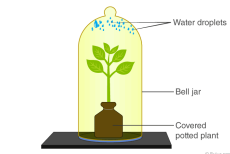
An apparatus as shown below was set up to investigate a physiological process in plants. The setup was kept in sunlight for two hours. Droplets of water were then seen inside the bell jar. Answer the questions that follow:Image

Mention two ways in which this process is beneficial to plants.
Most leaves have the upper surface more green and shiny. Why?
What is the importance of chiasma formation?
The Swachh Bharat Abhiyan, initiated by the Government of India in 2014, aimed to address the sanitation and cleanliness challenges faced by the country. Discuss the key objectives of the Swachh Bharat Abhiyan and how it has contributed to improving sanitation and hygiene practices in India.
(i) Discuss the socio-economic impact of the Swachh Bharat Abhiyan on rural communities in India.
(ii) How has the campaign contributed to improving health outcomes, reducing waterborne diseases, and enhancing the quality of life in these areas? Provide specific examples to support your answer.