Question
Explain the terms: (i) Attenuation, (ii) Demodulation used in communication system.

Answer

Attenuation : The loss of strength of a transmitted signal during its propagation through transmission channel is called attenuation.
Demodulation : For reception and reproduction of audio signal it is necessary to separate them from modulated wave. The process of separating the audio frequency signal from the modulated wave is called demodulation or detection and the device used for this purpose is called demodulator or detector which is also an electronic device. Demodulation is the reverse process of modulation.

Need a full question paper?

Generate a complete, print-ready paper with questions like this in minutes — across 16+ boards, with answer keys.
Start Generating Free

Similar questions

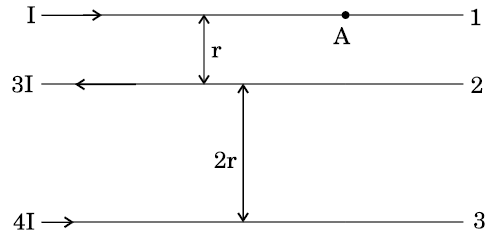
The figure shows three infinitely long straight parallel current carrying conductors. Find the
  1. magnitude and direction of the net magnetic field at point A lying on conductor 1,
  2. magnetic force on conductor 2.

When an object cools down, heat is withdrawn from it. Does the entropy of the object decrease in this process? If yes, is it a violation of the second law of thermodynamics stated in terms of increase in entropy?
It is found experimentally that 13.6 eV energy is required to separate a hydrogen atom into a proton and an electron. Compute the orbital radius and the velocity of the electron in a hydrogen atom.
What is Motional electromotive force (emf) ? Obtain motional emf $(\varepsilon)$= B I ${v}$ using proper example.
What is the shape of the wavefront in each of the following cases:
(a) Light diverging from point source.
(b) Light emerging out of a convex lens when a point source is placed at its focus.
(b) (c) The portion of the wavelength of light from a distant star intercepted by the Earth.
When two resistors are connected in sereis and parallel, then their equivalent resistances are $ 16~\Omega $ and $ 3~\Omega $ respectively. Find out the resistance of each resistor.
Obtain the first Bohr’s radius and the ground state energy of a muonic hydrogen atom [i.e., an atom in which a negatively charged muon $(\mu)$ of mass about 207me orbits around a proton].
In a Quincke's experiment, the sound intensity has a minimum value I at a particular position. As the sliding tube is pulled out by a distance of 16.5mm, the intensity increases to a maximum of 9I. Take the speed of sound in air to be 330m/s.
  1. Find the frequency of the sound source.
  2. Find the ratio of the amplitudes of the two waves arriving at the detector assuming that it does not change much between the positions of minimum intensity and maximum intensity.
Write the principle of working of a potentiometer. Describe briefly, with the help of a circuit diagram, how a potentiometer is used to determine the internal resistance of a given cell.
A charge of 1.0C is placed at the top of your college building and another equal charge at the top of your house. Take the separation between the two charges to be 2.0km. Find the force exerted by the charges on each other. How many times of your weight is this force?