Question
Explain why
Water with detergent disolved in it should have small angles of contact.

Answer

Water with detergent dissolved in it has small angles of contact $(\theta).$ This is because for a small $\theta$, there is a fast capillary rise of the detergent in the cloth. The capillary rise of a liquid is directly proportional to the cosine of the angle of contact $(\theta).$ If $(\theta)$ is small, then $\cos\theta$ will be large and the rise of the detergent water in the cloth will be fast.

Need a full question paper?

Generate a complete, print-ready paper with questions like this in minutes — across 16+ boards, with answer keys.
Start Generating Free

Similar questions

A wire elongates by l mm when a load W is hanged from it. If the wire goes over a pulley and two weights W each are hung at the two ends, then what will be the elongation of the wire in mm?
A Mars satellite moving in an orbit of radius 9.4 × 10³km takes 27540s to complete one revolution. Calculate the mass of Mars.
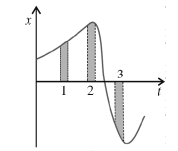
Figure gives the x – t plot of a particle in one dimensional motion. Three different equal intervals of time are shown. In which interval is the average speed greatest, and in which is it the least? Give the sign of average velocity for each interval.
Image
The maximum stress that can be applied to the material of a wire used to suspend on elevator is 1.3 × 10⁸Nm-2. If the mass of the elevator is 900kg and it moves up with an acceleration of 2.2ms-2, then what is the minimum diameter of the wire?
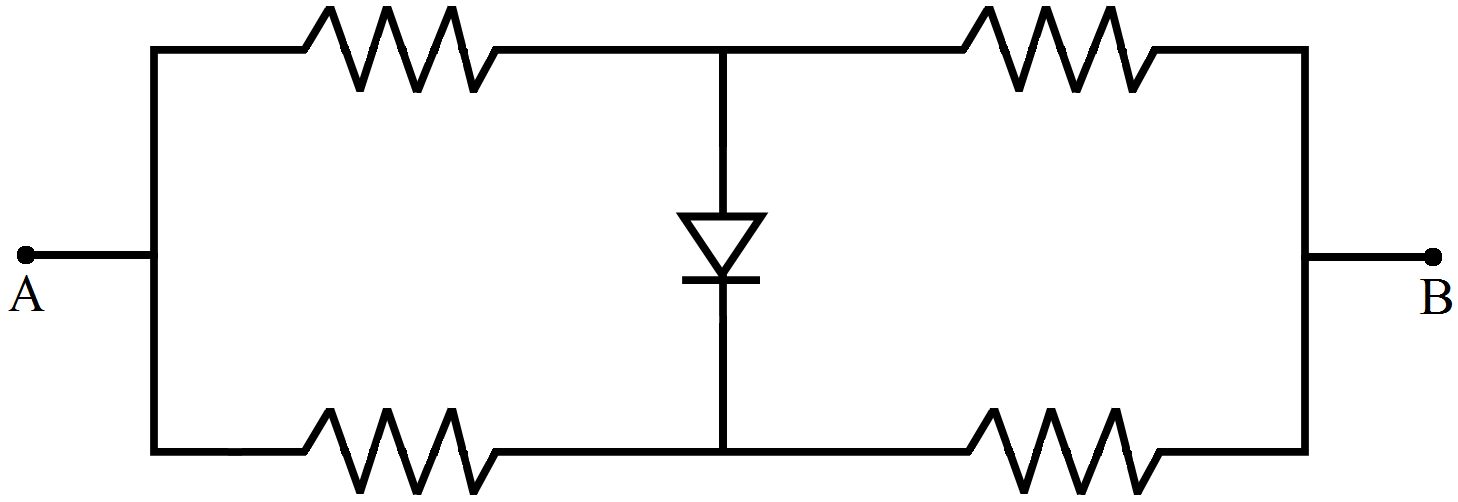
Each of the resistances shown in figure. has a value of $20\Omega.$ Find the equivalent resistance between A and B. Does it depend on whether the point A or B is at higher potential?

Just as precise measurements are necessary in science, it is equally important to be able to make rough estimates of quantities using rudimentary ideas and common observations. Think of ways by which you can estimate the following (where an estimate is difficult to obtain, try to get an upper bound on the quantity):
The wind speed during a storm.
A nut becomes loose and gets detached from a satellite revolving around the earth. Will it land on the earth? If yes, where will it land? If no, how can an astronaut make it land on the earth?
In the figure, the blocks are in contact with each other $m_1=3 kg, m_2=1 kg$. A horizontal force $F = 4 \mathrm { N }$. How much force can be applied :(i) On $m_1$ from the right side,
(ii) On $m_2$ from the left side? What will be the contact force between the two blocks?
Define the term watt, and kilo-watt hour.
For a satellite orbiting in an orbit, close to the surface of earth, to escape, what is the percentage increase in the kinetic energy required?