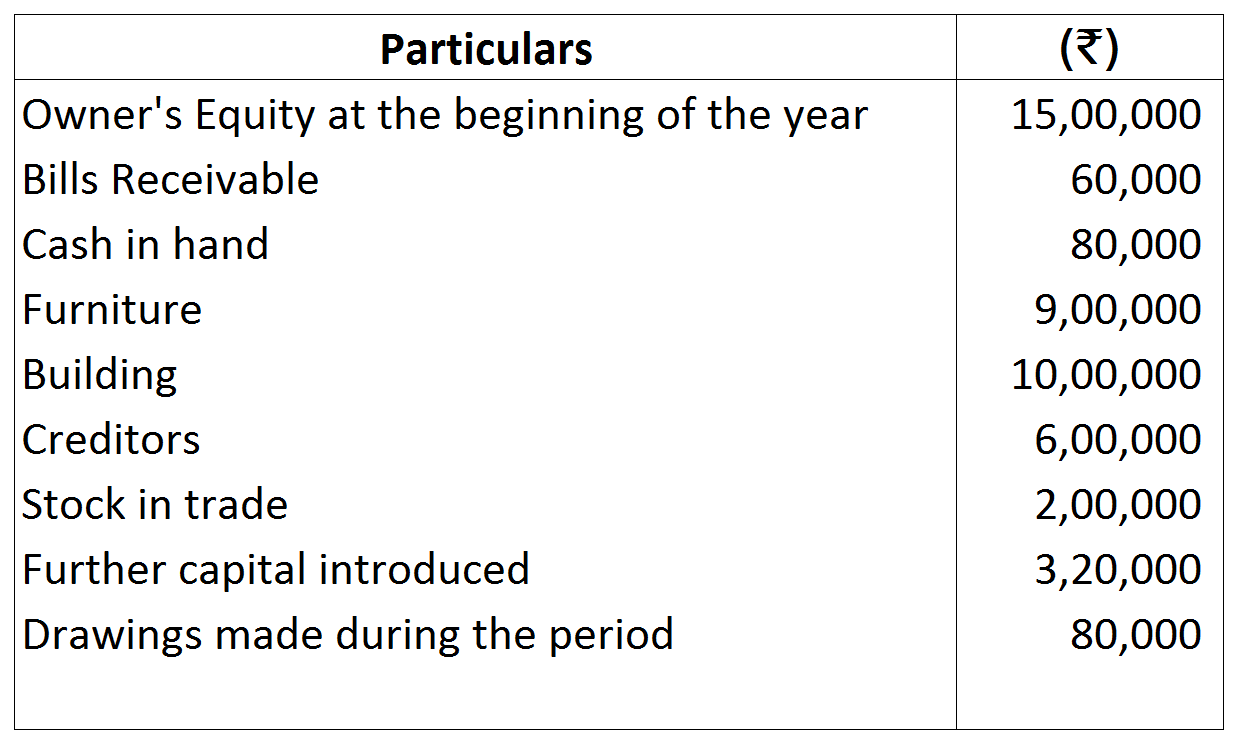
Question
Fill in the missing information in the following Rectifying Journal Entries: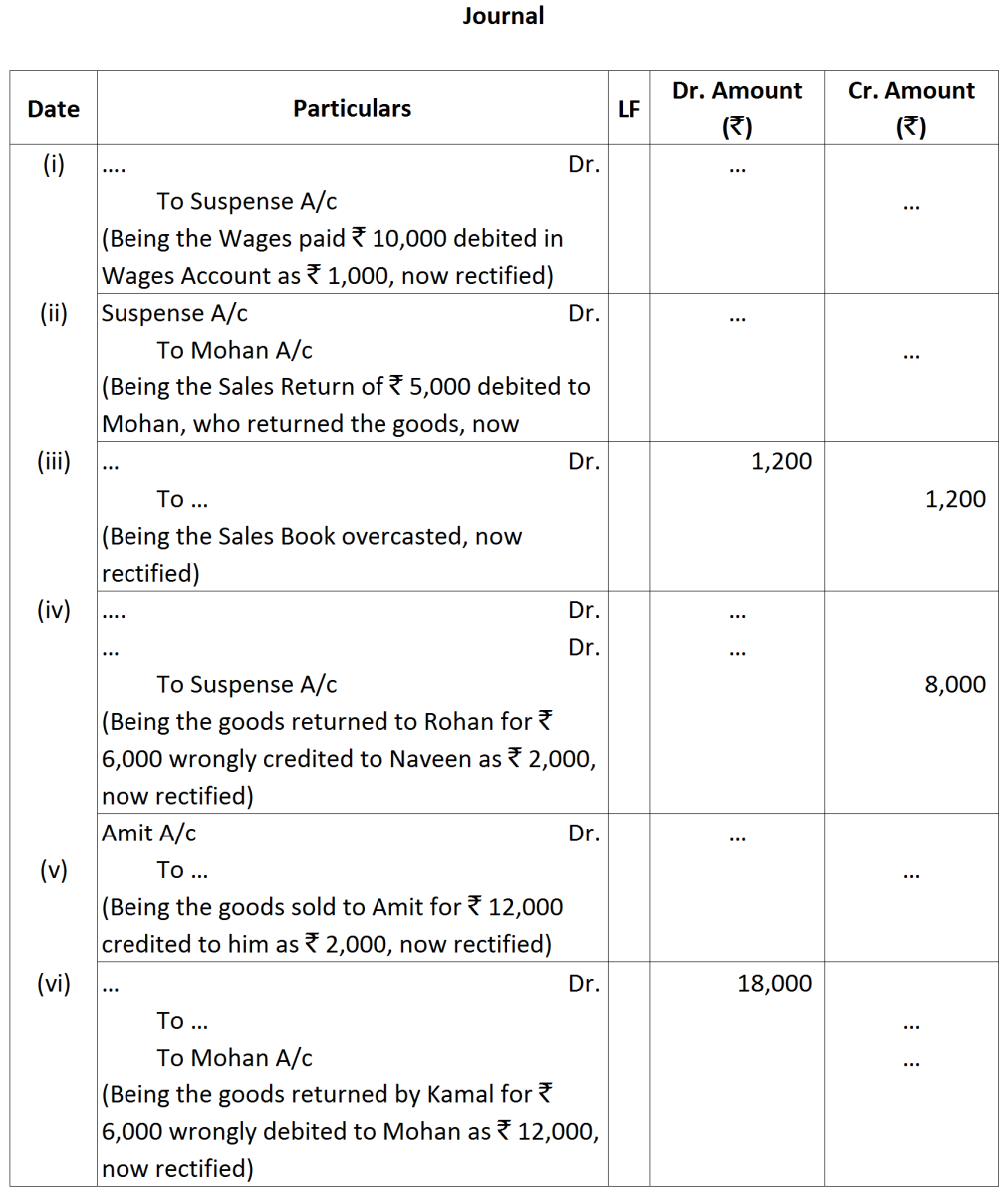
Get the step-by-step solution for this question inside the Vidyadip app.
Get the answer in the appGenerate a complete, print-ready paper with questions like this in minutes — across 16+ boards, with answer keys.
| April 01, 2016 | March 31, 2017 | |
| ₹ | ₹ | |
| Sundry creditors | 45,000 | 93,000 |
| Loan from wife | 66,000 | 57,000 |
| Sundry debtors | 22,500 | — |
| Land and Building | 89,600 | 90,000 |
| Cash in hand | 7,500 | 8,700 |
| Bank overdraft | 25,000 | — |
| Furniture | 1,300 | 1,300 |
| Stock | 34,000 | 25,000 |
|
|
|
₹
|
|
(i)
|
Bank balance as per Pass Book.
|
10,000
|
|
(ii)
|
Cheque deposited into the Bank, but no entry was passed in the Cash Book.
|
500
|
|
(iii)
|
Cheque received and entered in the Cash Book but not sent to bank.
|
1,200
|
|
(iv)
|
Credit side of the Cash Book bank column cast short.
|
200
|
|
(v)
|
Insurance premium paid directly by the bank under the standing advice.
|
600
|
|
(vi)
|
Bank charges entered twice in the Cash Book.
|
20
|
|
(vii)
|
Cheque issued but not presented to the bank for payment.
|
500
|
|
(viii)
|
Cheque received entered twice in the Cash Book.
|
1,000
|
|
(ix)
|
Bill discounted dishonoured not recorded in the Cash Book.
|
5,000
|
|
(x)
|
Bank had wrongly allowed interest of ₹ 5,000, which was reversed by it on 5th April, 2019
|
| 2019 | ₹ | |||
| April 1 | Opening Balance of Cash in Hand | 1,00,000 | ||
| Opening Balance of Bank Overdraft | 5,00,000 | |||
| April 2 | Sold goods for cash, including CGST and SGST @ 6% each | 4,48,000 | ||
| April 3 | Sold goods including CGST and SGST @ 6% each against cheque and paid into bank the same day | 3,36,000 | ||
| April 5 | Sold goods to Reema, including IGST @ 12% | 1,12,000 | ||
| April 6 | Ram paid by cheque | 78,000 | ||
| Discount allowed | 2,000 | |||
| April 7 | Bought goods from Rahul, Gurugram for ₹ 40,000 plus CGST and SGST @ 6% each and paid him by cheque | 44,800 | ||
| Salary paid to staff by cheque | 2,20,000 | |||
| April 10 | Deposited into bank | 3,10,000 | ||
| April 11 | Received a cheque from Suresh and paid into bank | 1,28,500 | ||
| Discount allowed | 1,500 | |||
| April 15 | Received from R. Kumar a cheque for a full settlement of his account for ₹ 1,95,000 | 1,87,500 | ||
| April 18 | Paid wages in cash | 30,000 | ||
| April 20 | Bank charges, including CGST and SGST @ 6% each | 5,600 | ||
| April 22 | Withdrew from bank for office use | 1,00,000 | ||
| Withdrew from Bank for personal use | 1,20,000 | |||
| April 25 | Paid electricity bill by cheque | 31,500 | ||
| Issued a cheque in favour of Sudha as advance for purchase of house of Gaurav | 2,00,000 | |||
| April 26 | Received a cheque from Amar | 58,200 | ||
| Allowed discount to him | 1,800 | |||
| April 28 | Cheque received from Amar sent to bank | |||
| April 30 | Bank collected interest received on investments | 15,000 | ||
| Paid rent for the month of May, 2019, including CGST and SGST @ 6% each | 22,400 | |||
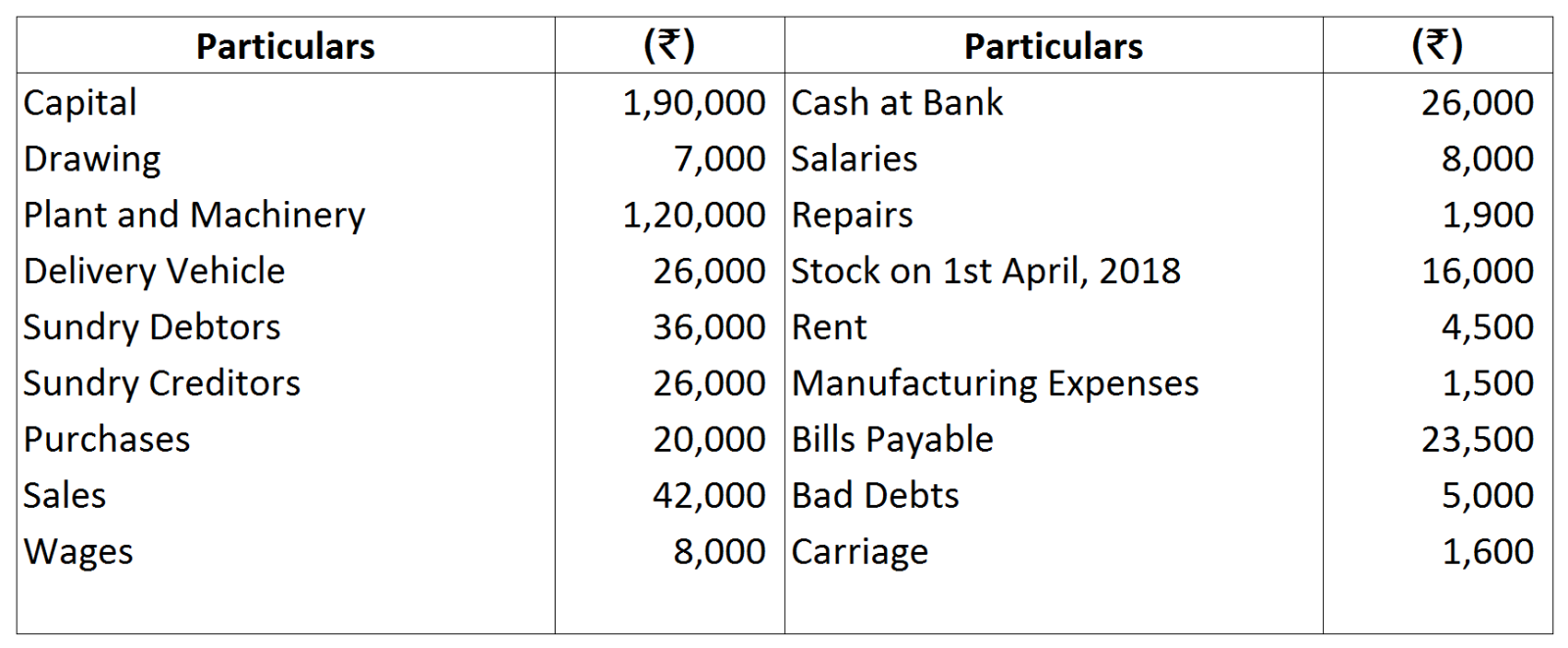
|
|
|
₹
|
|
(i)
|
Bank overdraft as per the Cash Book.
|
80,000
|
|
(ii)
|
Cheques deposited as per the bank statement but not entered in the Cash Book.
|
3,000
|
|
(iii)
|
Cheques recorded for collection but not sent to the bank.
|
10,000
|
|
(iv)
|
Credit side of bank column casted short.
|
1,000
|
|
(v)
|
Bank charges recorded twice in the Cash Book.
|
100
|
|
(vi)
|
Customer's cheque returned as per the Bank Statement.
|
4,000
|
|
(vii)
|
Cheques issued but dishonoured on technical grounds.
|
3,000
|
|
(viii)
|
Bills collected by bank directly.
|
20,000
|
|
(ix)
|
Cheque received entered twice in the Cash Book.
|
5,000
|