Question
For two statements are given-one labelled Assertion (A) and the other labelled Reason (R). Select the correct answer to these questions from the codes (a), (b), (c) and (d) as given below.
  1. Both A and R are true, and R is the correct explanation of A.
  2. Both A and R are true, but R is not the correct explanation of A.
  3. A is true but R is false.
  4. A is false and R is also false.
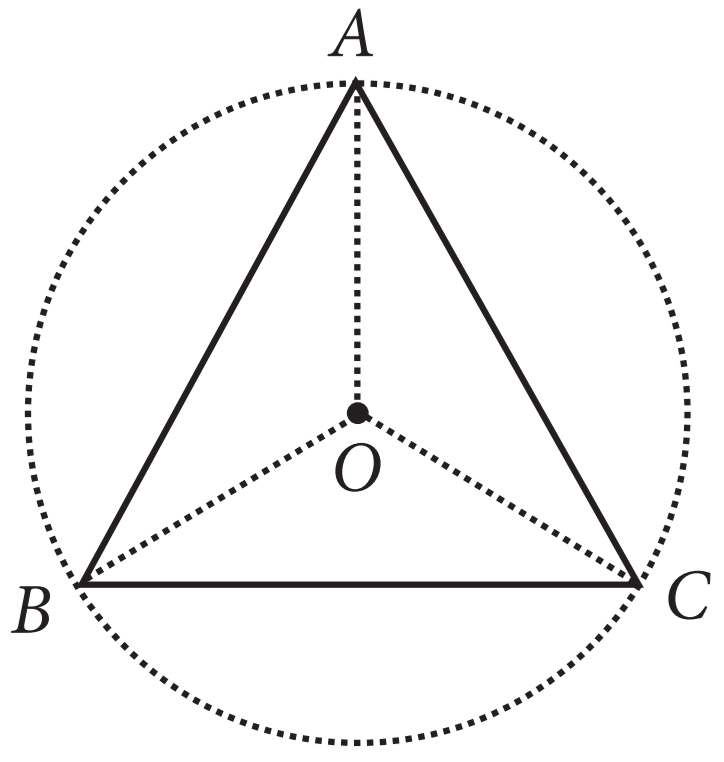
Assertion (A): Three equal charges are situated on a circle of radius r such that they form on equilateral triangle, then the electric field intensity at the centre is zero.
Reason (R): The force on unit positive charge at the centre, due to the three equal charges are represented by the three sides of a triangle taken in the same order. Therefore, electric field intensity at centre is zero.
Answer

  1. Both A and R are true, and R is the correct explanation of A.

Explanation:

Resultant of electric intensity at O due to B and C is equal and opposite to that due to A.

​​​​​​​​​​​​​​

Need a full question paper?

Generate a complete, print-ready paper with questions like this in minutes — across 16+ boards, with answer keys.

Start Generating Free

Similar questions

For two statements are given-one labelled Assertion (A) and the other labelled Reason (R). Select the correct answer to these questions from the codes (a), (b), (c) and (d) as given below.
  1. Both A and R are true, and R is the correct explanation of A.
  2. Both A and R are true, but R is not the correct explanation of A.
  3. A is true, but R is false.
  4. A is false, and R is also false.
Assertion: Insulator do not allow flow of current through them.
Reason: Insulator have no free charge carrier.
For question two statements are given-one labelled Assertion (A) and the other labelled Reason (R). Select the correct answer to these questions from the codes (a), (b), (c) and (d) as given below.
  1. Both A and R are true and R is the correct explanation of A.
  2. Both A and R are true but R is NOT the correct explanation of A.
  3. A is true but R is false.
  4. A is false and R is also false.
Assertion (A): When a light wave travels from a rarer to a denser medium, it loses speed. TI1e reduction in speed imply a reduction in energy carried by the light wave.
Reason (R): The energy of a wave is proportional to velocity of wave.
Two statements are given-one labelled Assertion (A) and the other labelled Reason (R). Select the correct answer to these questions from the codes (a), (b), (c) and (d) as given below.
  1. Both A and R are true and R is the correct explanation of A.
  2. Both A and R are true but R is NOT the correct explanation of A.
  3. A is true but R is false.
  4. A is false and R is also false.
Assertion (A): A charge, whether stationary or in motion produces a magnetic field around it.
Reason (R): Moving charges produce only electric field in the surrounding space.
For question, statements are given-one labelled Assertion (A) and the other labelled Reason (R). Select the correct answer to these questions from the codes (a) (b) (c) and (d) as given below.
  1. Both A and R are true, and R is the correct explanation of A.
  2. Both A and R are true, but R is NOT the correct explanation of A.
  3. A is true, but R is false.
  4. A is false and R is also false.
Assertion (A): Energy is released in a nuclear reaction.
Reason (R): In any nuclear reaction the reactants and resultant products obey the law of conservation of charge and mass only.
For question two statements are given-one labelled Assertion (A) and the other labelled Reason (R). Select the correct answer to these questions from the codes (a), (b), (c) and (d) as given below.
  1. Both A and R are true and R is the correct explanation of A.
  2. Both A and R are true but R is NOT the correct explanation of A.
  3. A is true but R is false.
  4. A is false and R is also false.
Assertion (A): Interference obeys the law of conservation of energy.
Reason (R): The energy is redistributed in case of interference.
For two statements are given-one labelled Assertion (A) and the other labelled Reason (R). Select the correct answer to these questions from the codes (a), (b), (c) and (d) as given below.
  1. Both A and R are true, and R is the correct explanation of A.
  2. Both A and R are true, but R is not the correct explanation of A.
  3. A is true but R is false.
  4. A is false and R is also false.
Assertion (A): A point charge is lying at the centre of a cube of each side. The electric flux emanating from each surface of the cube is $\frac{1^\text{th}}{6}$ of total flux.
Reason (R): According to Gauss theorem, total electric flux through a closed surface enclosing a charge is equal to $\frac{1}{\in_0}$ times the magnitude of the charge enclosed.
For two statements are given-one labelled Assertion (A) and the other labelled Reason (R). Select the correct answer to these questions from the codes (a), (b), (c) and (d) as given below.
  1. Both A and R are true, and R is the correct explanation of A.
  2. Both A and R are true, but R is not the correct explanation of A.
  3. A is true but R is false.
  4. A is false and R is also false.
Assertion (A): Charge is quantized.
Reason (R): Charge which is less than I C is not possible.
Two statements are given-one labelled Assertion (A) and the other labelled Reason (R). Select the correct answer to these questions from the codes (a), (b ), (c) and (d) as given below.
  1. Both A and R are true and R is the correct explanation of A.
  2. Both A and Rare true but R is NOT the correct explanation of A.
  3. A is true but R is false.
  4. A is false and R is also false.
Assertion (A): An induced emf is generated when magnet is withdrawn from the solenoid.
Reason (R): The relative motion between magnet and solenoid induces emf.
For two statements are given-one labelled Assertion (A) and the other labelled Reason (R). Select the correct answer to these questions from the codes (a), (b), (c) and (d) as given below.
  1. Both A and R are true, and R is the correct explanation of A.
  2. Both A and R are true, but R is not the correct explanation of A.
  3. A is true, but R is false.
  4. A is false, and R is also false.
Assertion: Two electric bulbs of 50 and 100 watt are given. When connected in series 50 watt bulb glows more but when connected in parallel 100 watt bulb glows more.
Reason: In series combination, power is directly proportional to the resistance of circuit. But in parallel combination, power is inversely proportional to the resistance of the circuit.
Two statements are given-one labelled Assertion (A) and the other labelled Reason (R). Select the correct answer to these questions from the codes (a), (b ), (c) and (d) as given below.
  1. Both A and R are true and R is the correct explanation of A.
  2. Both A and Rare true but R is NOT the correct explanation of A.
  3. A is true but R is false.
  4. A is false and R is also false.
Assertion (A): Changing magnetic flux can produce induced e.m.f.
Reason (R): Faraday established induced e.m.f. experimentally.