Question
For two statements are given-one labelled Assertion (A) and the other labelled Reason (R). Select the correct answer to these questions from the codes (a), (b), (c) and (d) as given below:

  1. Both A and R are true, and R is correct explanation of the assertion.
  2. Both A and R are true, but R is not the correct explanation of the assertion.
  3. A is true, but R is false.
  4. A is false, but R is true.

Assertion: A plane mirror neither converges parallel rays of light nor diverges them.

Reason: The focal length of a plane mirror can be considered to be infinite.
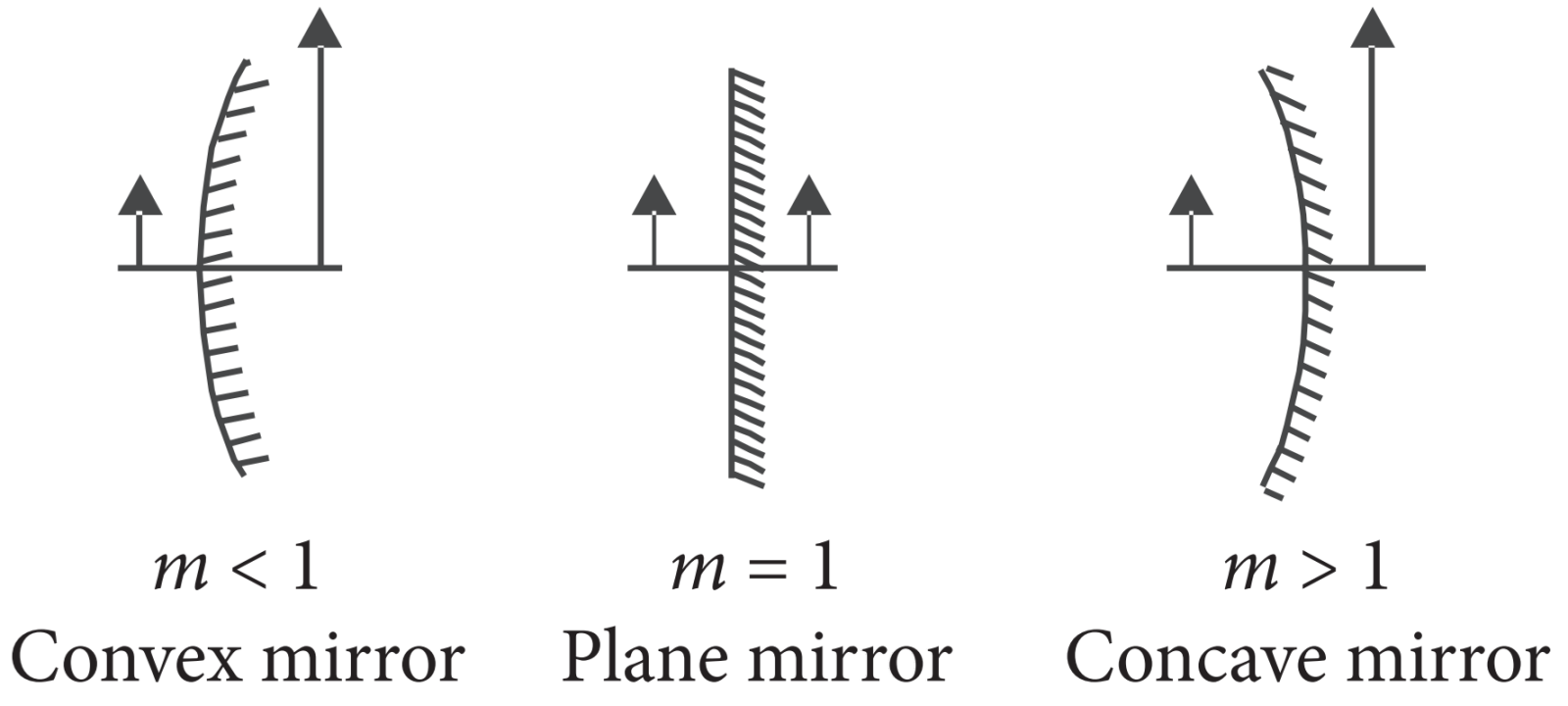
Answer

  1. Both A and Rare true, and R is correct explanation of the assertion.

Need a full question paper?

Generate a complete, print-ready paper with questions like this in minutes — across 16+ boards, with answer keys.

Start Generating Free

Similar questions

Assertion (A): In electric circuits, wires carrying currents in opposite directions are often twisted together.
Reason (R): If the wire are not twisted together, the combination of the wires forms a current loop. The magnetic field generated by the loop might affect adjacent circuits or components.
For two statements are given-one labelled Assertion (A) and the other labelled Reason (R). Select the correct answer to these questions from the codes (a), (b), (c) and (d) as given below:

  1. Both A and R are true, and R is correct explanation of the assertion.
  2. Both A and R are true, but R is not the correct explanation of the assertion.
  3. A is true, but R is false.
  4. A is false, but R is true.
Assertion: We can decide the nature of a mirror by observing the size of erect image in the mirror.

Reason: The minimum distance between a real object and its real image in a concave mirror is non zero.

For two statements are given-one labelled Assertion (A) and the other labelled Reason (R). Select the correct answer to these questions from the codes (a), (b), (c) and (d) as given below:
  1. Both A and R are true, and R is correct explanation of the assertion.
  2. Both A and R are true, but R is not the correct explanation of the assertion.
  3. A is true, but R is false.
  4. A is false, but R is true.
Assertion: The wires supplying current to an electric heater are not heated appreciably.
Reason: Resistance of connecting wires is very small and $\text{H}\propto\text{R}.$
For two statements are given-one labelled Assertion (A) and the other labelled Reason (R). Select the correct answer to these questions from the codes (a), (b), (c) and (d) as given below:
  1. Both A and R are true, and R is correct explanation of the assertion.
  2. Both A and R are true, but R is not the correct explanation of the assertion.
  3. A is true, but R is false.
  4. A is false, but R is true.
Assertion: Higher the refractive index of the prism material, lower is the angle of deviation.
Reason: The angle of deviation is directly proportional to the angle of prism.
For two statements are given-one labelled Assertion (A) and the other labelled Reason (R). Select the correct answer to these questions from the codes (a), (b), (c) and (d) as given below:

  1. Both A and R are true, and R is correct explanation of the assertion.
  2. Both A and R are true, but R is not the correct explanation of the assertion.
  3. A is true, but R is false.
  4. A is false, but R is true.

Assertion: Danger signals are red.

Reason: Red colour has smallest wavelength.

For two statements are given-one labelled Assertion (A) and the other labelled Reason (R). Select the correct answer to these questions from the codes (a), (b), (c) and (d) as given below:

  1. Both A and R are true, and R is correct explanation of the assertion.
  2. Both A and R are true, but R is not the correct explanation of the assertion.
  3. A is true, but R is false.
  4. A is false, but R is true.

Assertion: Property of converging of a convergent lens does not remain same in all media.

Reason : Property of lens whether the ray is diverging or converging is independent of the surrounding medium.

For two statements are given-one labelled Assertion (A) and the other labelled Reason (R). Select the correct answer to these questions from the codes (a), (b), (c) and (d) as given below:

  1. Both A and R are true, and R is correct explanation of the assertion.
  2. Both A and R are true, but R is not the correct explanation of the assertion.
  3. A is true, but R is false.
  4. A is false, but R is true.

Assertion : Light is able to reach earth from the sun.

Reason: Light rays can travel in vaccum.

For two statements are given-one labelled Assertion (A) and the other labelled Reason (R). Select the correct answer to these questions from the codes (a), (b), (c) and (d) as given below:
  1. Both A and R are true, and R is correct explanation of the assertion.
  2. Both A and R are true, but R is not the correct explanation of the assertion.
  3. A is true, but R is false.
  4. A is false, but R is true.
Assertion: The 200W bulbs glows with more brightness than 100W bulbs.
Reason: A 100 watt bulb has more resistance than a 200W bulb.
Assertion (A): Force experienced by moving charge will be maximum if direction of velocity of charge is perpendicular to applied magnetic field.
Reason (R): Force on moving charge is independent of direction of the applied magnetic field.
For two statements are given-one labelled Assertion (A) and the other labelled Reason (R). Select the correct answer to these questions from the codes (a), (b), (c) and (d) as given below:
  1. Both A and R are true, and R is correct explanation of the assertion.
  2. Both A and R are true, but R is not the correct explanation of the assertion.
  3. A is true, but R is false.
  4. A is false, but R is true.
Assertion: The scattering of longer wavelengths of light increases as the size of the particles increases.
Reason: Large particles scatter lights of all wavelengths equally well.