Question
Give one example each to show that the rational numbers are closed under addition, subtraction and multiplication. Are rational numbers closed under division? Give two examples in support of your answer.

Answer

We know that, rational numbers are closed under addition, subtraction and multiplication.
We can understand this from the following examples.
Rational numbers are closed under addition e.g. $\frac{4}{7}+\frac{1}{2}=\frac{8+7}{14}=\frac{15}{14},$ Which is a rational number.
Subtraction e.g. $\frac{4}{7}-\frac{1}{2}=\frac{8-7}{14}=\frac{1}{14},$ Which is a rational number.
Multiplication e.g. $\frac{4}{7}\times\frac{1}{2}=\frac{4}{14}=\frac{2}{7},$ Which is a rational number.
But rational are not closed under division.
If zero is excluded from the collection of rational numbers, then we can say that rational numbers are closed under division.
Now, we see the examples given below: $\frac{4}{7}+\frac{1}{2}=\frac{4}{7}\times2=\frac{8}{7},$
Whcih is a rational number. But $\frac{4}{7}+0=\frac{4}{7}\times\frac{1}{0},$
Which is not defined and so, it is not a rational number.
Also, $\frac{1}{2}+0=\frac{1}{2}\times\frac{1}{0},$
Which is not defince and so, it is not a rational number.

Need a full question paper?

Generate a complete, print-ready paper with questions like this in minutes — across 16+ boards, with answer keys.
Start Generating Free

Similar questions

Find the cube root of $13824$ by prime factorisation method.
Prepare a frequency table of the following ages (in years) of $30$ students of class VIII in your school: $13, 14, 13, 12, 14, 13, 14, 15, 13, 14, 13, 14, 16, 12, 14, 13, 14, 15, 16, 13, 14, 13, 12, 17, 13, 12, 13, 13, 13, 14.$
Verify the property $x \times (y + z) = x \times y + x \times z$ of rational numbers by taking. $\text{x}=\frac{-2}{3},\ \text{y}=\frac{-4}{6},\ \text{z}=\frac{-7}{9}$
Find the square root of the following correct to three places of decimal:
$17$
Draw a map of your school playground. Mark all necessary places like $2$ library, Playground, Medical Room, Classrooms, Assembly area, etc.
If two cardboard boxes occupy $1000 cm^3$ space. then how much space is required to keep 200 such boxes?
Inverse Variation
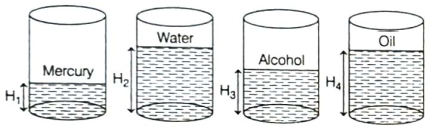
Take four cylindrical containers of the same size each of radius 5 cm . Fill the containers with different types of liquids with same mass (different density) like mercury, water, alcohol, oil.
Image
Note the height in each case at which the level of liquid stands. Tabulate this information in the following table and show that this is case of inverse proportion.
DensityMercutyWaterAlcoholOil
$\left( g / cm ^3\right)$$13.6\left(D_1\right)$$0.99\left(D_2\right)$$0.78\left(D_3\right)$$0.96\left(D_4\right)$
Height (cm)$H _1$$H _2$$H _3$$H _4$
Density $\times$ Height $=$ Constant .
Roma borrowed Rs. $64000$ from a bank for $1\frac{1}{2}$ years at the rate of $10\%$ per annum. Compute the total compound interest payable by Roma after $1\frac{1}{2}$ years, if the interest is compounded half-yearly.
A dealer purchased a fan for $Rs. 1080.$ After allowing a discount of $25\%$ on its marked price, he gains $25\%.$ Find the marked price of the fan.
$3\text{x}-\frac{\text{x}-2}{3}=4-\frac{\text{x}-1}{4}$