Question
Give reasons for the following:
  1. Covalent bonds are directional bonds while ionic bonds are non- directional.
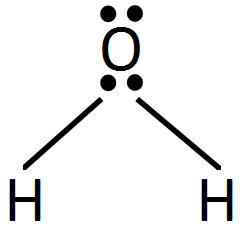
  2. Water molecule has bent structure whereas carbon dioxide molecule is linear.
  3. Ethyne molecule is linear.

Answer

  1. Since the covalent bond depends on the overlapping of orbitals between different orbitals, the geometry of the molecule is different. The orientation of overlap is different. The orientation of overlap is the factor responsible for their directional nature.
  2. Due to presence of two lone pairs of electrons on oxygen atom in HiO the repulsion between is more. $\mathrm{CO}_2$ undergoes sp hybridization resulting in linear shape $(\mathrm{O}=\mathrm{C}=\mathrm{O})$ while $\mathrm{H}_2 \mathrm{O}$ undergoes $\mathrm{sp}^3$ hybridisation resulting in distorted tetrahedral or bent structure.
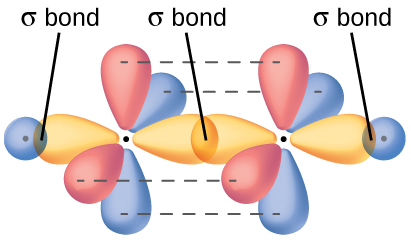
  1. In ethyne molecule carbon undergoes sp hybridization with two unhybridised orbitals. One sp hybrid orbital of one carbon atom overlaps axially with sp hybrid orbital of the other carbon atom to form C – C sigma bond while the other hybridized orbital of each carbon atom overlaps axially with S orbitals of hydrogen atoms forming. Unhybridised orbitals form n-bonds.
​​

Need a full question paper?

Generate a complete, print-ready paper with questions like this in minutes — across 16+ boards, with answer keys.

Start Generating Free

Similar questions

The s-block elements are characterised by their larger atomic sizes, lower ionisation enthalpies, invariable $+1$ oxidation state and solubilities of their oxosalts.In the light of these features describe the nature of their oxides, halides and oxosalts.
The longest wavelength doublet absorption transition is observed at $589$ and $589.6nm$. Calcualte the frequency of each transition and energy difference between two excited states.
Draw diagrams showing the formation of a double bond and a triple bond between carbon atoms in $\mathrm{C}_2 \mathrm{H}_4$ and $\mathrm{C}_2 \mathrm{H}_2$ molecules.
The pH of 0.005M codeine ($C_{18}H_{21}NO_3$) solution is 9.95. Calculate its ionization constant and $pK_b$​​​​​​​.
1. Describe the effect of
a. addition of $H _2$
b. addition of $CH _3 OH$
c. removal of CO
d. removal of $CH _3 OH$ on the equilibrium of the reaction,
$
2 H_2(g)+CO(g) \rightleftharpoons CH_3 OH(g)
$
2. What happens to an equilibrium in a reversible reaction if a catalyst is added to it?
  1. Balance and complete the following reactions:
  1. $\text{Fe(s)}+\text{H}_2\text{O}\xrightarrow{\ \ \ \ \ \ \ \ }$
  2. $\text{Zn(s)}+\text{NaOH}(\text{aq})\xrightarrow{\ \ \ \ \ \ \ \ \ \ }$
  3. $\text{Mg(s)}+\text{HNO}_3(\text{aq})\xrightarrow{\ \ \ \ \ \ \ \ \ }$
(b) Write chemical equations for the following:
(1) $H_2O_2$, as an oxidising agent in acidic medium.
(ii) $H_2O_2$ as an reducing agent in basic medium.
(iii) $H_2O_2$ as an reducing agent in basic medium.
(iv) $H_2O_2$ as an reducing agent in acidic medium.
1. What are electrophiles and nucleophiles? Explain with examples.
2. Derive the structure of 3 - Nitrocyclohexene.
  1. Derive the mathematical expression for first law of thermodynamics.
  2. Calculate the $\Delta_\text{r}\text{H}^\circ$ for the reaction:
$\mathrm{H}_2(\mathrm{~g})+\mathrm{Br}_2(\mathrm{~g}) \rightarrow 2 \mathrm{HBr}(\mathrm{~g})$
Bond enthalpy are given as, $\mathrm{H}-\mathrm{H}=436 \mathrm{~kJ} \mathrm{~mol}^{-1}, \mathrm{Br}-\mathrm{Br}=192 \mathrm{~kJ} \mathrm{~mol}^{-1}$ and $\mathrm{H}-\mathrm{Br}=368 \mathrm{~kJ} \mathrm{~mol}^{-1}$
The work function for caesium atom is $1.9eV$. Calculate,
  1. The threshold wavelength.
  2. The threshold frequency of the radiation.
If the caesium element is irradiated with a wavelength $500nm$, calculate the kinetic energy and the velocity of the ejected photoelectron.
Explain the following reactions: Silicon is heated with methyl chloride at high temperature in the presence of copper.