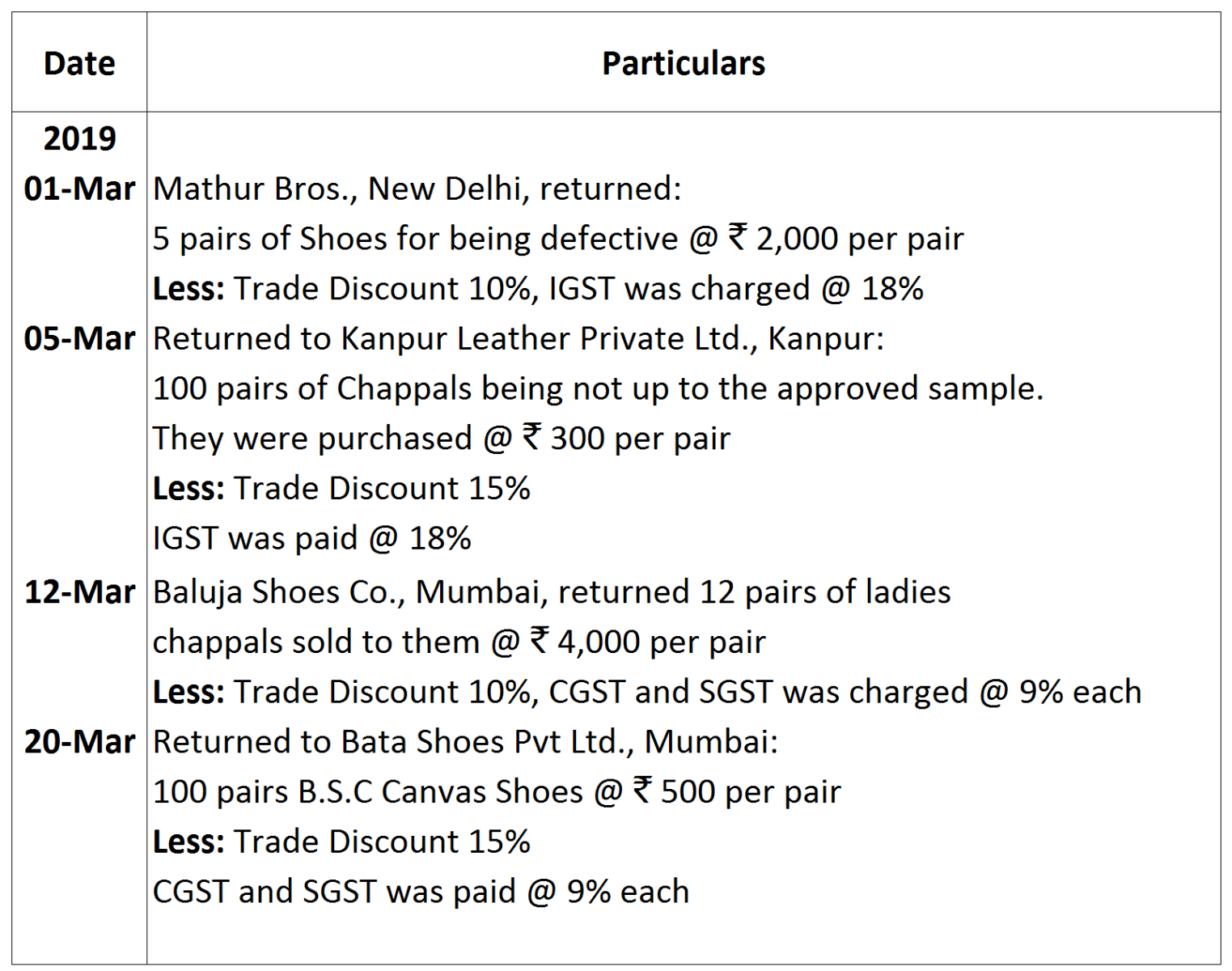
Question
Give two differences between provisions and reserves.

Answer

Difference between Provision and Reserve:
 
Basis of Difference
Provision
Reserve
1.
Meaning
It is created to meet a known liability
It is created to meet an unknown liability.
2.
Necessity (Charge or Appropriation)
Creation of provision is a legal necessity. Provisions have to be provided for even if there are no profits. Thus, provision is charge against profit
Creation of reserves discretionary. It adequate. Thus, reserve is an Appropriation of Profit.
3.
Object
The object is to provide for depreciation, doubtful debts and other specific liabilities.
The object of reserves is to strengthen the finacial position of the business.

Need a full question paper?

Generate a complete, print-ready paper with questions like this in minutes — across 16+ boards, with answer keys.

Start Generating Free

Similar questions

On 31st December, 2014 the Cash Book of Basu showed an overdraft of ₹ 18,000 with the Bank of India. The balance did not agree with balance as shown by the Bank Pass Book and you find that Basu had paid into the Bank on 26th December four cheques for ₹ 10,000; ₹ 12,000; ₹ 6,000 and ₹ 8,000. Of these the cheque for ₹ 6,000 was credited by the bank in January, 2015. Basu had issued on 24th December three cheques for ₹ 15,000, ₹ 12,000, and ₹ 7,000. The first two cheques were presented to the bank for payment in December and the third in January, 2015.
You also find that on 31st December, 2014, the bank had debited Basu's Account for ₹ 500 for interest and ₹ 20 for charges but Basu has not recorded these amounts in his books.
You are required to prepare a Bank Reconciliation Statement as on 31st December, 2014 and ascertain the balance as per bank Pass Book.
Distinguish between an accomodation bill and a trade bill.
Rectify the following errors:
  1. Credit sales to Mridula ₹ 5,000 were recorded as ₹ 500.
  2. Credit purchases from Nayna ₹ 8,000 were recorded as ₹ 800.
  3. Goods returned to Priya ₹ 12,000 were recorded as ₹ 1,200.
  4. Goods returned from Rashi ₹ 10,000 were recorded as ₹ 1,000.
Record the following transaction in simple cash book for November 2016:
 
 
01
Cash in hand
12,500
04
Cash paid to Hari
600
07
Purchased goods
800
12
Cash received from Amit
1,960
16
Sold goods for cash
800
20
Paid to Manish
590
25
Paid cartage
100
31
Paid salary
1,000
Are debits or credits listed first in journal entries? Are debits or credits indented?
Should a transaction be first recorded in a journal or ledger? Why?
When should revenue be recognised? Are there exceptions to the general rule?
On 31st December, 2014 the Cash Book of Gopal showed debit balance of ₹ 12,000. On comparing the Cash Book with the Pass Book, the following discrepancies were noted:-
  1. Cheques were issued for ₹ 15,000, but of them cheques for ₹ 7,700 have not yet been presented.
  2. Cheques for ₹ 8,000 were deposited in bank but of these cheques for ₹ 2,000 were not recorded in the Cash Book.
  3. Cheques deposited in bank but not credited ₹ 3,800.
  4. A cheque for ₹ 350 was paid into bank but bank credited the amount with ₹ 530 by mistake.
  5. Bank received interest on debentures on behalf of Gopal amounting to ₹ 300.
  6. It was also found that the total of one page on the payment side of the Cash Book was ₹ 4,520 but it was written on the next page as ₹ 5,420.
Prepare a Bank Reconciliation Statement.
Distinguish between straight line method and written down value method of calculating depreciation.
Prepare Returns Inward and Return Outward Books of Manoj, Mumbai from the following transactions and post them into Ledger Accounts: