Question
Hole in semiconductor is:

Answer

  1. An artificially created particle.

Need a full question paper?

Generate a complete, print-ready paper with questions like this in minutes — across 16+ boards, with answer keys.
Start Generating Free

Similar questions

In conductor when electrons move between two collisions, their paths are ... A... when external fields are absent and ... B...when external filed is present. Here, A and B refer to:
Two bar magnets of the same mass, length and breadth but magnetic moments $M$ and $2 M$ respectively, when placed in same position, time period is $3 \sec.$ What will be the time period when they are placed in different position
The magnetic field $B$ with in the solenoid having $n$ turns per metre length and carrying a current of $i$ ampere is given by $4 \pi$
The instantaneous voltage through a device of impedence $20\Omega$ is $\text{e}=80\sin100\pi\text{t}.$ The effective value of the current is.
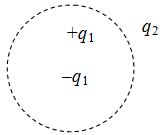
Consider the charge configuration and spherical Gaussian surface as shown in the figure. When calculating the flux of the electric field over the spherical surface the electric field will be due to
If the amplitude ratio of two sources producing interference is 3 : 5, the ratio of intensities at maxima and minima is(a) 25 : 16(b) 5 : 3(c) 16 : 1 (d) 25 : 9
       
Heat produced in a wire of resistance $R$ due to current flowing at constant potential difference is proportional to
A magnet is placed in iron powder and then taken out, then maximum iron powder is at(a) Some away from north pole(b) Some away from south pole(c) The middle of the magnet(d) The end of the magnet
   
   
Free $^{238}U$ nuclei kept in a train emit alpha particles. When the train is stationary and a uranium nucleus decays, a passenger measures that the separation between the alpha particle and the recoiling nucleus becomes $x$ in time $t$ after the decay. If a decay takes place when the train is moving at a uniform speed $v,$ the distance between the alpha particle and the recoiling nucleus at $a$ time $t$ after the decay, as measured by the passenger will be:
When a radioactive substance is kept in a vessel, the atmosphere around it is rich with: