- AElectric lines of force never cross each other.
- BElectric lines of force end at a positive.
- CThe electric field charge inside a conductor are infinity.
- DLines of electric field point towards regions of lower potential.
Explanation:
If the lines cross each other at a given location, then there must be two distinctly different values of electric field with their own individual direction at that given location. This could never be the case. Therefore the lines representing the field cannot cross each other at any given location.
Electric field end at a negative charge.
Along the electric field line potential drops.
Generate a complete, print-ready paper with questions like this in minutes — across 16+ boards, with answer keys.
Kirchhoff's second law is based on the law of conservation of
|
(a) Charge |
(b) Energy |
|
(c) Momentum |
(d) Sum of mass and energy |
In the lowest energy level of hydrogen atom, the electron has the angular momentum
|
(a) |
(b) h/ |
(c) h/2 |
(d) |
X-rays are produced in laboratory by
|
(a) Radiation |
|
(b) Decomposition of the atom |
|
(c) Bombardment of high energy electron on heavy metal |
|
(d) None of these |
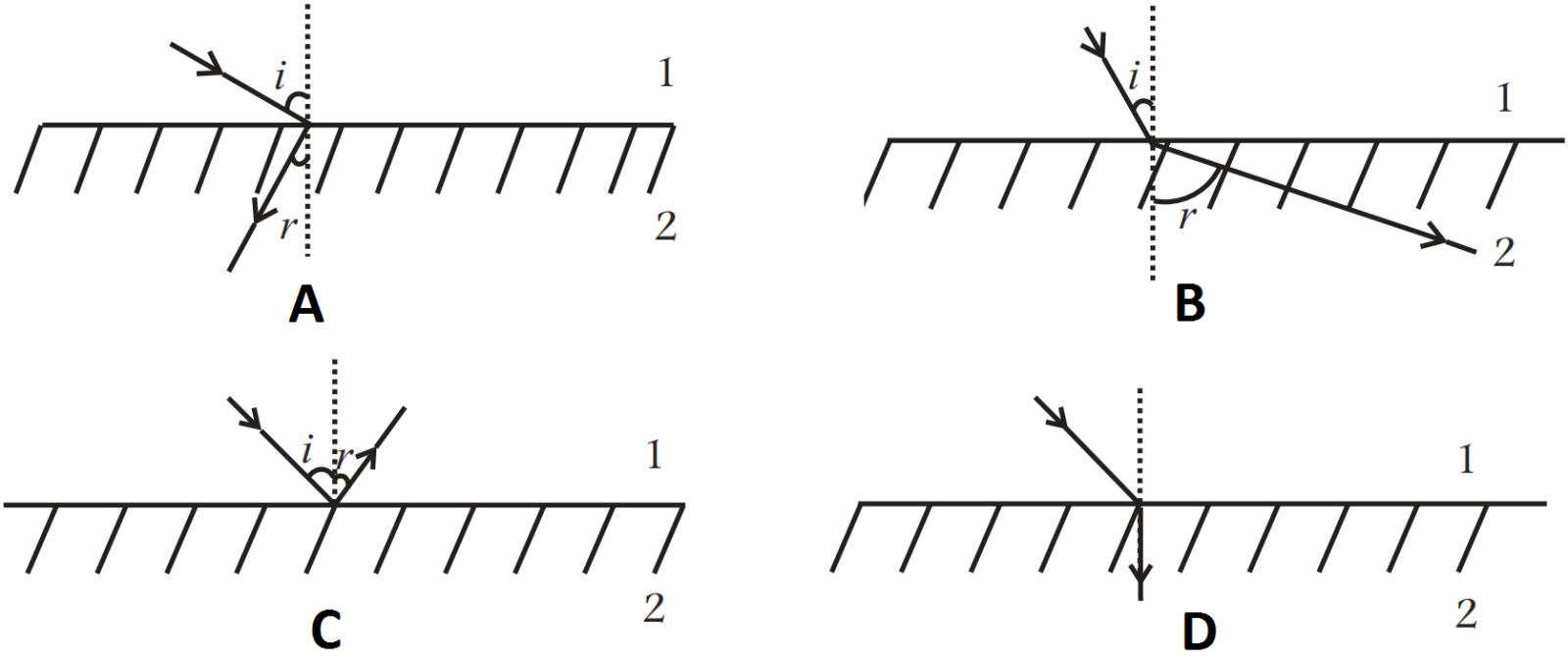
There are certain material developed in laboratories which have a negative refractive index (Fig). A ray incident from air (medium 1) into such a medium (medium 2) shall follow a path given by:

Which of the following is true for number of spectral lines in going form Layman series to Pfund series
|
(a) Increases |
(b) Decreases |
|
(c) Unchanged |
(d) May decreases or increases |
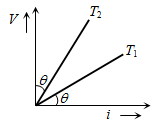
The V-i graph for a conductor at temperature
and
are as shown in the figure. (
is proportional to

|
(a) cos2θ |
(b) sin θ |
(c) cot 2θ |
(d) tan θ |
The light rays having photons of energy 1.8 eV are falling on a metal surface having a work function 1.2 eV. What is the stopping potential to be applied to stop the emitting electrons
|
(a) 3 eV |
(b) 1.2 eV |
(c) 0.6 eV |
(d) 1.4 eV |