Question
How can $\text{D}_2\text{O}$ be prepared from water? Mention the physical properties in which $\text{D}_2\text{O}$ differs from $\text{H}_2\text{O}$. Give at least three reactions of $\text{D}_2\text{O}$ showing the exchange of hydrogen with deuterium.
Answer

For preparation of heavy water, there is exhaustive distillation of ordinary water. It is a multistep distillation process. Physical properties
 
 
$\text{H}_2\text{O}$
$\text{D}_2\text{O}$
1.
Boiling point
373k
374.42k
2.
Melting point
273k
276.82k
3.
Mol. mass
18.016
20.03
Exchange reactions.
$\text{NaOH}+\text{D}_2\text{O}\leftrightharpoons\text{NaOD}+\text{HDO}$
$\text{HCl}+\text{D}_2\text{O}\leftrightharpoons\text{DCl}+\text{HDO}$
$\text{NH}_4\text{Cl}+4\text{D}_2\text{O}\leftrightharpoons\text{ND}_4\text{Cl}+4\text{HDO}$

Need a full question paper?

Generate a complete, print-ready paper with questions like this in minutes — across 16+ boards, with answer keys.

Start Generating Free

Similar questions

Write comments on the following:
(a) Pauli's exclusion law
(b) n +$l$ rule
S. NO.
Column I
Column II
1.
Li
$Na_2O_2$
2.
Na
$Li_2O$
3.
K
$KO_2$
4.
Rb
$K_2O$
5.
 
$Rb_2O$
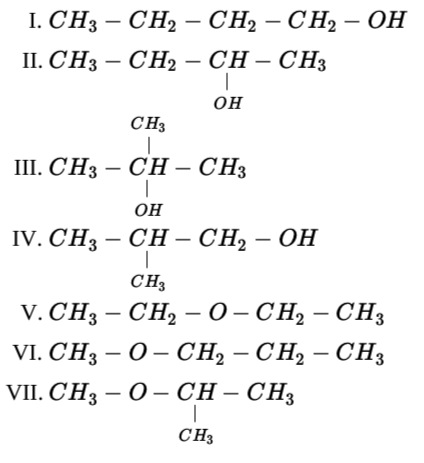
1. Identify the pairs of compounds which are functional group isomers.
Image
2. Explain, how is the electronegativity of carbon atoms related to their state of hybridization in an organic compound.
What is resonance effect and it is of how many types? Explain with examples.
Attempt any five of the following:
1. Convert methane into ethane.
2. Write IUPAC name of the following: $CH _3\left( CH _2\right)_4 CH \left( CH _2\right)_3 CH _3 CH _2- CH \left( CH _3\right)_2$
3. To which category of compounds does cyclohexane belong?
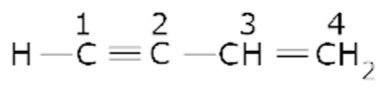
4. Name the type of hybridization in C (2) and C (3) in the following molecule
Image

5. What are Arenes?
6. n-propylmagnesium bromide on hydrolysis gives propane. Is there any other Grignard reagent which also gives propane? If so, give its name, structure and equation for the reaction.
7. How will you distinguish between acetylene and ethylene?
S. No.
Column I
Column II
1.
Gypsum
$NaHCO_3$
2.
Plaster of Paris
$Na_2CO_3.10H_2O$
3.
Bleaching powder
$CaSO_4.2H_2O$
4.
Washing soda
$\text{CaSO}_4\frac{1}{2}\text{H}_2\text{O}$
5.
Baking soda
$CaOCl_2$
Molecular hydrides are classified as electron deficient, electron precise and electron rich compounds. Explain each type with two examples.
  1. State Henry's Law.
  2. Assign reason for the following:
  1. A solution of $NH_4Cl$ in water shows pH less than 7.
  2. In qualitative analysis $NH_4Cl$ is added before adding $NH_4OH$ for testing $Fe^{3+}$ or $AP^{3+}$ ions.
  1. Consider the reaction:
$\text{N}_2(\text{g})+3\text{H}_2(\text{g})\rightleftharpoons2\text{NH}_3+\text{Heat}$
Indicate the direction in which the equilibrium will shift when:
  1. Temperature is increased.
  2. Pressure is increased.
In Ostwald’s process for the manufacture of nitric acid, the first step involves the oxidation of ammonia gas by oxygen gas to give nitric oxide gas and steam. What is the maximum weight of nitric oxide that can be obtained starting only with 10.00g of ammonia and 20.00g of oxygen?
What are the various factors due to which the ionization enthalpy of the main group elements tends to decrease down a group?