Question
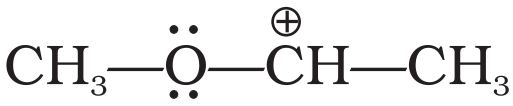
What is resonance effect and it is of how many types? Explain with examples.

Answer

self

Need a full question paper?

Generate a complete, print-ready paper with questions like this in minutes — across 16+ boards, with answer keys.

Start Generating Free

Similar questions

Pay load is defined as the difference between the mass of displaced air and the mass of the balloon. Calculate the pay load when a balloon of radius $10 \ m$ , mass $100 \ kg$ is filled with helium at 1.66 bar at $27^{\circ} C$. (Density of air $=1.2 kg$ $m ^{-3}$ and $R =0.083 bar dm ^3 K^{-1} mol^{-1}$ ).
What is buffer solution? How many types of buffer solution are there? Explain with examples.
Explain the following observations:
  1. $CO_2$ and $SO_2$ are not isostructural.
  2. $BF_3$ and $NF_3$ are not isostructural.
  3. $\text{BH}^-_4$ and $\text{NH}^+_4$ are isostructural.
  4. $N_2$ has higher bond order than NO.
  5. In $NO^+$ and $N_2$, the bond order is same.
Predict the products of electrolysis in the following:
An aqueous solution of $CuCl_2$ with platinum electrodes.
Calculate the enthalpy change for the process$\text{CCI}_4(\text{g})\xrightarrow{ \ \ \ \ \ }\text{C}(\text{g})+4\text{CI}(\text{g})$
and calculate bond enthalpy of $C – Cl$ in $CCl_4$(g).$\Delta_\text{vap}\text{H}^\ominus(\text{CCI}_4)=30.5\text{kJ} \ \text{mol}^{-1}.$
$\Delta_\text{f}\text{H}^\ominus(\text{CCI}_4)=-135.5\text{kJ} \ \text{mol}^{-1}.$
$\Delta_\text{a}\text{H}^\ominus(\text{C})=-715.0\text{kJ} \ \text{mol}^{-1},$ where $\Delta_\text{a}\text{H}^\ominus$ is enthalpy of atomisation
$\Delta_\text{a}\text{H}^\ominus(\text{CI}_2)=242\text{kJ} \ \text{mol}^{-1}$
Match the ions given in Column I with their nature given in Column II.
 
Column I
 
Column II
(i)
(a)
Stable due to resonance.
(ii)
$\text{F}_3-\text{C}^\oplus$
(b)
Destabilised due to inductive effect.
(iii)
$\ \ \ \ \ \ \ \ \ \ \ \ \text{CH}_3\\\ \ \ \ \ \ \ \ \ \ \ \ \ |\\\text{CH}_3-\text{C}^\ominus\\\ \ \ \ \ \ \ \ \ \ \ \ \ \ |\\\ \ \ \ \ \ \ \ \ \ \ \ \ \text{CH}_3$
(c)
Stabilised by hyperconjugation.
(iv)
$\ \ \ \ \ \ \ \ \ \ \ \ \ _\oplus\\\text{CH}_3-\text{CH}-\text{CH}_3$
(d)
A secondary carbocation.
"For classification of elements atomic number is more appropriate in comparison to atomic mass." Comment.
On the basis of chemical reactions involved, explain how do chlorofluorocarbons cause thinning of ozone layer in stratosphere.
Write short notes on the following: (i) Hydroboration of alkenes (ii) Polymerisation of alkenes
Propanal and pentan-3-one are the ozonolysis products of an alkene? What is the structural formula of the alkene?