Question
How do metals react with hydrogen? Explain with an example.

Answer

Most of the metals do not react with hydrogen. Only a few reactive metals react with hydrogen to form metal hydrides. For example: When hydrogen gas is passed over heated sodium, then sodium hydride is formed.

Need a full question paper?

Generate a complete, print-ready paper with questions like this in minutes — across 16+ boards, with answer keys.
Start Generating Free

Similar questions

State the rule to determine the direction of a:Current induced in coil due to its rotation in a magnetic field.
With the help of a labelled diagram, explain how a concave lens diverges a beam of parallel light rays.
Write the function of the retina in the human eye.
Why Al metal cannot be obtained by the reduction of $Al _2 O _3$ with coke? Explain.
What is meant by incineration? For what purpose is it used?
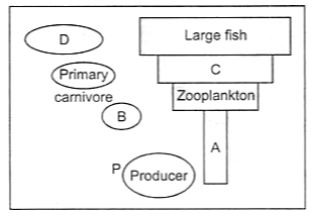
Complete the below diagram by filling spaces marked as A, B, C and D:

Image
Explain the following in terms of gain or loss of oxygen with one example:
  1. Oxidation.
  2. Reduction.
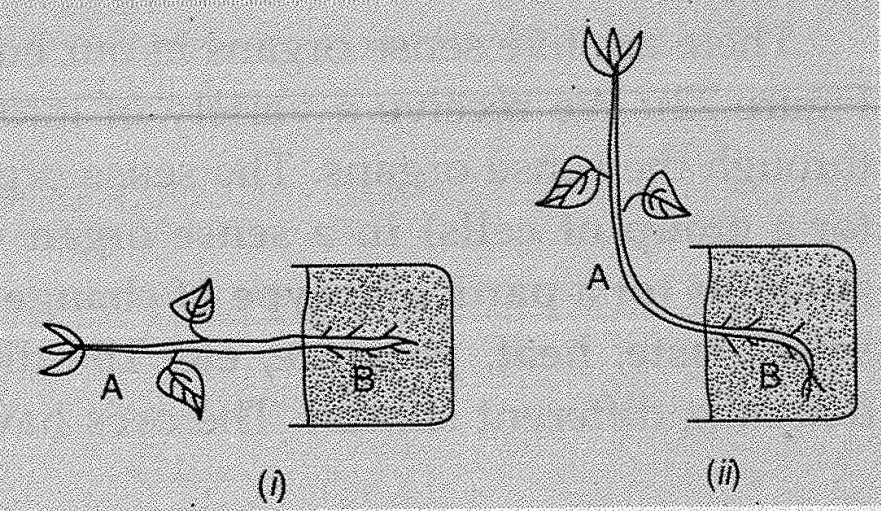
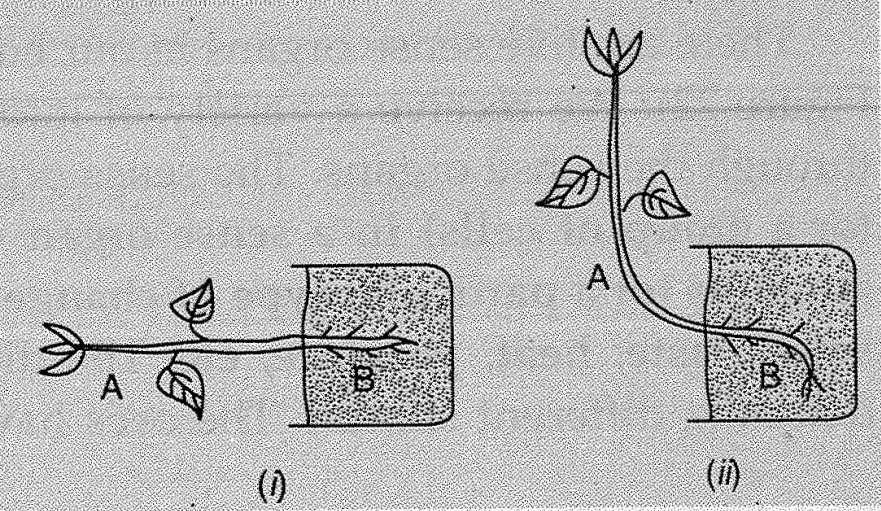
A potted plant having straight parts A and B was placed horizontally on its side as shown in figure (i). After a few days it was observed that the parts A and B of the plant acquire new positions as shown in Figure (ii).
  1. Name the phenomenon exhibited by the position of plant parts A and B in Figure (ii).
  2. Name the stimulus (other than sunlight) which causes plant part A to grow and bend upwards, and plant part B to bend downwards.
An element A from group 14 of the periodic table combines with an element B from group 16.
  1. What type of chemical bond is formed?
  2. Give the formula of the compound formed.
A potted plant having straight parts A and B was placed horizontally on its side as shown in figure (i). After a few days it was observed that the parts A and B of the plant acquire new positions as shown in Figure (ii).
  1. Name the phenomenon exhibited by the position of plant parts A and B in Figure (ii).
  2. Name the stimulus (other than sunlight) which causes plant part A to grow and bend upwards, and plant part B to bend downwards.