Question
How do you expect the metallic hydrides to be useful for hydrogen storage? Explain.

Answer

Metallic hydrides are hydrogen deficient, i.e., they do not hold the law of constant composition. It has been established that in the hydrides of Ni, Pd, Ce, and Ac, hydrogen occupies the interstitial position in lattices allowing further absorption of hydrogen on these metals. Metals like Pd, Pt, etc. have the capacity to accommodate a large volume of hydrogen. Therefore, they are used for the storage of hydrogen and serve as a source of energy.

Need a full question paper?

Generate a complete, print-ready paper with questions like this in minutes — across 16+ boards, with answer keys.
Start Generating Free

Similar questions

Compare the alkali metals and alkaline earth metals with respect to (i) Ionisation enthalpy (ii) Basicity of oxides and (iii) Solubility of hydroxides.
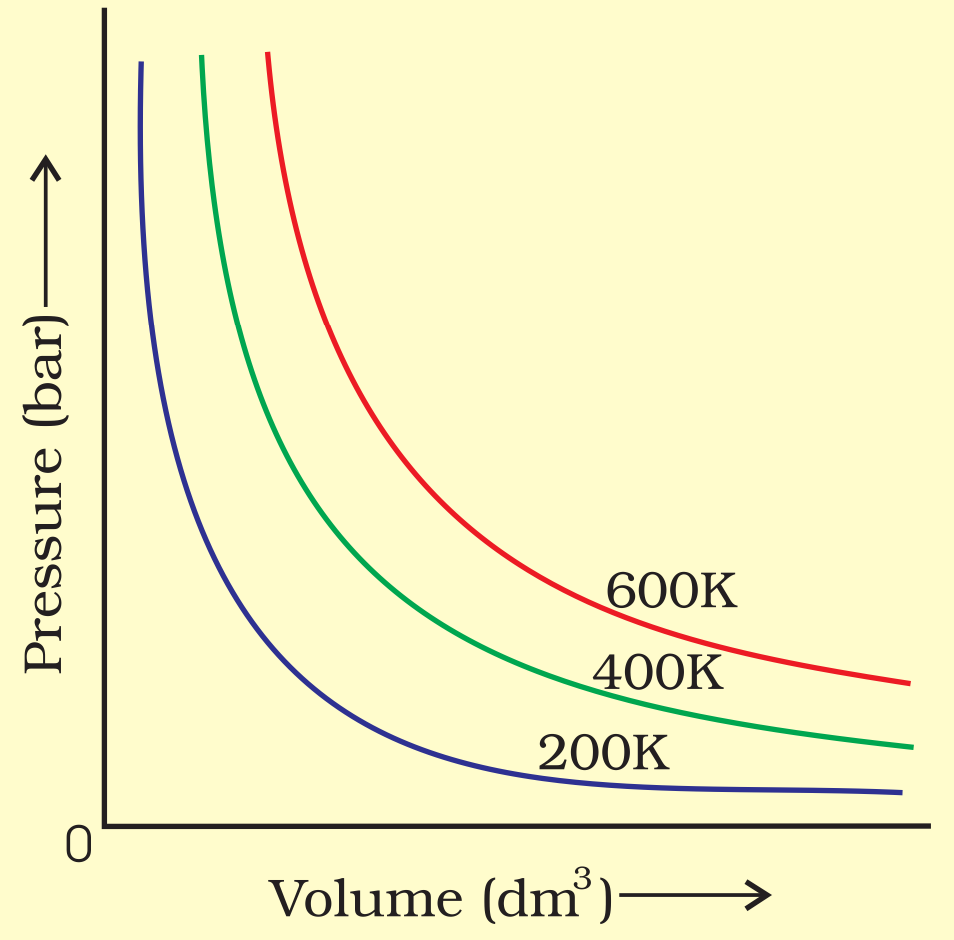
The variation of pressure with volume of the gas at different temperatures can be graphically represented as shown in Fig. On the basis of this graph answer the following questions.
  1. How will the volume of a gas change if its pressure is increased at constant temperature?
  2. At a constant pressure, how will the volume of a gas change if the temperature is increased from 200K to 400K?
Why does fluorine not show disporportionation reaction?
An ionic hydride of groups has sufficiently covalent character. It is used to form hydrides of other elements of group 13 which are useful reducing agent. Write the formula this hydride and its reaction with $\mathrm{B}_2 \mathrm{H}_6$ and $\mathrm{AlCl}_3$.
Calculate the molar solubility of $Ni ( OH )_2$ in 0.10 M NaOH . The ionic product of $Ni ( OH )_2$ is $2.0 \times 10^{-15}$.
What is an ionic bond? Give two suitable examples explain the difference between ionic and covalent bond.
Calculate the maximum work obtained when 0.75mol of an ideal gas expands isothermally and reversibly at 27°C from a volume of 15L to 25L.
Match standard free energy of the reaction with the corresponding equilibrium constant.
Column I Column II
i. $\Delta\text{G}^\ominus>0$ a. $\text{K}>1$
ii. $\Delta\text{G}^\ominus<0$ b. $\text{K}=1$
iii. $\Delta\text{G}^\ominus=0$ c. $\text{K}=0$
    d. $\text{K}<1$
Explain the following:
  1. Common ion effect.
  2. Bronsted Lowry concepts of acids and bases.
State the law of thermodynamics that was first formulated by Nernst in 1906. What is the utility of this law? The equilibrium constant for the reaction $A \rightleftharpoons B$ is $1.8 \times 10^{-7}$ at 298 K . Calculate the value of $\Delta G ^{\circ}$ for the reaction $\left( R =8.314 JK ^{-1} mol^{-1}\right)$. Predict the feasibility of the reaction under standard states.