Question
How does colour appear in coordination compounds? Its explanation is based on crystal field theory.

Answer

self

Need a full question paper?

Generate a complete, print-ready paper with questions like this in minutes — across 16+ boards, with answer keys.

Start Generating Free

Similar questions

  1. $30 g$ of urea $(M = 60 g mol^{-1})$ is dissolved in 846 g of water. Calculate the vapour pressure of water for this solution if vapour pressure of pure water at $298 K$ is $23.8$ mm Hg.
  2. Write two differences between ideal solutions and non-ideal solutions.
  1. Write the steps involved in the preparation of:
  1. $K_2Cr_2O_7$_ from $Na_2CrO_{4.}$​​​​​​​
  2. $KMnO_4$​​​​​​​_ from $K_2MnO_{4.}$
  3. Calomel from corrosive sublimate.
  1. What is meant by lanthanoid contraction? What effect does it have on the chemistry of the elements which follow lanthanoids?
Write the $S _{ N } 1$ mechanism of unimolecular nucleophilic substitution reaction.
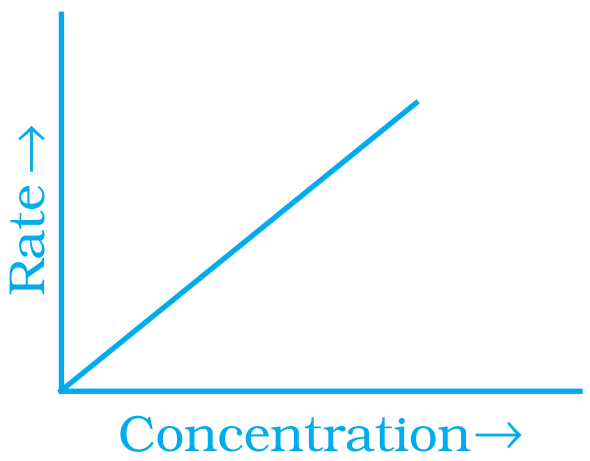
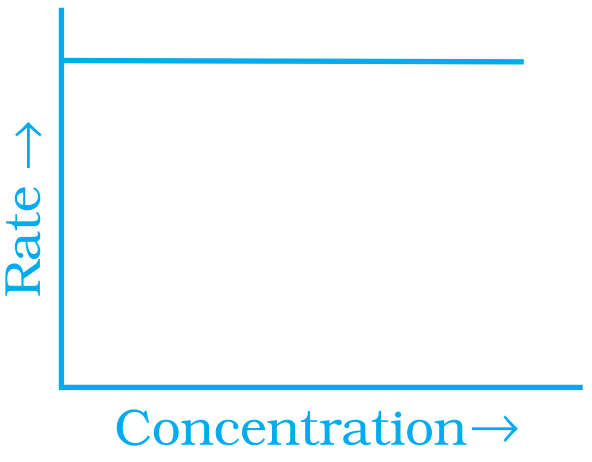
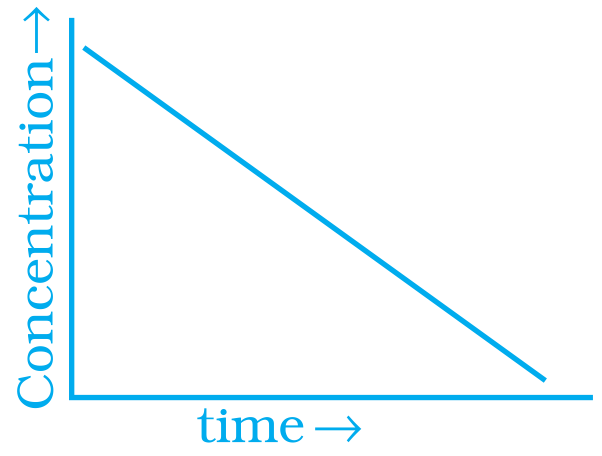
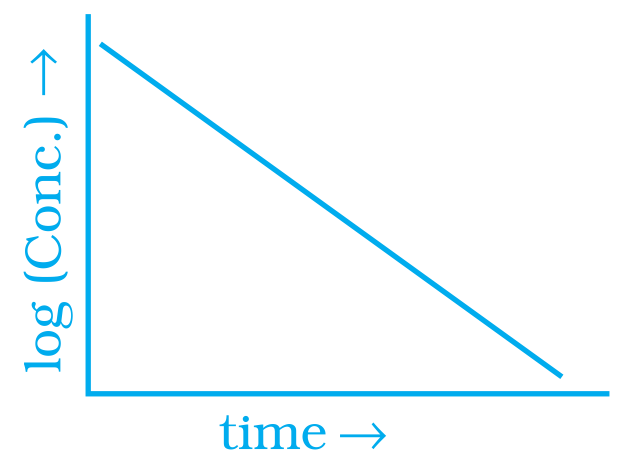
Match the graph given in Column I with the order of reaction given in Column II. More than one item in Column I may link to the same item of Column II.
 
Column I
 
Column II
(i)
 
 
(ii)
(a)
$I^{st}$ order
(iii)
(b)
Zero order
(iv)
   
Mention the IUPAC rule used to write the formulas of mononuclear coordination compounds.
Match the solutions given in Column I and the colours given in Column II.
 
Column I
(Aqueous solution of salt)
 
Column II
(Colour)
$(i)$
$FeSO_4.7H_2O$
$(a)$
Green
$(ii)$
$NiCl_2.4H_2O$
$(b)$
Light pink
$(iii)$
$MnCl_2.4H_2O$
$(c)$
Blue
$(iv)$
$CoCl_2.6H_2O$
$(d)$
Pale green
$(v)$
$Cu_2Cl_2$
$(e)$
Pink
 
 
$(f)$
Colourless
Answer the following question: Write mechanism of the reaction of HI with methoxymethane.
  1. Give reasons for the following:
  1. Sulphur in vapour state shows paramagnetic behaviour.
  2. N-N bond is weaker than P-P bond.
  3. Ozone is thermodynamically less stable than oxygen.
  1. Write the name of gas released when Cu is added to
  1. dilute $HNO_3$
  2. conc. $HNO_3$
Explain with two examples each of the following: Coordination entity, ligand coordination number, coordination polyhedron, homoleptic and heteroleptic.
  1. Define the following terms:
  1. Co-enzymes.
  2. Mutation in biomolecules.
  3. Nucleotides.
  1. List four main functions of carbohydrates in organisms.