MCQ
How does the eye change in order to focus on near or distant objects?
  • A
    The lens moves in or out.
  • B
    The retina moves in or out.
  • C
    The lens becomes thicker or thinner.
  • D
    The pupil gets larger or smaller.

Answer

  1. The lens becomes thicker or thinner.

Explanation:

The eye lens becomes thicker to focus on nearby objects and thinner to focus on distant objects.

Need a full question paper?

Generate a complete, print-ready paper with questions like this in minutes — across 16+ boards, with answer keys.
Start Generating Free

Similar questions

Current in circuit, which makes bulb glow or heats up the wire, is:
The danger signals installed at the top of tall buildings are red in colour. These can be easily seen from a distance because among all other colours, the red light:
  1. Is scattered the most by smoke or fog.
  2. Is scattered the least by smoke or fog.
  3. Is absorbed the most by smoke or fog.
  4. Moves fastest in air.
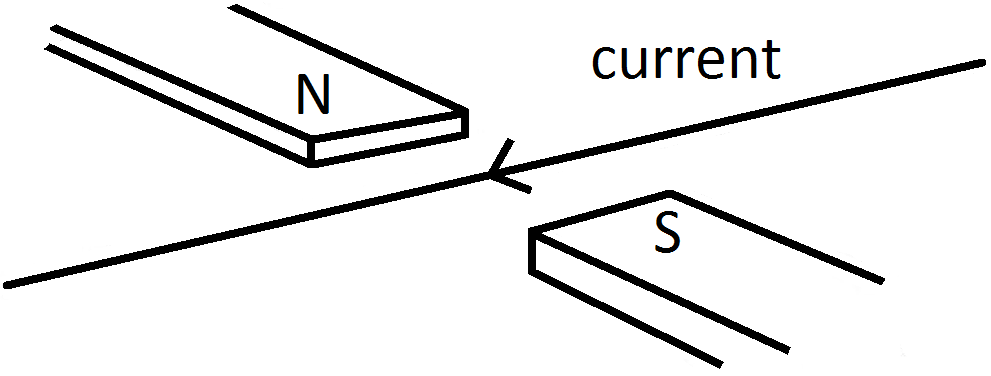
A horizontal wire carries a current as shown in Figure below between magnetic poles N and S:

Is the direction of the force on the wire due to the magnet:
A lens of focal length 12cm forms an erect image three times the size of the object. The distance between the object and image is:
  1. 8cm
  2. 16cm
  3. 24cm
  4. 36cm
The colour that is scattered the least by the tiny particles and the atoms/ molecules of the atmosphere is:
For finding the focal length of a convex lens by obtaining the image of a distant object, one should use as the object:
Which of the following statement is correct?
  1. A person with myopia can see distant objects clearly.
  2. A person with hypermetropia can see nearby objects clearly.
  3. A person with myopia can see nearby objects clearly.
  4. A person with hypermetropia cannot see distant objects clearly.
Write the SI unit of electric power:
Which of the following does not belong to the group formed by the others:
The real image formed by a concave mirror is larger than the object when object is:
  1. At a distance equal to radius of curvature.
  2. At a distance less than the focal length.
  3. Between focus and centre of curvature.
  4. At a distance greater than radius of curvature.