Question
How will an air bubble behave like a lens in water?

Answer

Both the surfaces of the air bubble are convex. Hence this behaves like a convex lens. But the refractive index of water is greater than the refractive index of air. Therefore, due to the change in the nature of the air bubble present in the water tank, it will act like a concave lens.

Need a full question paper?

Generate a complete, print-ready paper with questions like this in minutes — across 16+ boards, with answer keys.
Start Generating Free

Similar questions

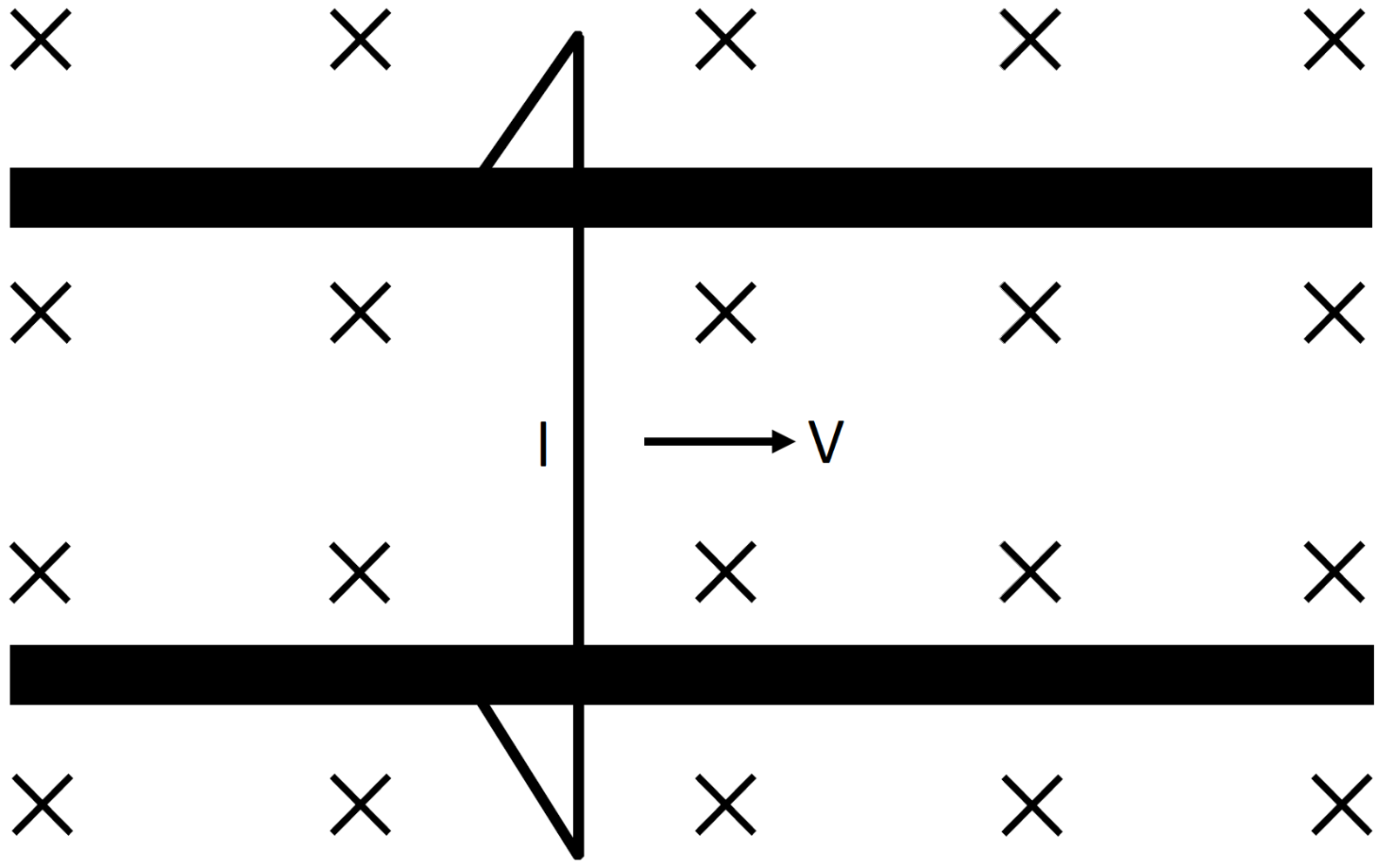
Figure shows a wire sliding on two parallel, conducting rails placed at a separation l. A magnetic field B exists in a direction perpendicular to the plane of the rails. What force is necessary to keep the wire moving at a constant velocity v?
Consider Experiment 6.2. (a) What would you do to obtain a large deflection of the galvanometer? (b) How would you demonstrate the presence of an induced current in the absence of a galvanometer?
A driver takes 0.20s to apply the brakes after he sees a need for it. This is called the reaction time of the driver. If he is driving a car at a speed of 54km/h and the brakes cause a deceleration of $6.0m/s^2$, find the distance travelled by the car after he sees the need to put the brakes on.
The circuit arrangement given below shows that when an a.c. passes through the coil A, the current starts flowing in the coil B.
  1. State the underlying principle involved.
  2. Mention two factors on which the current produced in the coil B depends.
Give an explanation about electric field lines and explain how they can be drawn.
Give the SI unit and definition of electric charge and also write down the smaller unit.
Plot a graph showing variation of de-Broglie wavelength $\lambda$ versus $\frac{1}{\sqrt{V}} ,$ where V is accelerating potential for two particles A and B carrying same charge but of masses $m_1, m_2\left(m_1>m_2\right)$. Which one of the two represents a particle of smaller mass and why?
Can we measure the potential difference across an unbiased p–n junction by connecting a sensitive voltmeter across it?
A parallel-plate capacitor is filled with a dielectric material of resistivity ρ and dielectric constant K. The capacitor is charged and disconnected from the charging source. The capacitor is slowly discharged through the dielectric. Show that the time constant of the discharge is independent of all geometrical parameters like the plate area or separation between the plates. Find this time constant.
Given: Wavelength of light in mercury is $5.5 \times 10^{-5} cm$.
i. Calculate its frequency and period.
ii. What is the wavelength of the light in the glass, if the refractive index of glass is 1.5 ?