Question
(i) What are anti-freezing agents?
(ii) What is called de-icing agent?

Answer

(i) The substance which when mixed with water reduces its freezing point is called anti-freezing.Example : Ethylene glycol
.(ii) The substance which reduces the freezing point of water and which when poured on ice melt it quickly, is called de-icing agent. For example : $NaCl , CaCl _2$ etc.

Need a full question paper?

Generate a complete, print-ready paper with questions like this in minutes — across 16+ boards, with answer keys.

Start Generating Free

Similar questions

Given that the standard electrode potentials $(E^o)$ of metals are$:$
$K^+/K = –2.93 V, Ag^+/Ag = 0.80 V, Cu^{2+}/Cu = 0.34 V,$
$Mg^{2+}/Mg = -2.37 V, Cr^{3+}/Cr = – 0.74 V, Fe^{2+}/Fe = – 0.44 V.$
Arrange these metals in an increasing order of their reducing power.
Write the IUPAC name of the following :
(i) $\left[ Cu \left( H _2 O \right)_4\right]^{+2}$
(ii) $\left[ Co \left( NH _3\right)_6\right] Br _3$
(iii) $\left[ Fe ( CN )_6\right]^{3-}$
Explain the limitations of Raoult's law.
Explain the alkylation process of amine compounds with example.
Why are $Mn^{2+}$ compounds more stable than $Fe^{2+}$ towards oxidation to their $+3$ state?
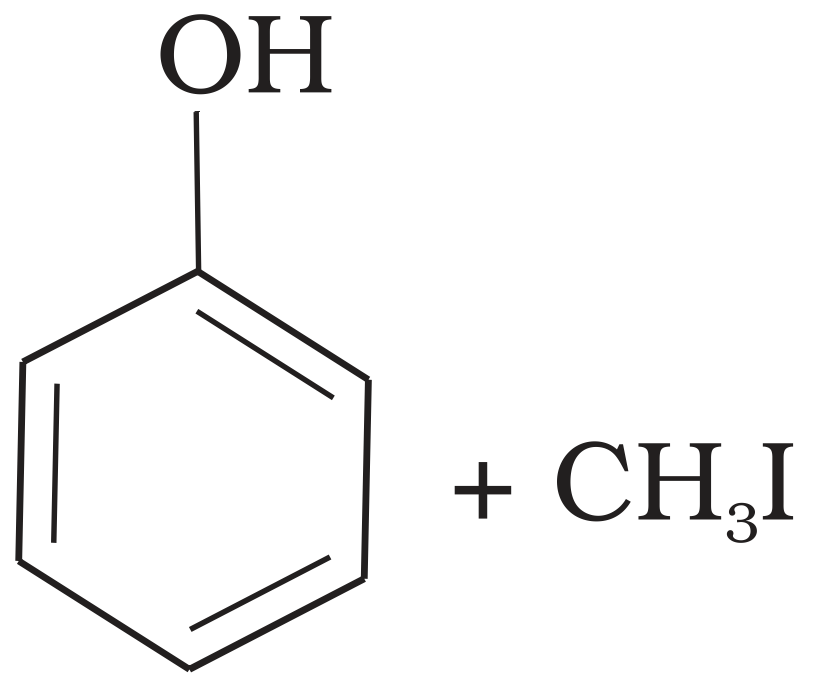
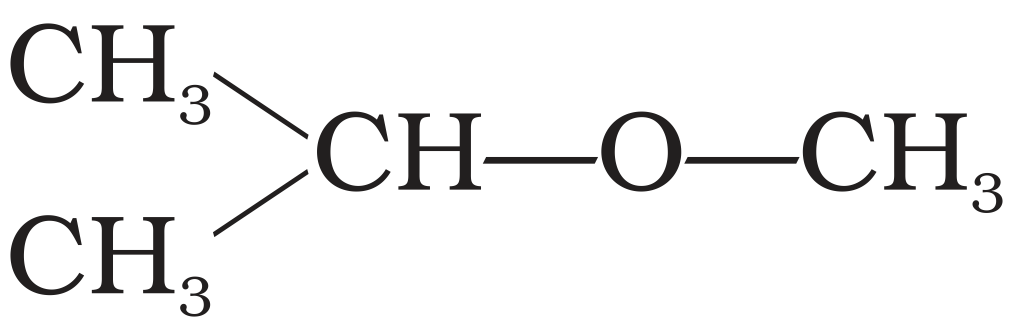
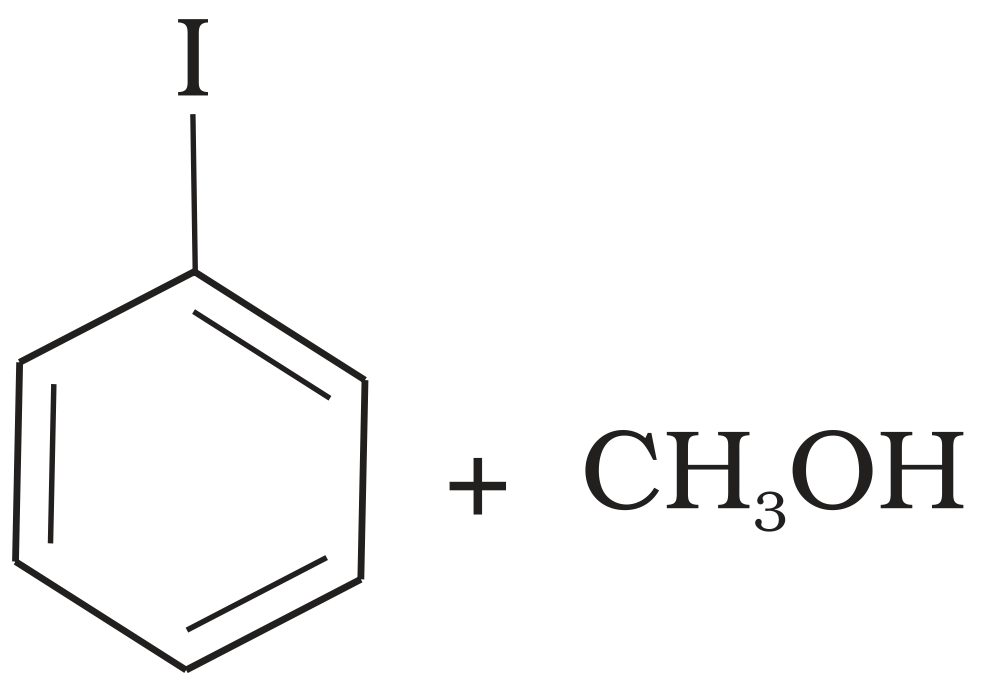
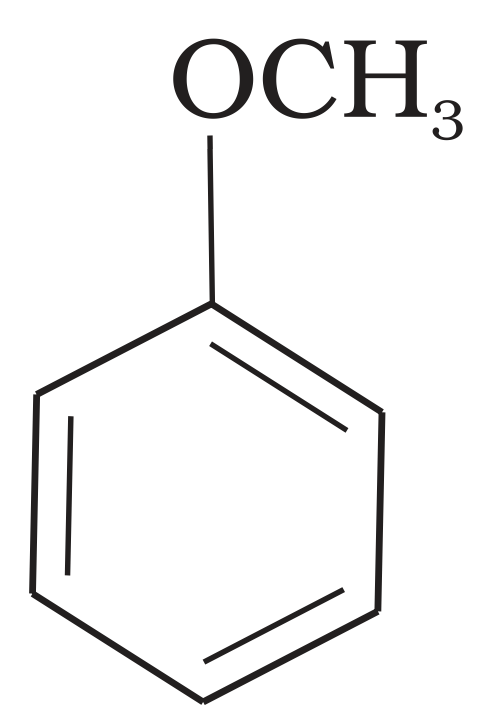
Match the starting materials given in Column $I$ with the products formed by these $($Column $II)$ in the reaction with $II.$
 
Column $I$
 
Column $II$
$(i)$ $CH_3-o-CH_3$ $(a)$
$(ii)$
$(b)$
$\ \ \ \ \ \ \ \ \ \ \ \ \ \text{CH}_3 \\ \ \ \ \ \ \ \ \ \ \ \ \ \ \ | \\ \text{CH}_3-\text{C}-\text{I}+\text{CH}_3\text{OH} \\ \ \ \ \ \ \ \ \ \ \ \ \ \ \ | \\ \ \ \ \ \ \ \ \ \ \ \ \ \ \text{CH}_3$
$(iii)$
$\ \ \ \ \ \ \ \ \ \ \ \ \ \text{CH}_3 \\ \ \ \ \ \ \ \ \ \ \ \ \ \ \ | \\ \text{H}_3\text{C}-\text{C}-\text{O}-\text{CH}_3 \\ \ \ \ \ \ \ \ \ \ \ \ \ \ \ | \\ \ \ \ \ \ \ \ \ \ \ \ \ \ \text{CH}_3$
$(c)$
$(iv)$
$(d)$ $CH_3-OH + CH_3-I$
 
 
$(e)$
 
 
$(f)$
 
 
$(g)$
$\ \ \ \ \ \ \ \ \ \ \ \ \ \text{CH}_3 \\ \ \ \ \ \ \ \ \ \ \ \ \ \ \ | \\ \text{CH}_3-\text{C}-\text{OH}+\text{CH}_3\text{I} \\ \ \ \ \ \ \ \ \ \ \ \ \ \ \ | \\ \ \ \ \ \ \ \ \ \ \ \ \ \ \text{CH}_3$
Calculate the half$-$life of a first order reaction from their rate constants given below:
  1. $200 s^{–1}$
  2. $2 min^{–1}$
  3. $4$ years$^{–1}$
Using $\text{IUPAC}$ norms write the formulae for the following $:$
  1. Potassium trioxalatoaluminate$(III)$
  2. Dichloridobis$($ethane$-1,2-$diamine$)$cobalt$(III)$
What happens when benzene diazonium chloride reacts with potassium iodide ? Write only equation of the reaction.
Identify the compounds A, B and C in the following reaction.
$\text{CH}_3-\text{Br}\xrightarrow{\text{Mg}/\text{ether}}\text{(A)}\xrightarrow[(\text{ii})\text{Water}]{(\text{i})\text{CO}_2}\text{(B)}\xrightarrow[\triangle]{\text{CH}_3\text{OH/}\text{H}^+}\text{(C)}$