MCQ
Identify the correct statement about the magnetic field lines:
- AThese start from the N-pole and terminate on the S-pole.
- BThese lines always form closed loops.
- CBoth (a) and (b) are correct.
- DBoth (a) and (b) are wrong.
Explanation:
The magnetic field lines of a simple magnet are shown in the picture below.They point from the north pole to the south pole. However, the magnetic field lines do not just end at the tip of the magnet. They go right through it, so that inside the magnet the magnetic field points from the south pole to the north pole.
Magnetic field lines form closed loops since magnetic monopoles doesn't exist unlike an electric charge.
Generate a complete, print-ready paper with questions like this in minutes — across 16+ boards, with answer keys.
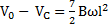
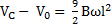
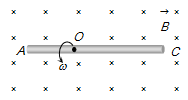
A conducting rod AC of length 4l is rotated about a point O in a uniform magnetic field  directed into the paper. AO = l and OC = 3l. Then
|
(a) |
(b) |
(c) |
(d) |
 mesons can be
|
(a) |
(b) |
(c) |
(d) |
Dual nature of radiation is shown by
|
(a) Diffraction and reflection |
(b) Refraction and diffraction |
|
(c) Photoelectric effect alone |
(d) Photoelectric effect and diffraction |
Before using the tangent galvanometer, its coil is set in
|
(a) Magnetic meridian (or vertically north south) |
|
(b) Perpendicular to magnetic meridian |
|
(c) At angle of 45o to magnetic meridian |
|
(d) It does not require any setting |
The sensitivity of a tangent galvanometer is increased if
| (a) Number of turn decreases | (b) Number of turn increases |
| (c) Field increases | (d) None of the above |
The amplification produced by a triode is due to the action of
|
(a) Filament |
(b) Cathode |
(c) Grid |
(d) Plate |
In P-N junction, the barrier potential offers resistance to
|
(a) Free electrons in N region and holes in P region |
|
(b) Free electrons in P region and holes in N region |
|
(c) Only free electrons in N region |
|
(d) Only holes in P region |