MCQ
Identify the incorrect statement.
  • The oxidation states of chromium in $CrO _{4}\,^{2-}$ and $Cr _{2} O _{7}\,^{2-}$ are not the same
  • B
    $Cr ^{2+}\left( d ^{4}\right)$ is a stronger reducing agent than $Fe ^{2+}\left( d ^{6}\right)$ in water.
  • C
    The transition metals and their compounds are known for their catalytic activity due to their ability to adopt multiple oxidation states and to form complexes.
  • D
    Interstitial compounds are those that are formed when small atoms like $H , C$ or $N$ are trapped inside the crystal lattices of metals.
Answer

Correct option: A.
The oxidation states of chromium in $CrO _{4}\,^{2-}$ and $Cr _{2} O _{7}\,^{2-}$ are not the same
a
Chromate $\left( CrO _{4}\,^{-2}\right) \Rightarrow$ oxidation state $=+6$

dichromate $\left( Cr _{2} O _{7}\,^{-2}\right) \Rightarrow$ oxidation state $=+6$

oxidation state are same.

Need a full question paper?

Generate a complete, print-ready paper with questions like this in minutes — across 16+ boards, with answer keys.

Start Generating Free

Similar questions

The current inside a copper voltameter?
Benzyl amine is $........$ basis than aniline while ethyl amine is $.......$ basis than diethyl amine
A solution of phenol in chloroform when treated with aqueous $NaOH$ gives compound $P$ as a major product. The mass percentage of carbon in $P$ is..............(to the nearest integer)

(Atomic mass : $C =12 ; H =1 ; O =16$ )

Alkyl halides react with dialkyl copper reagents to give
Arrange reactivity of given alcohol in increasing order of elimination reaction

$(I)$ $\begin{array}{*{20}{c}}
  {C{H_2} - C{H_2} - C{H_2} - C{H_2}OH} \\ 
  {|\,\,\,\,\,\,\,\,\,\,\,\,\,\,\,\,\,\,\,\,\,\,\,\,\,\,\,\,\,\,\,\,\,\,\,\,\,\,\,\,\,\,\,\,\,\,\,\,\,\,\,\,\,\,} \\ 
  {N{O_2}\,\,\,\,\,\,\,\,\,\,\,\,\,\,\,\,\,\,\,\,\,\,\,\,\,\,\,\,\,\,\,\,\,\,\,\,\,\,\,\,\,\,\,\,\,\,\,\,\,} 
\end{array}$

$(II)$ $\begin{array}{*{20}{c}}
  {C{H_3} - C{H_2} - CH - C{H_2}OH} \\ 
  {|\,} \\ 
  {N{O_2}} 
\end{array}$

$(III)$ $\begin{array}{*{20}{c}}
  {C{H_3} - CH - C{H_2} - C{H_2}OH} \\ 
  {|\,\,\,\,\,\,\,\,\,\,\,\,\,\,\,\,\,\,\,\,\,\,\,\,\,\,\,} \\ 
  {N{O_2}\,\,\,\,\,\,\,\,\,\,\,\,\,\,\,\,\,\,\,\,\,\,\,} 
\end{array}$

$(IV)$ $CH_3-CH_2-CH_2-CH_2OH$

Select answer from codes given below :

Consider the following complex ions  $ \mathrm{P}=\left[\mathrm{FeF}_6\right]^{3-} $  ,  $ \mathrm{Q}=\left[\mathrm{V}\left(\mathrm{H}_2 \mathrm{O}\right)_6\right]^{2+} $  ,  $ \mathrm{R}=\left[\mathrm{Fe}\left(\mathrm{H}_2 \mathrm{O}\right)_6\right]^{2+}$  The correct order of the complex ions, according to their spin only magnetic moment values (in $B.M.$) is :
The vapour pressure of high boiling liquid is ____. Then the vapour pressure of low boiling liquid is
Identify $Z$ in $CH_3CH_2CH_2Br$ $\xrightarrow{{Aq.NaOH}}X\xrightarrow{{A{l_2}{O_3}}}Y\xrightarrow{{C{l_2}/{H_2}O}}Z$
When ether is reacted with ${O_2},$ it undergoes explosion due to
Rate of reaction toward Beckmann rearrangement

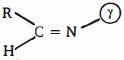
when $\underset{(i)}{\mathop{\gamma =C{{H}_{3}}CO_{2}^{-},}}\,\,\,\,\,\,\underset{(ii)}{\mathop{Cl-C{{H}_{2}}-CO_{2}^{-},}}\,\,\,\,\,\,\,\underset{(iii)}{\mathop{Ph-SO_{3}^{-}}}\,$