Question

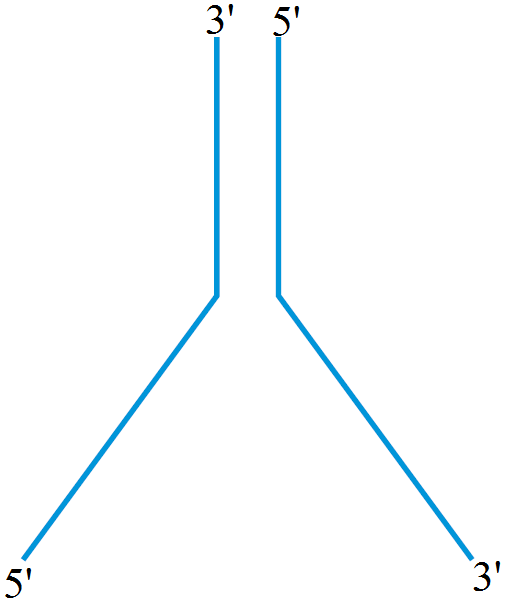
  1. Identify the structure shown above.
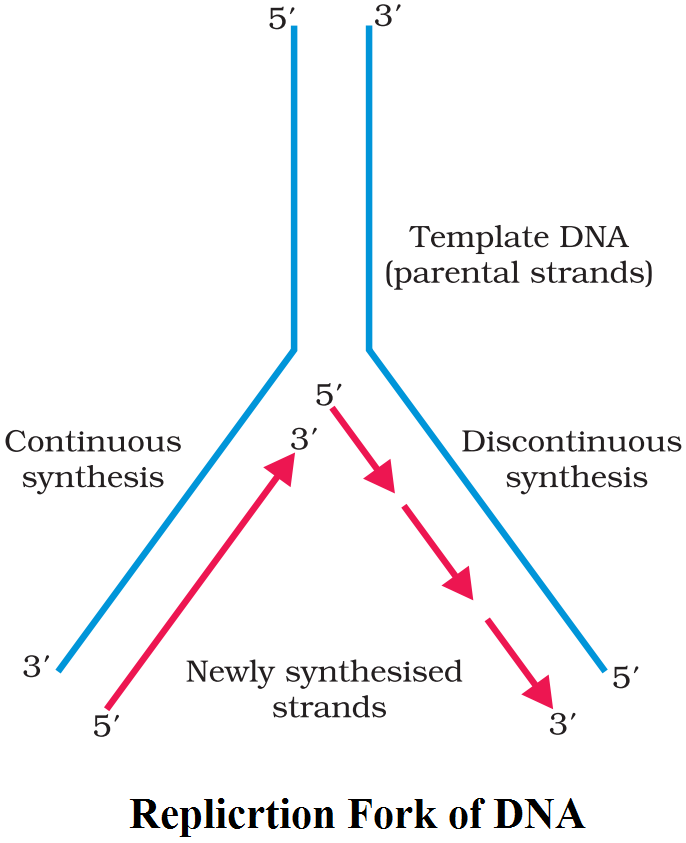
  2. Redraw the structure as a replicating fork and label the parts.
  3. Write the source of energy for this replication and list the enzymes involved in this process.
  4. Mention the difference in the synthesis based on the polarity of the two template strands.

Answer

  1. It represents the parental or template DNA strands, showing the replication fork.
  2.  
  1. The deoxyribonucleoside triphosphates provide energy.
  2. DNA dependent DNA polymerase and DNA ligases are the enzymes involved;
  1.  
  1. On the template strand with 3' → 5' polarity, DNA synthesis is continuous, in the 5' → 3' direction.
  2. On the template strand with 5' → 3' polarity, DNA synthesis is discontinuous; DNA strand is synthesised as short segments, also in the 5' → 3' direction and the discontinuously synthesised segments become joined by DNA ligase.

Need a full question paper?

Generate a complete, print-ready paper with questions like this in minutes — across 16+ boards, with answer keys.

Start Generating Free

Similar questions

  1. Explain the role of regulatory gene, operator, promoter and structural genes in lac operon when E.coli is growing in a culture medium with the source of energy as lactose.
  2. Mention what would happen if lactose is withdrawn from the culture medium.
Explain the mechanism of sex determination in human being.
Ranjana and Shilpi had a hot argument whether or not life is still originating on the earth today. Their neighbour, Mr. Kamal Mishra, a retired professor, who happened to be listening to the girls, called them and explained the matter in detail.
  1. As a student of biology, what is your answer to the above problem? And why?
  2. Recall the experiment of Miller, which simulated the primitive atmosphere.
  1. What were the products obtained in his experiment?
  2. How was energy provided in the experiment?
  1. What would have been the energy source for origin of life on the earth?
  2. Indicate the values shown by Mr. Kamal Mishra?
Explain the events upto fertilisation that occur in a flower after the pollen grain has landed on its compatible stigma.
Describe in detail the various ancient and modern hypothesis given to explain the origin of life on earth.
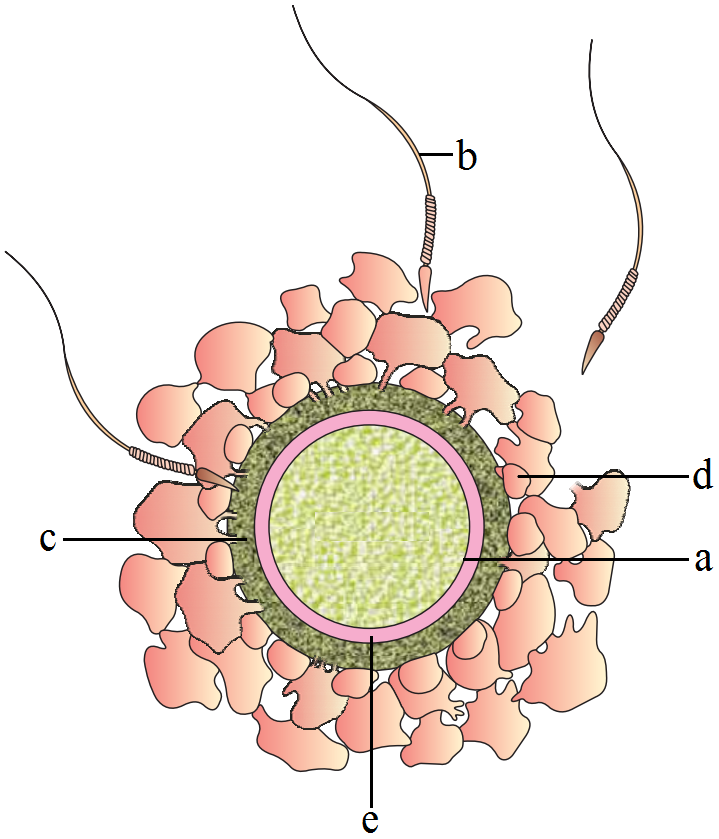
Study the illustration given and answer the questions that follow:

Identify ‘d’.

What is called immunity? How many types are there? Describe innate immunity.
If a desired gene is identified in an organism for some experiments, explain the process of the following:
i. Cutting this desired gene at specific location.
ii. Synthesis of multiple copies of this desired gene.
A pregnant woman who have had amniocentesistest was advised to undergo MTP. It was diagnosed by her doctor that the embryo she is carrying has an extra barr body.
  1. Name the syndrome which is likely to be associated with the embryo.
  2. Why was she advised to undergo MTP?
  3. Do you justify the statutory ban on amniocentesis in our country Give reasons.
Read the following and answer any four questions from (i) to (v) given below:

Stem cells hold the potential for manifold applications in biotechnology based next generation therapeutics. Scientists are trying to formulate better and more personalised treatment modalities against some seemingly irremediable diseases, by harnessing body's own stem cells and stem cell niche. Stem cells of different origin and level of potency are being investigated for tissue regeneration, treatment of bone defect, drug testing, gene therapy and cell based therapy for muscle damage, spinal cord injury, cancer therapy, etc. 'Tile properties of embryonic and adult stem cells to either self-renew or differentiate into multiple cell lineages make them an attractive source for cell therapies, tissue engineering and as model system for drug screening.

  1. Stem cells are widely used in medical research. Which property of stem cells makes them particularly useful in this research?
  1. They can be fused together to form a zygote.
  2. They can divide and eventually give rise to a whole organism.
  3. They can divide and be made to differentiate into various types of cell.
  4. They will continue to divide indefinitely.
  1. Stem cells can be divided into four main types. Which of the four types of stem cell can differentiate into a limited range of tissues?
  1. Adult stem cells.
  2. Embryonic stem cells.
  3. Fetal stem cells.
  4. Zygotic stem cells.
  1. Which feature of stem cells obtained from blood in the umbilical cord enables their use in the treatment of a variety of blood cancers?
  1. They can differentiate into bone marrow cells.
  2. They can differentiate into any cellular component of blood.
  3. They can replace blood stem cells affected by cancer.
  4. They are totipotent.
  1. The search for pluripotent stem cells is intense. The spennatogonium is the diploid precursor of haploid sperm in the development pathway of mouse gametes as shown below.
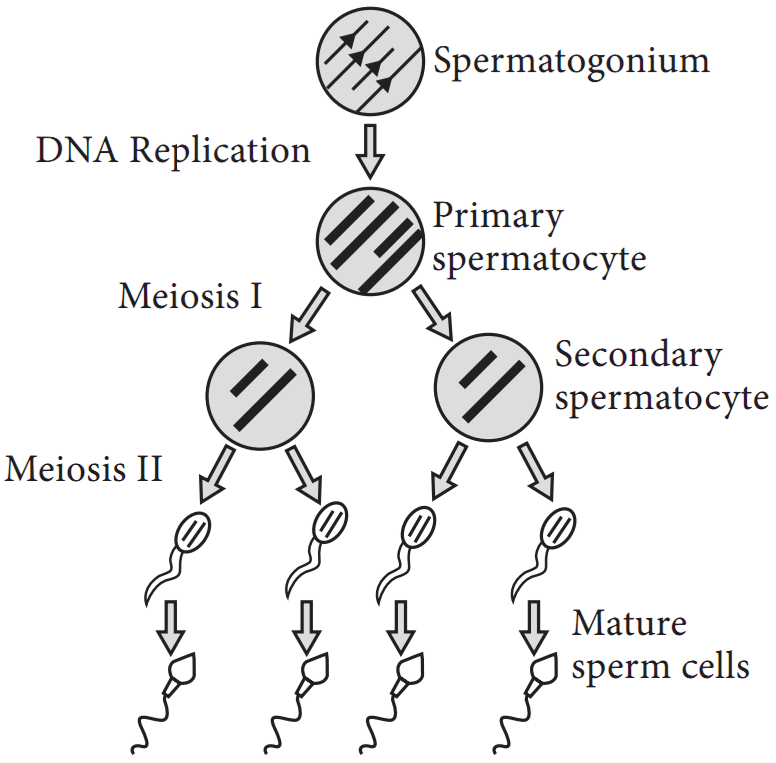
Scientists were interested to find out which stages of sperm development have stem cell capacity. Two experiments were carried out using sterile host males with testes that lacked germ cells. The results are shown in the table.

  Type of cells used Result
Experiment 1 Secondary spermatocytes were injected Fertility was not restored
Experiment 2 Spermatogonia were injected Fertility was restored for the rest of the mouse's life

What property of a stem cell is missing in the secondary spermatocytes?

  1. Specialisation.
  2. Self-renewal.
  3. Commitment.
  4. A proper stem-cell niche.
  1. Which feature of embryonic stem cells (ESCs) is illustrated below?
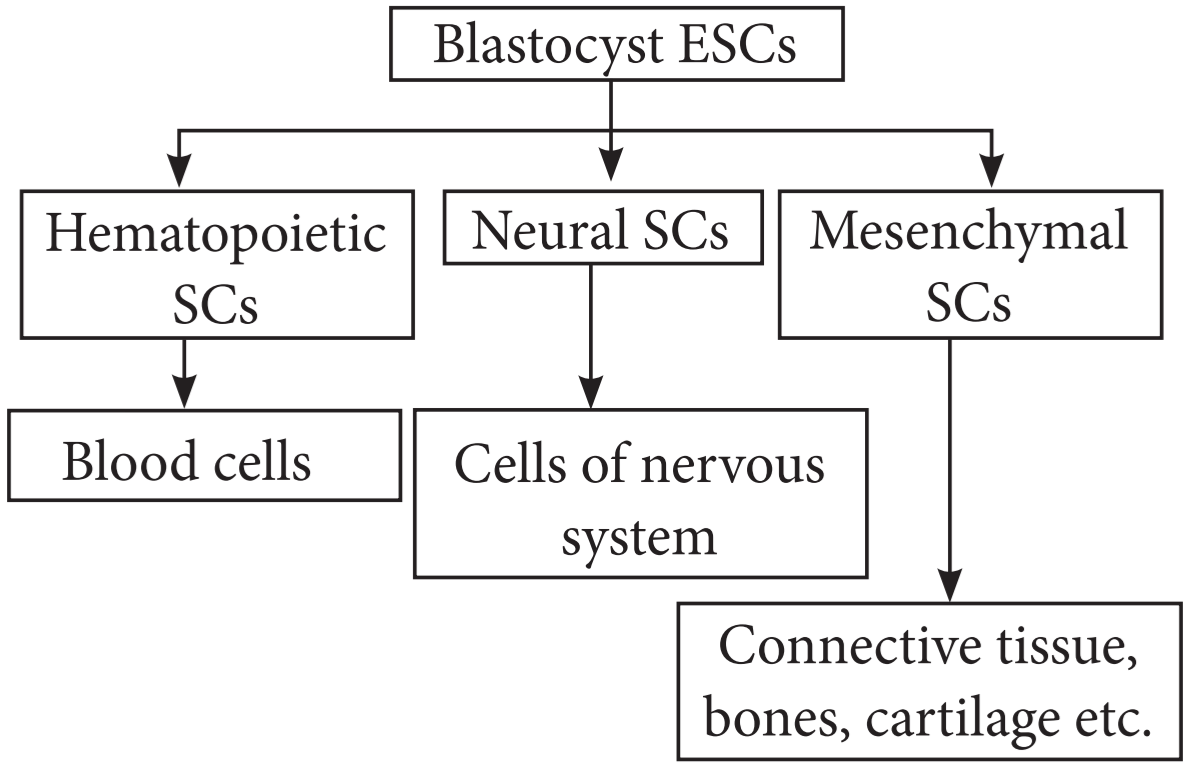
  1. ESCs are capable of dividing.
  2. ESCs are multipotent.
  3. ESCs are pluripotent.
  4. ES Cs show plasticity.