62 questions · self-marked practice — reveal the answer and mark yourself.

| (a) | Unambiguous: One codon codes for only one amino acid. | Universal: Genetic code/codons are(nearly) same for all organisms/from bacteria to human. |
| (b) | Degenerate: More than one codon coding for the same amino acid. | Initiator: Start codon/AUG. |

They also discovered that protein-digesting enzymes (proteases) and RNA digesting enzymes (RNases) did not affect transformation, so the transforming substance was not a protein or RNA. Digestion with DNase did inhibit transformation, suggesting that the DNA caused the transformation. They concluded that DNA is the hereditary material, but not all biologists were convinced.
Observation:
Conclusion: DNA was found to be the genetic material.
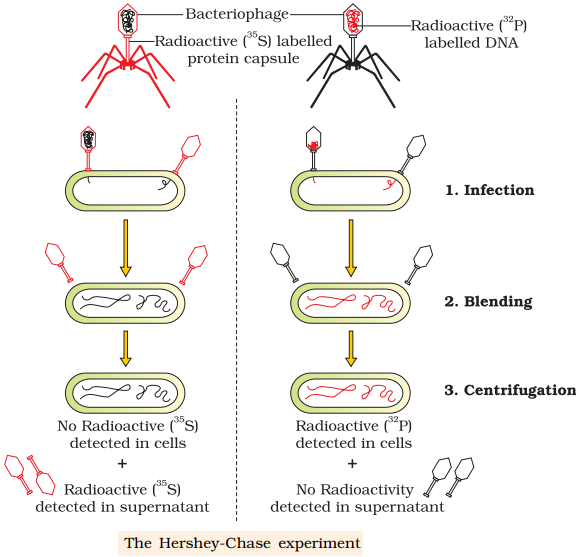
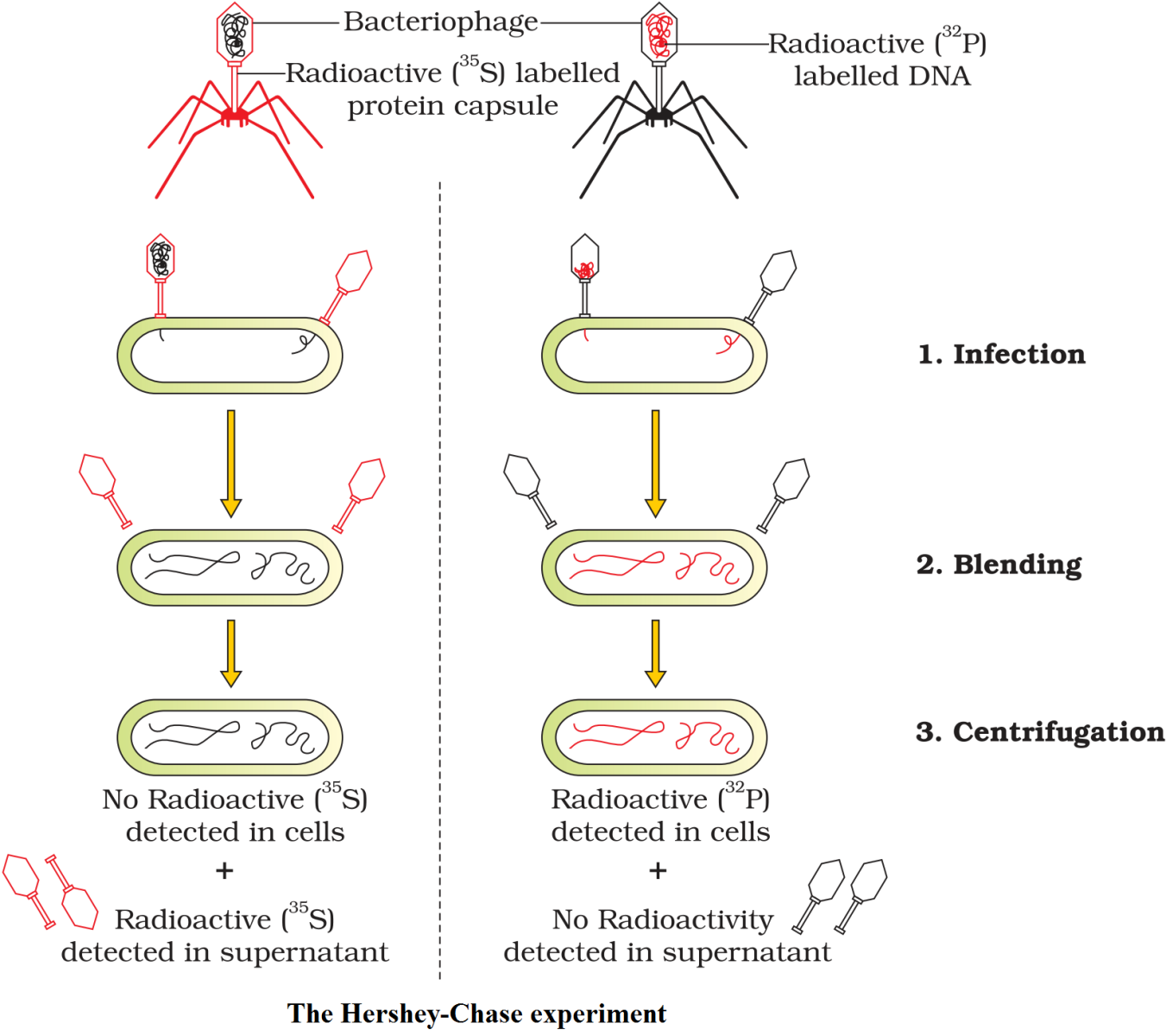
If both the DNA and proteins contained Sulphur and phosphorus, it would have not been possible to pinpoint the exact genetic material, i.e. DNA or proteins.
S strain → Injected into mice → Mice died.
R strain → Injected into mice → Mice lived
S strain → Injected into mice → Mice lived (Heat-killed)
S strain (Heat-killed) + R strain (live)→ Injected into mice → Mice died.
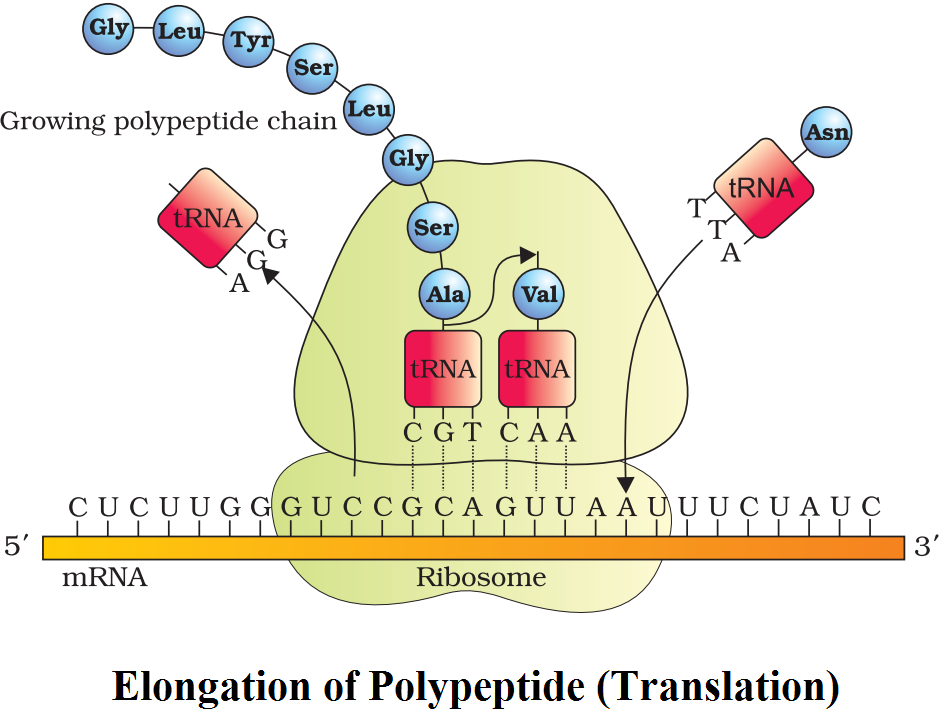
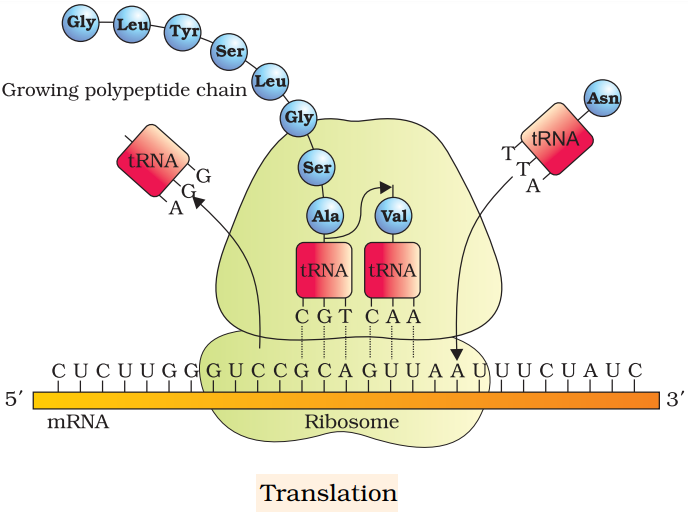
There are three stages of protein synthesis:
Transfer RNA (tRNA) acts as an adaptor molecule that at one end reads the code on mRNA and accordingly bind to amino acid on the other end. It recognises the codon on mRNA by its anticodon and leaves amino acid at the site of protein synthesis.
Ribosomal RNA (rRNA) constitutes the ribosomal structure and helps to form peptide bond.

| S.No. | Transcription in Prokarytoes | Transcription in Eukaryotes |
| (i) | Products of transcription become effective in situ. | Products of transcription come out of the nucleus for functioning in cytoplasm. |
| (ii) | There is only one RNA polymerase. | Three RNA polymerases take part in it. |
| (iii) | mRNA is polycistronic. | mRNA is monocistronic. |
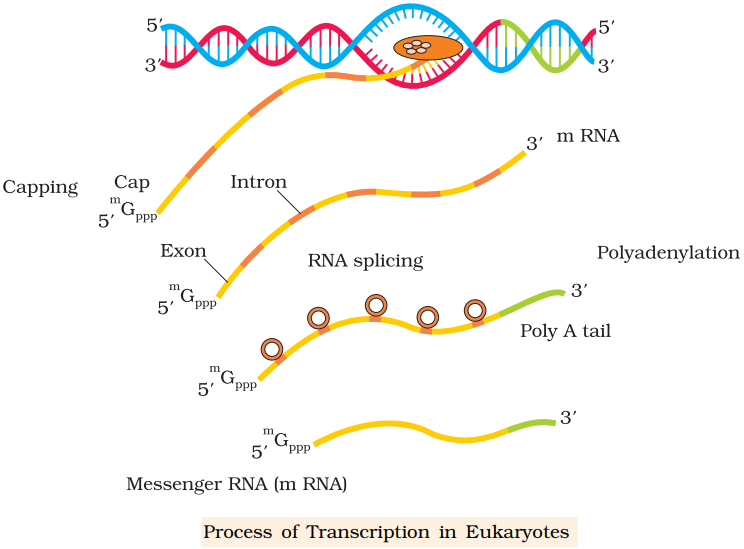
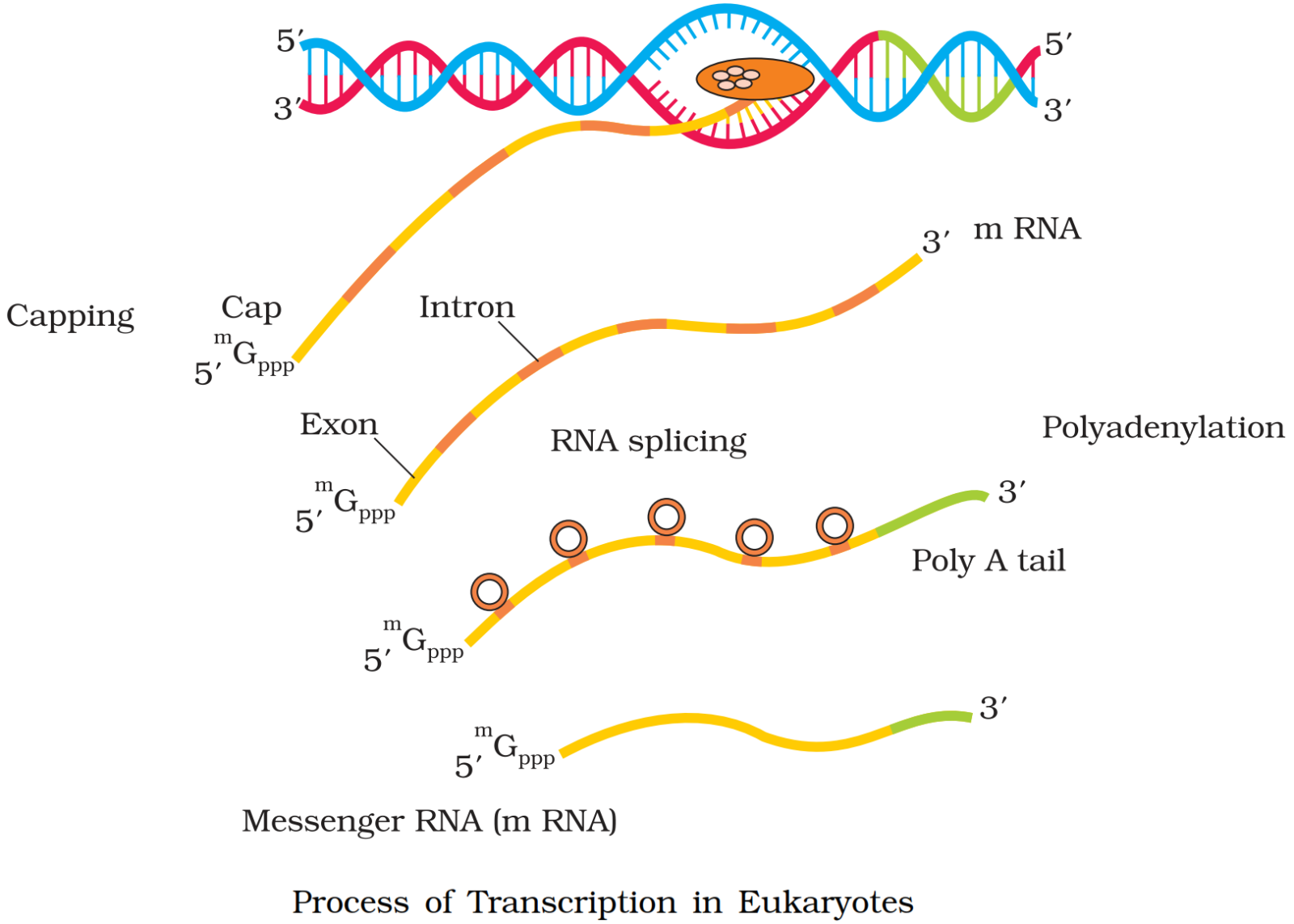
| (iv) | Splicing is not required. | Splicing is required for removing introns. |
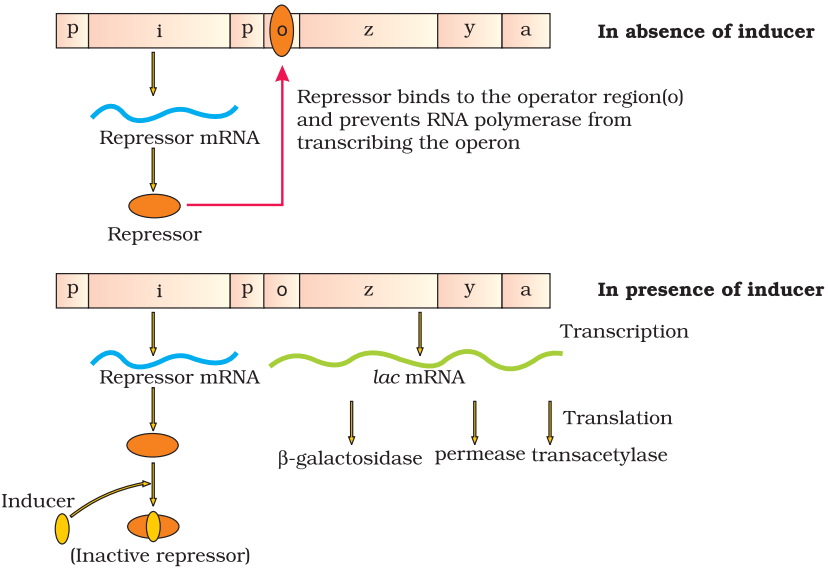
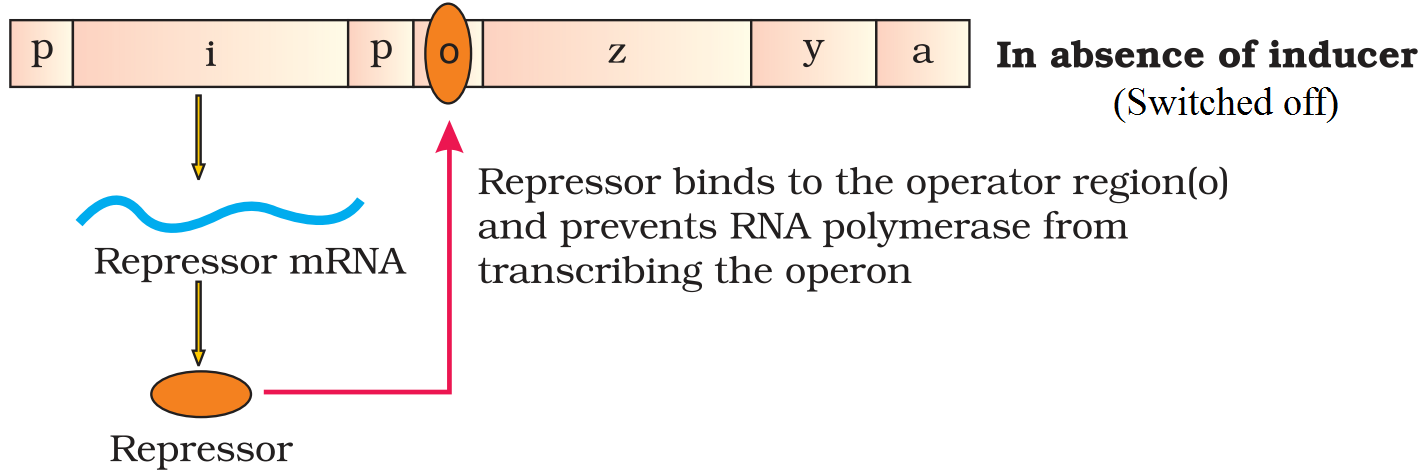
Regulatory gene: This gene controls the operator gene. This produces a protein substance known as represser which combines with the operator gene to stop its function.
Operator: It controls the functioning of structural genes which are expressed when operate, gene is turned on by inducer and not expressed when operates is turned off by repressor.
Promoter: It is the site at which the RNA polymerase binds and reaches the structural genes for the transcription of mRNA to start.
Structural genes: These genes produce mRNA which synthesize the specific proteins such as enzyme regained for metabolism of Lactose.
If lactose is withdrawn from the culture medium the operon is not expressed. The repressor units with the operator gene and turns it off with the result the structural genes are inactivated and therefore the transcription and protein (enzyme) synthesis stops.
They are classified on the basis of:

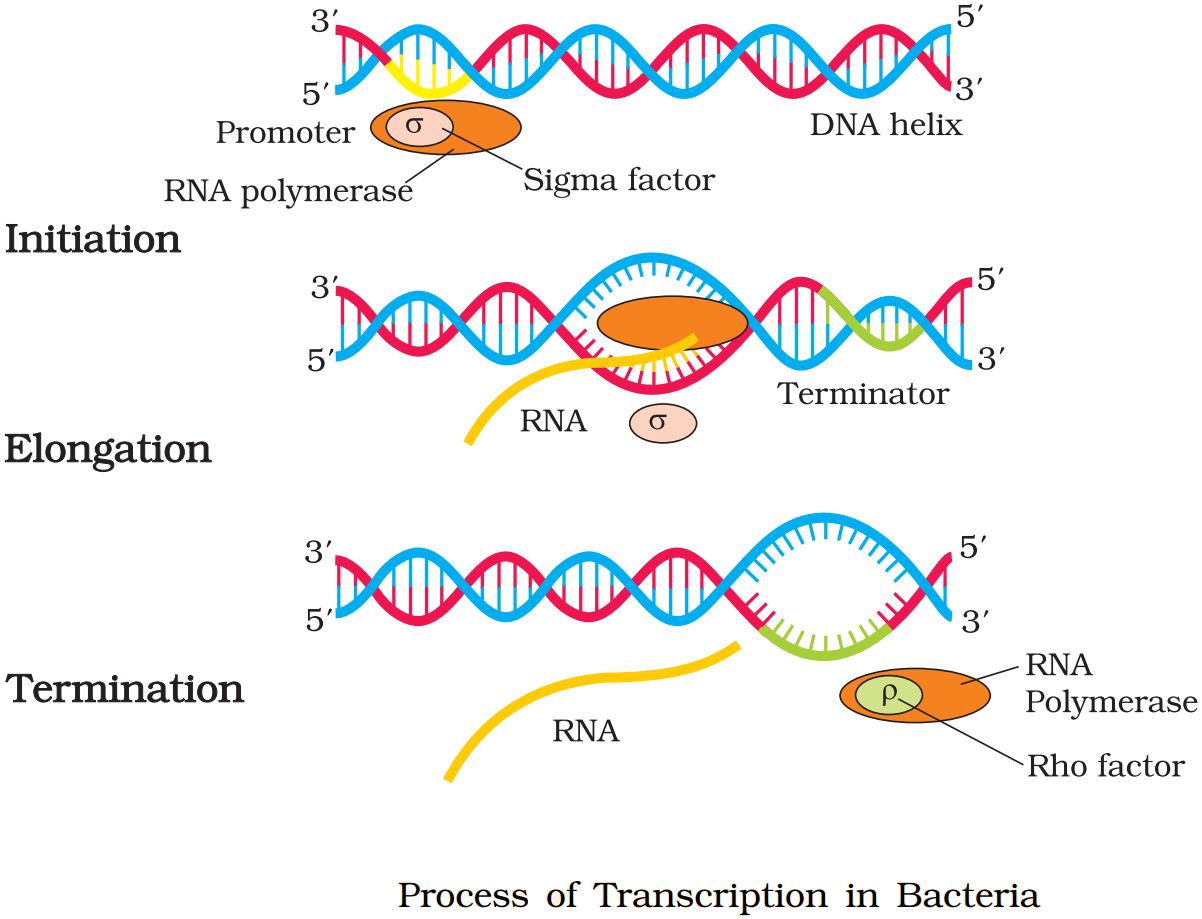
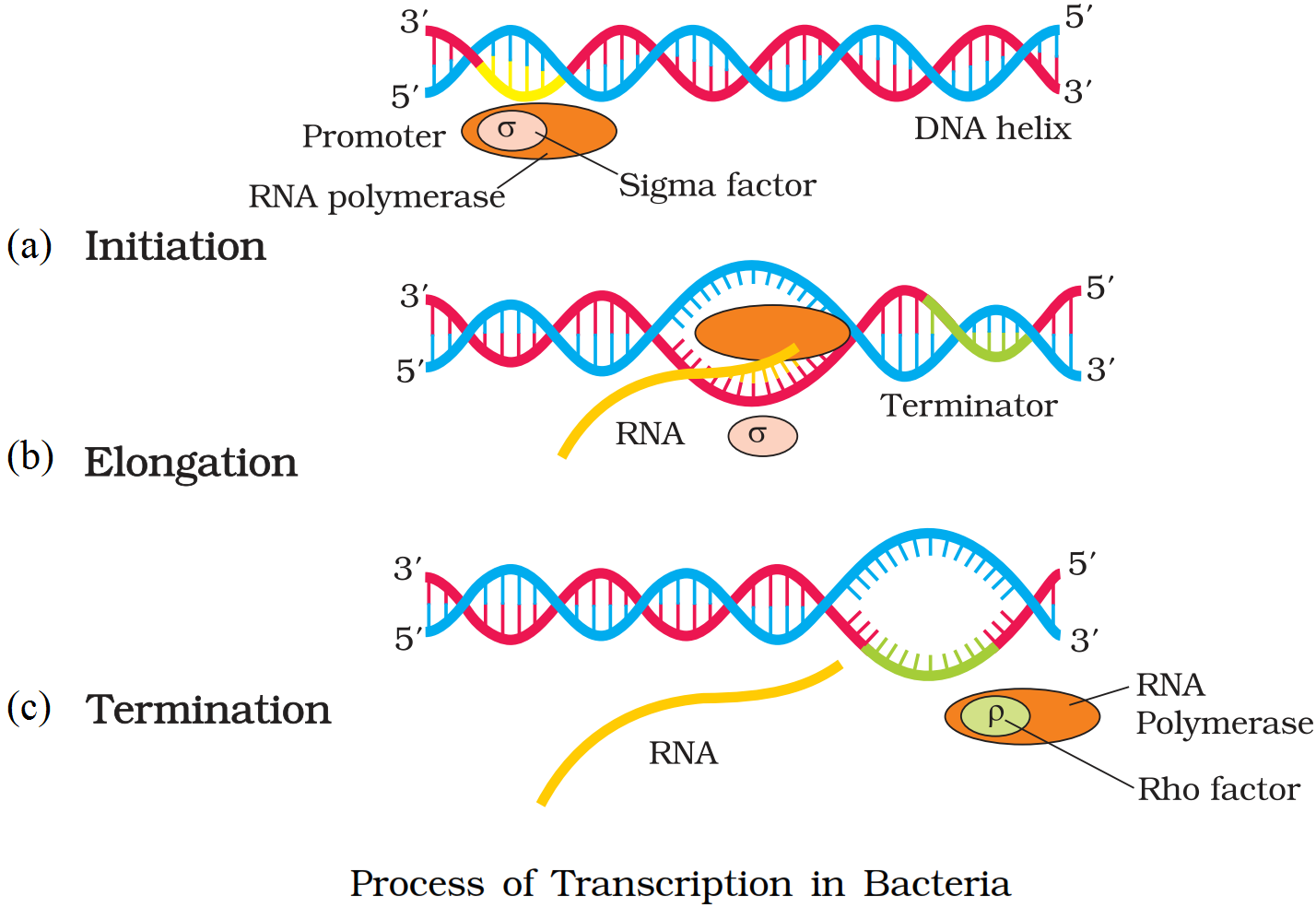
Initiation: $\sigma\text{ (sigma)}$ factor recognises the start signal and promotor region on DNA and the $\sigma\text{ (sigma)}$ with RNA polymerase binds to the promoter and initiates transcription.
Elongation: The RNA polymerase after initiation of RNA transcription loses the $\sigma-\text{factor}$ but continues the process of RNA formation.
Termination: Once the RNA polymerase reaches the termination region of DNA, the RNA polymerase is separated from DNA-RNA hybrid, as a result nascent RNA separates. This process is called termination which is facilitated by certain termination factor.
Role of polymerase in transcription in eukaryotes:
Transforming Principle
Frederick Griffith in 1928, carried out a series of experiments with Streptococcus pneumoniae (a bacterium that causes pneumonia). He observed that when these bacteria (Streptococcus pneumoniae) were grown on a culture plate, some of them produced smooth, shiny colonies (S-type), whereas the others produced rough colonies (R-type). This difference in appearance of colonies (smooth/rough) is due to the presence or absence of mucus (polysaccharide) coat on S-strains, but not on R-strains. In his experiments, he first infected two separate groups of mice. The mice that were infected with the S-strain died from pneumonia as S-strains are the virulent strains causing pneumonia. S-strain (virulent strain) → Injected into mice → Mice died. The mice that were infected with the R-strain did not develop pneumonia and they lived. R-strain (non-virulent strain) → Injected into mice → Mice lived.
In the next set of experiments, Griffith killed the bacteria by heating them. The mice that were injected with heat-killed S-strain bacteria did not die and lived. S-strain (heat killed) → Injected into mice → Mice lived. Whereas, on injecting a mixture of heat-killed S-strain and live R-strain bacteria, the mice died. Moreover, living S-bacteria was recovered from the dead mice. S-strain (heat killed) + R-strain (live) → Injected into mice + Mice died.
From all these observations Griffith concluded that the live R-strain bacteria, had been transformed by the heat-killed S-strain bacteria, i.e. some 'transforming principle' had transferred from the heat-killed S-strain, which helped the R-strain bacteria to synthesise a smooth polysaccharide coat and thus, become virulent. This must be due to the transfer of the genetic material. However, he was not able to define the biochemical nature of genetic material from his experiments.
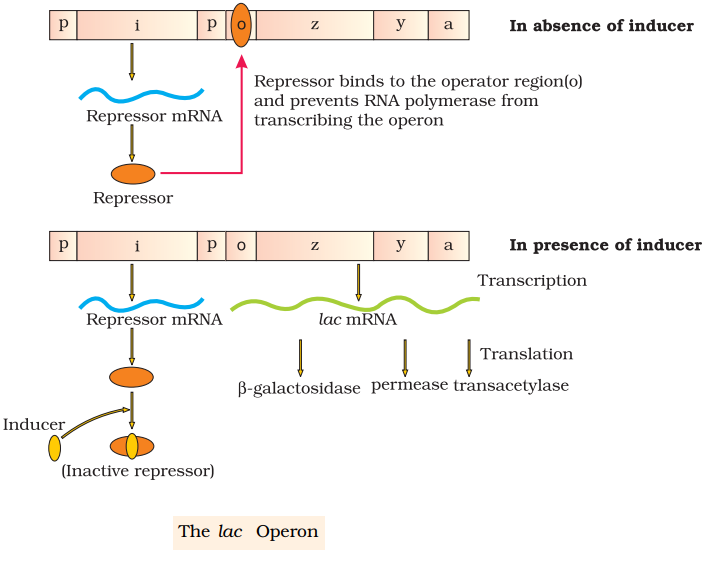
Inducible Operon: When the operon is regulated by an inducer, it is called inducible operon. An inducer can switch on or off the operon. Lac operon is an example of inducible operon. Lactose is a substrate of enzyme beta-galactosidase and is the inducer of lac operon.

The given diagram shows the working of lac operon. In the absence of an inducer the repressor binds to the operator region and prevents transcription.
In the presence of an inducer, repressor becomes inactive. This allows transcription in the operator region which results in release of mRNA. Subsequently, mRNA promotes translation and protein synthesis is accomplished.


Initiation:


Transforming Principle:
OR
Describe how the lac operon operates both in the presence and absence of an inducer in E.coli.


When Lactose is Absent:
When Lactose is Present:
| S. No. | Column I | | Column II |
| A | UUU | 1 | Termination |
| B | AUG | 2 | Tyrosine |
| C | UAA | 3 | Phenylalanine |
| D | AGU | 4 | Methionine |
| E | UAC | 5 | Serine |
| S. No. | Column I | | Column II |
| A | UUU | 3 | Phenylalanine |
| B | AUG | 4 | Methionine |
| C | UAA | 1 | Termination |
| D | AGU | 5 | Serine |
| E | UAC | 2 | Tyrosine |
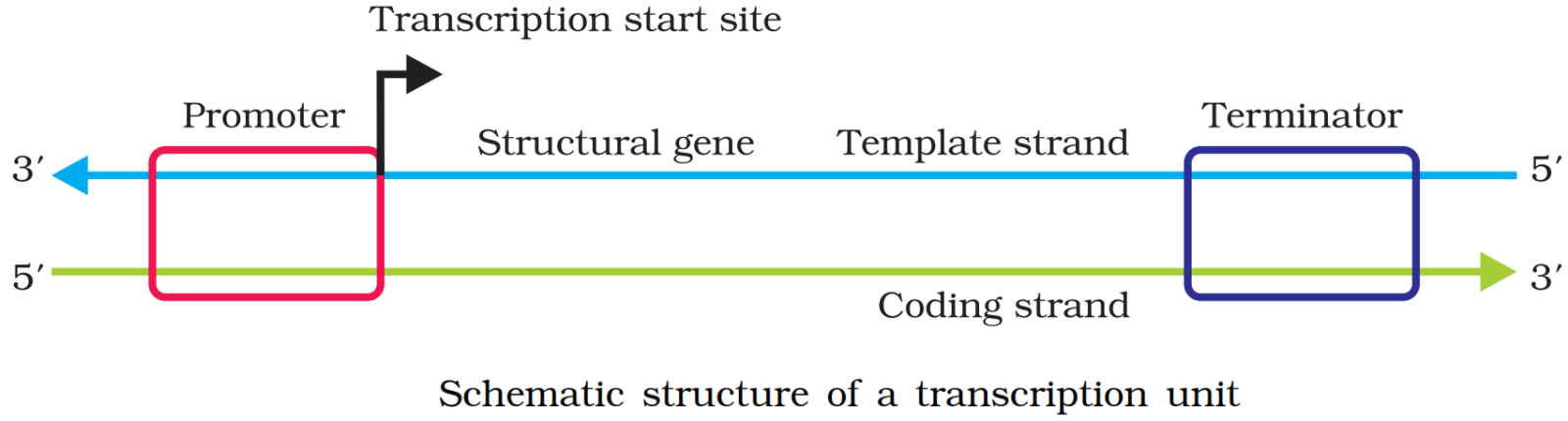
The promoter: It is the binding site for RNA polymerase for initiation of transcription.
The structural gene: It codes for enzyme or protein for structural functions.
The terminator: It is the region where transcription ends.


| S. No. | Column I | | Column II |
| A | Transcription | 1 | A set of three bases on RNA that is complementary to the bases of codon on mRNA. |
| B | Anticodon | 2 | A unit of DNA that codes for a polypeptide. |
| C | Cistron | 3 | Process of synthesis of polypeptide as dictated by mRNA. |
| D | Translation | 4 | Process by which mRNA carries the information from nucleus to ribosomes. |
| S. No. | Column I | | Column II |
| A | Transcription | 4 | Process by which mRNA carries the information from nucleus to ribosomes. |
| B | Anticodon | 1 | A set of three bases on RNA that is complementary to the bases of codon on mRNA. |
| C | Cistron | 2 | A unit of DNA that codes for a polypeptide. |
| D | Translation | 3 | Process of synthesis of polypeptide as dictated by mRNA. |
OR
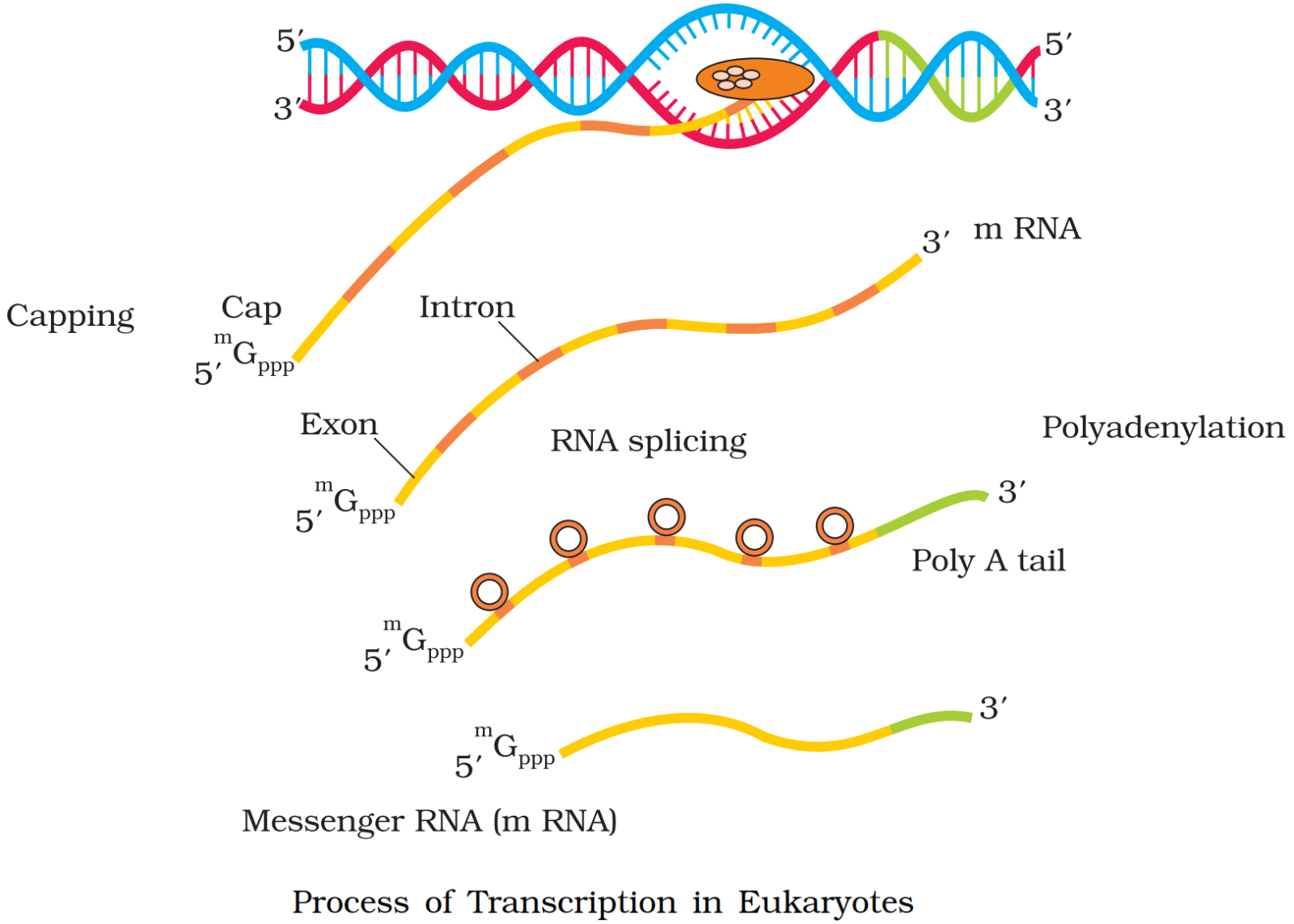
Describe the process of transcription in a bacterium.

When DNase is added to the medium, the DNA of the heat-killed cells gets digested and is unable to carry out the transformation.

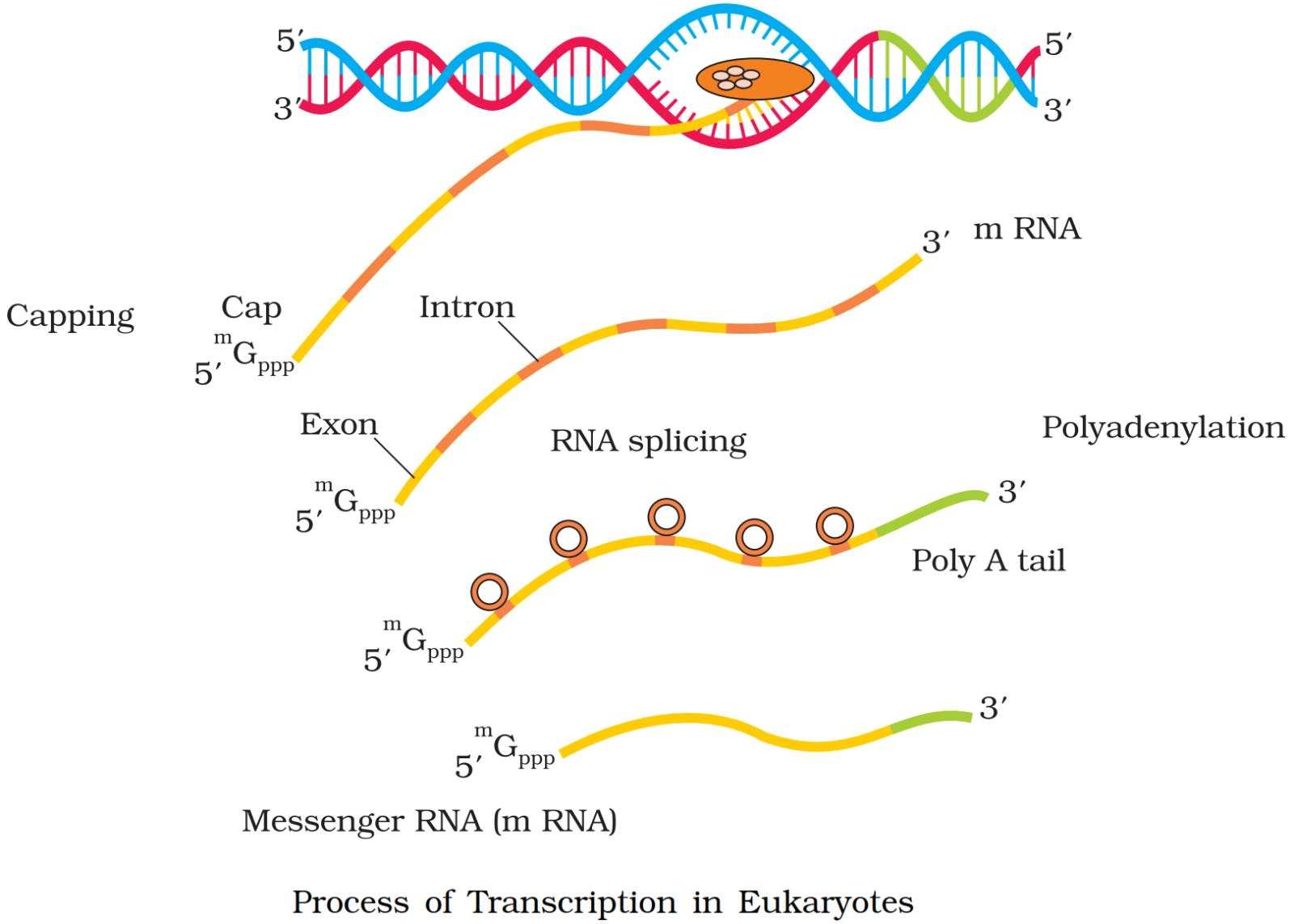
Post-transcriptional modifications:


The methods involve two major approaches:
Expressed sequence tags (ESTs): This method focusses on identifying all the genes that are expressed as RNA.
Sequence annotation: It is an approach of simply sequencing the whole set of genome that contains all the coding and non-coding sequences, and later assigning different regions in the sequence with functions.


| S. No | | Prokaryotes | Eukaryotes |
| (i) | Transcription | Occurs in cytosol | Occurs in nucleus |
| (ii) | Translation | Occurs in cytosol | Occurs in cytoplasm |
Translation:
There are three stages of protein synthesis:
In prokaryotes, initiation requires the large and small ribosome subunits, the mRNA, initiation tRNA and three initiation factors (IFs).
Activation of amino acid: Amino acids become activated by binding with aminoacyl tRNA synthetase enzyme in the presence of ATP.
Aminoacid(AA) + ATP → synthetases Aminoacy lt RNA AA - AMP - Enzymecomplex + Pi
Transfer of amino acid to tRNA: The AA - AMP - Enzyme complex formed reacts with specific tRNA to form aminoacyl-tRNA complex. AA - AMP - Enzyme complex + tRNA → AA - tRNA + AMP + Enzyme.

OR
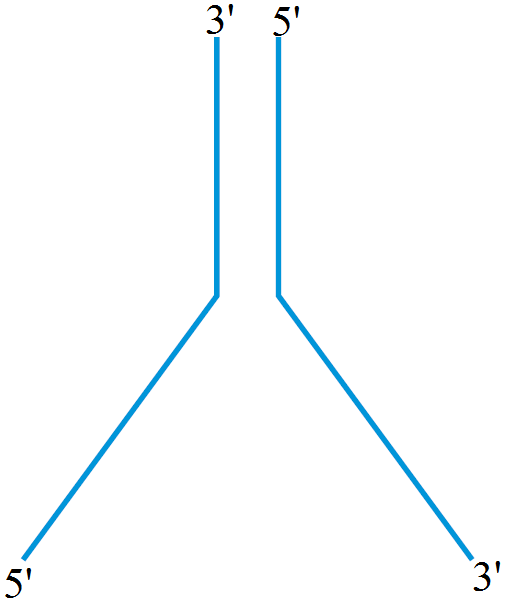
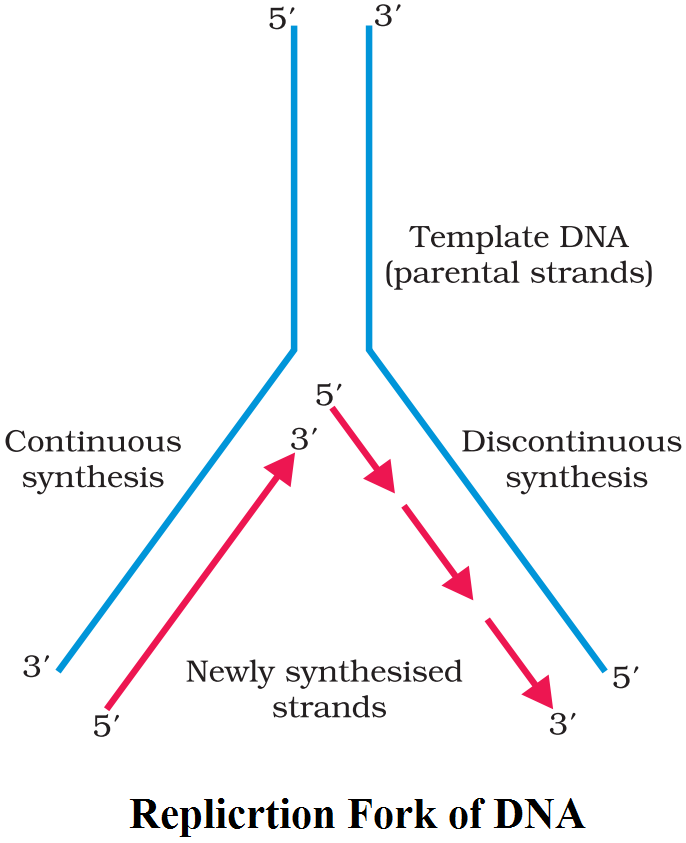
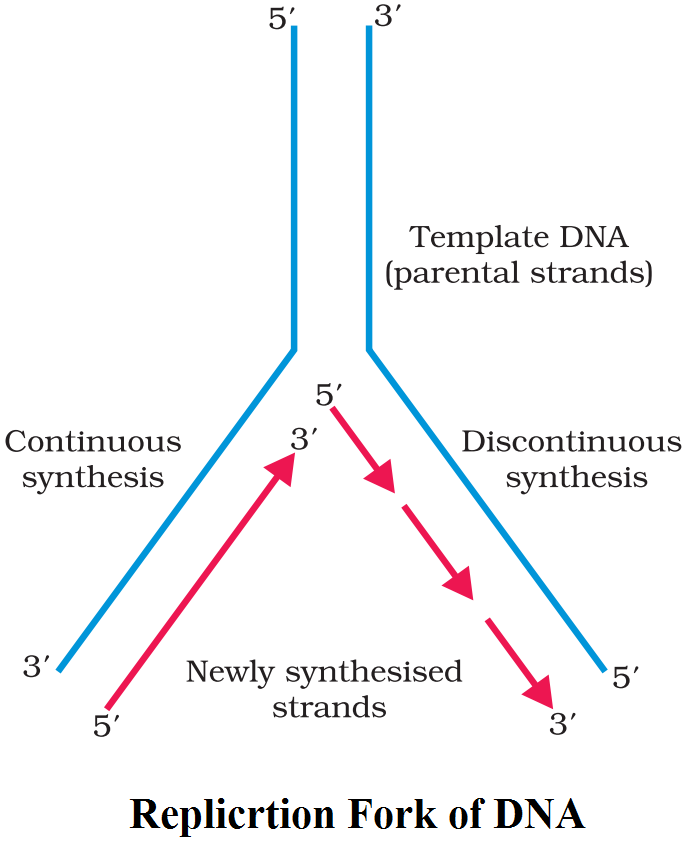
Explain the process of DNA replication with the help of a replicating fork.


y-permease
a-Transacetylase
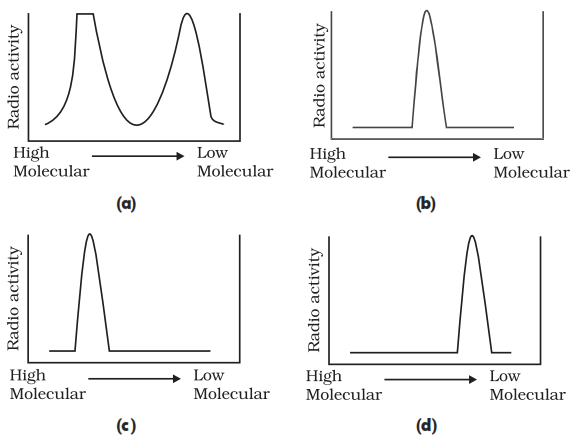
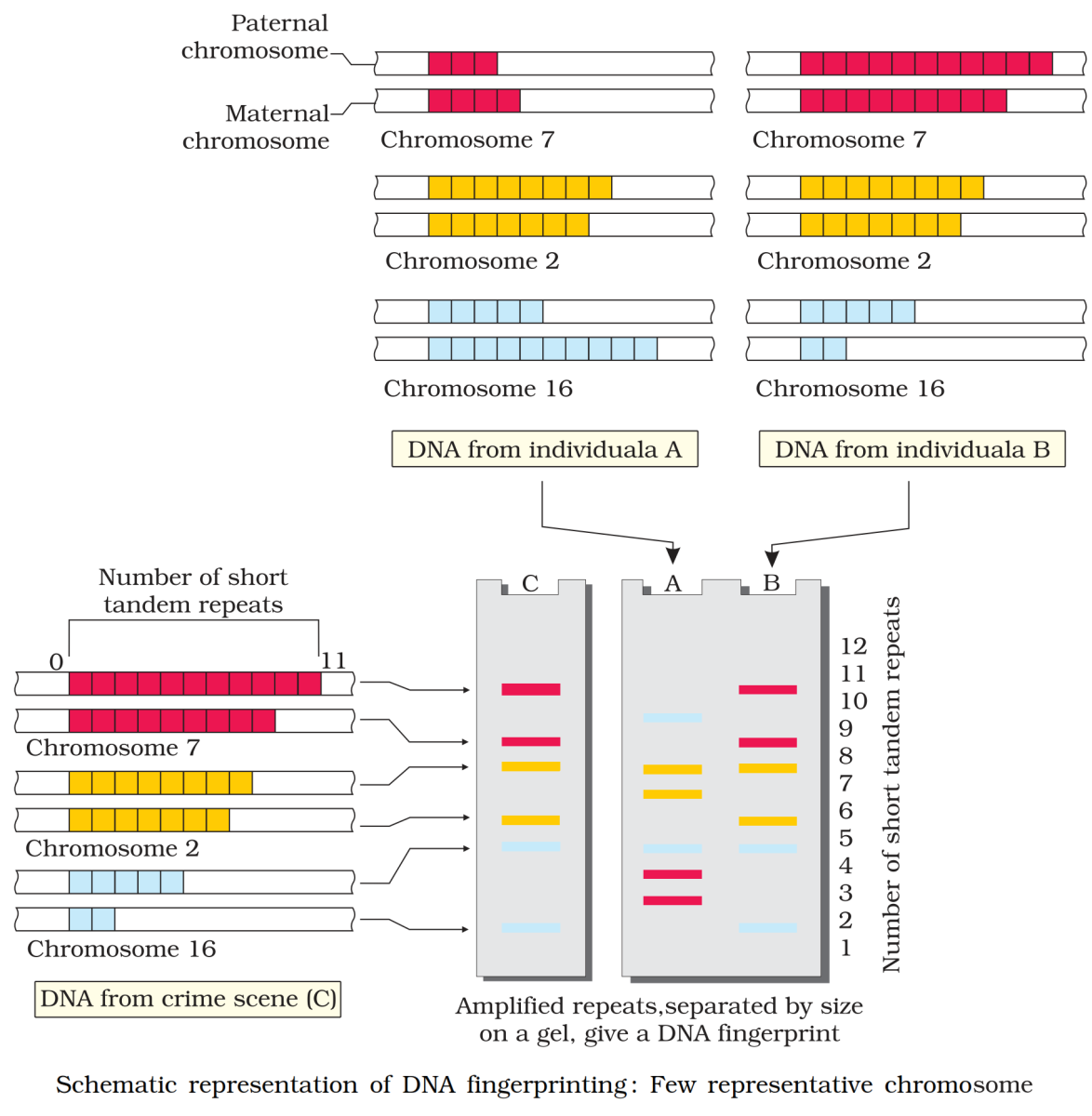
The bulk DNA forms a major peak and the other small peaks are referred to as satellite DNA. Depending on base composition (A : T rich or G : C rich), length of segment, and number of repetitive units, the satellite DNA is classified into many categories, such as micro-satellites, mini-satellites etc. These sequences normally do not code for any proteins, but they form a large portion of human genome.
These sequence show high degree of polymorphism and form the basis of DNA fingerprinting. Since DNA from every tissue (such as blood, hair-follicle, skin, bone, saliva, sperm etc.), from an individual show the same degree of polymorphism, they become very useful identification tool in forensic applications. Further, as the polymorphisms are inheritable from parents to children, DNA fingerprinting is the basis of paternity testing, in case of disputes.
The technique of DNA fingerprinting was initially developed by Alec Jeffreys. Lalji Singh is called father of Indian DNA fingerprinting or DNA profiling or DNA typing. He used a satellite DNA as probe that shows very high degree of polymorphism. It was called as Variable Number of Tandem Repeats (VNTR).
The technique, as used earlier, involved Southern blot hybridisation using radiolabelled VNTR as a probe. It included,