Question
If the phase difference between the two wave is 2$\pi $ during superposition, then the resultant amplitude is
Answer

(a) Phase difference is $2\pi $ means constrictive interference so resultant amplitude will be maximum.

Need a full question paper?

Generate a complete, print-ready paper with questions like this in minutes — across 16+ boards, with answer keys.

Start Generating Free

Similar questions

A body of mass $m$ moving with velocity $v$ makes a head-on collision with another body of mass $2 \,m$ which is initially at rest. The loss of kinetic energy of the colliding body (mass $m$) is
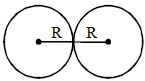
Two masses (spheres) as in fig are placed. If mass density of each sphere is $'\rho '$. Find force between than
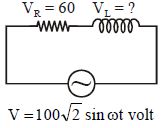
In given circuit, voltage across the inductor will be .....$V$
Two unlike charges of magnitude $q$ are separated by a distance $2d$. The potential at a point midway between them is
When a $_4B{e^9}$ atom is bombarded with $\alpha - $ particles, one of the product of nuclear transmutation is $_6{C^{12}}$. The other is
In double slit experiment, the wavelength $\lambda $ of the light source $400\ nm$ , the slit seperation $d$ is $20\ \mu m$ and the individual slit width a is $4\ \mu m$ . Consider the interference of the light from the two slits and also the diffraction of light through each slit. Find number bright interference fringes are within the central peak of diffraction envelope
Ratio of nuclear radii of ${ }^{135} Cs$ to ${ }^{40} Ca$ is
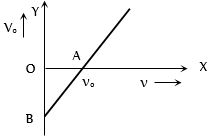
In an experiment on photoelectric effect the frequency $f$ of the incident light is plotted against the stopping potential ${V_0}$. The work function of the photoelectric surface is given by ($e$ is electronic charge)
The capacity of a parallel plate condenser depends on
Resistance of tungsten wire at $150\,^oC$ is $133\,\Omega $. Its resistance temperature coefficient is $0.0045\,^oC$. The resistance of this wire at $500\,^oC$ will be .............. $\Omega$