Question
If the potential difference used to accelerate electrons is tripled, by what factor does de Broglie wavelength of electrons beam change?

Answer

de Broglie wavelength of electrons accelerated through a potential difference of V volts is $\lambda=\frac{\text{h}}{\sqrt{2\text{meV}}}$
When accelerating voltage V is tripled, the de Broglie wavelength becomes $\frac{1}{\sqrt{3}}$ times.

Need a full question paper?

Generate a complete, print-ready paper with questions like this in minutes — across 16+ boards, with answer keys.
Start Generating Free

Similar questions

1019 electrons are placed on an uncharged body. Calculate the charge produced on the body.
Current in a circuit falls from $5.0A$ to $0.0A$ in $0.1s.$ If an average emf of $200V$ induced, give an estimate of the self$-$inductance of the circuit.
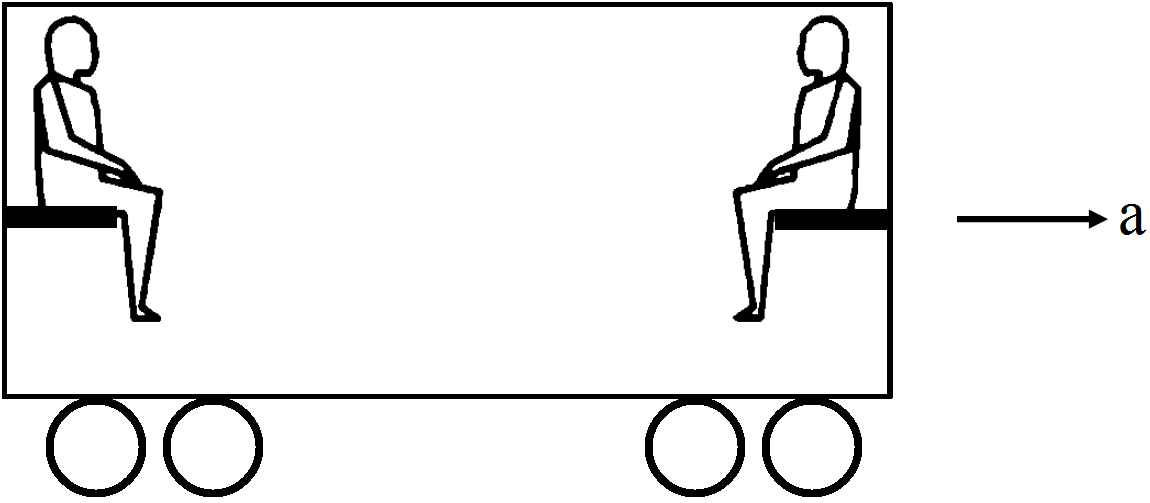
Which of the two persons shown in figure is more likely to fall down? Which external force is responsible for his falling down?
100%
A vertical rod is hit at one end. What kind of wave propagates in the rod if:
  1. The hit is made vertically.
  2. The hit is made horizontally?
In Young's double-slit experiment using monochromatic light of wavelength 2, the intensity of light at a point on the screen where path difference is λ, is K units. What is the intensity of light at a point where path difference is λ/3?
The masses of $^{11}C$ and $^{11}B$ are respectively $11.0114u$ and $11.0093u.$ Find the maximum energy a positron can have in the $\beta^+$-decay of $^{11}C$ to $^{11}B.$
What is the frequency range of T.V. transmission? Which method of propagation is used for it ?
Using Ampere’s circuital law, obtain an expression for the magnetic field along the axis of a current carrying solenoid of length l and having N number of turns.
An $ \alpha $-particle and a proton are accelerated through the same potential difference. Find the ratio of their de-Broglie wavelength.
The minimum deviations suffered by red, yellow and violet beams passing through an equilateral transparent prism are 38.4°, 38.7° and 39.2° respectively. Calculate the dispersive power of the medium.