MCQ
If there were no atmosphere, the average temperature on earth surface would be :
- ✓lower
- Bhigher
- Csame
- D$0^\circ C$
Generate a complete, print-ready paper with questions like this in minutes — across 16+ boards, with answer keys.
$(A)$ The compound is optically active
$(B)$ The compound possesses centre of symmetry
$(C)$ The compound possesses plane of symmetry
$(D)$ The compound possesses axis of symmetry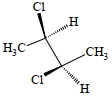
${C_({graphite)}} + {O_2} \to C{O_2};\,\Delta H = - 393.4\,kJ/mole$
${C_({graphite})} \to {C_{{\rm({diamond})}}};\,\Delta H = $
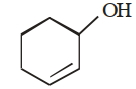
Compound $(X)$ $\xrightarrow[{Pt}]{{5{H_2}}}$
Compound $(X)$ $\xrightarrow{{AgN{O_3}}}$ Precipitate
Compound $(X)$ $\xrightarrow[{M{e_2}S}]{{{O_3}}}$ $\begin{array}{*{20}{c}}
{\,\,\,\,\,\,\,O\,\,\,\,\,\,\,\,\,\,\,\,\,\,\,\,\,\,\,\,\,\,\,\,\,\,\,\,\,\,\,\,\,\,\,\,\,\,\,\,\,\,\,O\,\,\,\,\,\,\,\,\,\,O\,\,\,\,} \\
{\,\,\,\,\,\,\,\,\,\,\,\,\,\,\,\,\,\,\,||\,\,\,\,\,\,\,\,\,\,\,\,\,\,\,\,\,\,\,\,\,\,\,\,\,\,\,\,\,\,\,\,\,\,\,\,\,\,\,\,\,\,\,\,\,||\,\,\,\,\,\,\,\,\,\,||\,\,\,\,\,\,\,\,\,\,\,\,\,\,\,\,\,\,} \\
{H - C - C{H_2} - C{H_2} - C - C - H}
\end{array}$ $\begin{array}{*{20}{c}}
{\,\,O\,\,\,\,\,\,O\,\,\,\,\,\,\,\,\,\,} \\
{||\,\,\,\,\,\,\,\,||\,\,\,\,\,\,\,\,\,} \\
{H - C - C - O - H}
\end{array}$ $ + \begin{array}{*{20}{c}}
{O\,\,\,\,\,\,\,} \\
{||\,\,\,\,\,\,\,\,} \\
{H - C - O - H}
\end{array}$ $ + \begin{array}{*{20}{c}}
{CHO} \\
{|\,\,\,\,\,\,\,\,} \\
{CHO}
\end{array}$