MCQ
In a harmonium the intermediate notes between a note and its octave form
  • A
    An arithmetic progression
  • A geometric progression
  • C
    A harmonic progression
  • D
    An exponential progression

Answer

Correct option: B.
A geometric progression
b
In a harmonium, the intermediate notes between a note and its octave form a geometric progression

Need a full question paper?

Generate a complete, print-ready paper with questions like this in minutes — across 16+ boards, with answer keys.
Start Generating Free

Similar questions

The quantum hall resistance $R_H$ is a fundamental constant with dimensions of resistance. If $h$ is Planck's constant and $e$ is the electron charge, then the dimension of $R_H$ is the same as
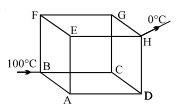
Twelve conducting rods form the riders of a uniform cube of side $'l'.$ If in steady state, $B$ and $H$ ends of the rod are at $100^o C$ and $0^o C$. Find the temperature of the junction $'A'$  ....... $^oC$ 
The specific heat of a gas
The angle between vectors $(\vec{M} \times \vec{N})$ and $(\bar{N} \times \vec{M})$ is ................
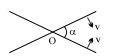
Find the speed of the intersection point $O$ of the two wires if the wires starts moving perpendicular to itself with speed $v$ as shown in figure.
If $P$ represents radiation pressure, $c$ represents speed of light and $Q$ represents radiation energy striking a unit area per second, then non-zero integers $x,\,y$ and $z$ such that ${P^x}{Q^y}{c^z}$ is dimensionless, are
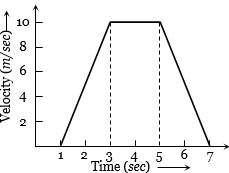
For the velocity-time graph shown in figure below the distance covered by the body in last two seconds of its motion is what fraction of the total distance covered by it in all the seven seconds
A metal ball immersed in alcohol weighs ${W_1}$ at $0°C$ and ${W_2}$ at $59°C.$ The coefficient of cubical expansion of the metal is less than that of alcohol. Assuming that the density of metal is large compared to that of alcohol, it can be shown that
The heart of a man pumps $5$ litres of blood through the arteries per minute at a pressure of $150 \,mm$ of mercury. If the density of mercury be $13.6 \times 10^3\, kg/m^3$ and $g=10\,m/s^2$ then the power (in watt) is 
If Surface tension $(S)$, Moment of Inertia $(I)$ and Planck’s constant $(h)$, were to be taken as the fundamental units, the dimensional formula for linear momentum would be