Question
In a process on a system, the initial pressure and volume are equal to the final pressure and volume.
  1. The initial temperature must be equal to the final temperature.
  2. The initial internal energy must be equal to the final internal energy.
  3. The net heat given to the system in the process must be zero.
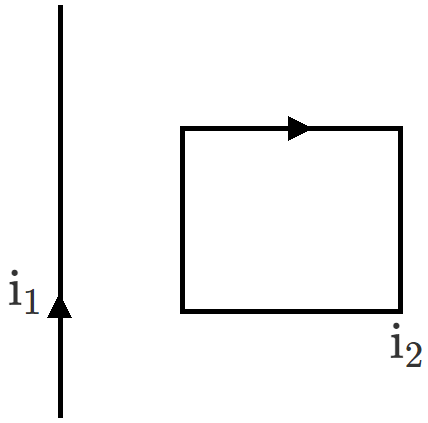
  4. The net work done by the system in the process must be zero.

Answer

  1. Let initial pressure, volume and temperature be $P_1, V_1$ and $T_1$ and final pressure, volume and temperature be $P_2, V_2$ and $T_2$. Then,
$\frac{\text{P}_1\text{V}_1}{\text{T}_1}=\frac{\text{P}_2\text{V}_2}{\text{T}_2}$
$\Rightarrow\text{T}_1=\text{T}_2\ \big[\text{P}_1=\text{P}_2$ and $\text{V}_1=\text{V}_2\big]$
  1. Internal energy is given by $\Delta\text{U}=\text{nC}_\text{V}\Delta\text{T}$
Since $\Delta\text{T}=0,\Delta\text{U}=0,$
  1. This may not be true because the system may be isothermal and in between, heat may have been given to the system. Also, the system may have done mechanical expansion work and returned back to its original state.
  2. Not necessary because an isothermal system may have done work absorbing heat from outside and coming back to the same state losing heat.

Need a full question paper?

Generate a complete, print-ready paper with questions like this in minutes — across 16+ boards, with answer keys.

Start Generating Free