MCQ
In isothermic process, which statement is wrong
  • A
    Temperature is constant
  • B
    Internal energy is constant
  • No exchange of energy
  • D
    $(a)$ and $(b)$ are correct

Answer

Correct option: C.
No exchange of energy
c
(c)In isothermal process, exchange of energy takes place between system and surrounding to maintain the system temperature constant.

Need a full question paper?

Generate a complete, print-ready paper with questions like this in minutes — across 16+ boards, with answer keys.
Start Generating Free

Similar questions

In Young’s expt., the distance between two slits is $\frac {d}{3}$ and the distance between the screen and the slits is $3\,D$. The number of fringes in $\frac {1}{3}\,m$ on the screen, formed by monochromatic light of wavelength $3\,\lambda $, will be
With the usual notations, the following equation ${S_t} = u + \frac{1}{2}a(2t - 1)$ is
An air bubble in a glass slab with refractive index $1.5$ (near normal incidence) is $5\,\, cm$ deep when viewed from one surface and $3\,\, cm$ deep when viewed from the opposite face. The thickness (in $cm$) of the slab is
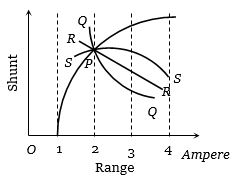
The ammeter has range $1\, ampere$ without shunt. the range can be varied by using different shunt resistances. The graph between shunt resistance and range will have the nature
A charged particle is released from rest in a region of uniform electric and magnetic fields which are parallel to each other. The particle will move on a
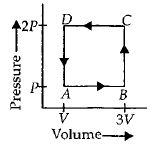
A thermodynamic system is taken through the cycle $ABCD$ as shown in figure. Heat rejected by the gas during the cycle is 
$Assertion :$ Smaller drops of liquid resist deforming forces better than the larger drops
$Reason :$ Excess pressure inside a drop is directly proportional to its surface area.
The energy gap of silicon is $1.14 \ eV$. The maximum wavelength at which silicon will begin absorbing energy is.....$Å$
Two particles of masses $m_1, m_2$ move with initial velocities $u_1$ and $u_2$ On collision, one of the particles get excited to higher level, after absorbing energy $\varepsilon $. If final velocities of particles be $v_1$ and $v_2$ then we must have
A $U-$tube contains water and methylated spirit separated by mercury. The mercury columns in the two arms are in level with $10.0\; cm$ of water in one arm and $12.5\; cm $ of spirit in the other. if $15.0\; cm$ of water and spirit each are further poured into the respective arms of the tube, what is the difference in the levels  (in $cm$) of mercury in the two arms?

(the specific gravity of spirit is $0.8.)$