MCQ
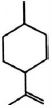
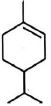
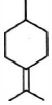
In polyenes that contain differently substituted $(C=C)$ double bonds, it is  possible to hydrogenate chemeselectively one $(C=C)$ double bond. Product is 
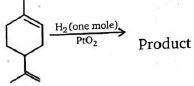
  • A


  • C

  • D

Answer

Correct option: B.

b
$(b)$ less stable alkene (less $\alpha $ -hydrogen) will undergo reduction first

Need a full question paper?

Generate a complete, print-ready paper with questions like this in minutes — across 16+ boards, with answer keys.

Start Generating Free

Similar questions

In Ostwald's process for the manufacture of nitric acid, the first step involves the oxidation of ammonia gas by oxygen gas to give nitric oxide gas and steam. What is the maximum weight of nitric oxide that can be obtained starting only with 10.00 g of ammonia and 20.00 g of oxygen?
$\Delta_{\text {vap }} \mathrm{H}^{\ominus}$ for water is $+40.49 \mathrm{~kJ} \mathrm{~mol}^{-1}$ at 1 bar and $100^{\circ} \mathrm{C}$. Change in internal energy for this vapourisation under same condition is. . . . . . . . . . $\mathrm{kJ}$ $\mathrm{mol}^{-1}$. (Integer answer) (Given $\mathrm{R}=8.3 \mathrm{JK}^{-1} \mathrm{~mol}^{-1}$ )
Arrange in decreasing order, the energy of $2s-$ orbital in following atoms $H, Li, Na, K$
Match the colum
Column $-I$ Column $-II$
(Atomic number) (Position of element
in Periodic table)
$(A)$   $Z = 37$ $(P)$   $p-$ block
$(B)$   $Z = 42$ $(Q)$   $f-$ block
$(C)$   $Z = 34$ $(R)$   $d-$ block
$(D)$   $Z = 92$ $(S)$   $s-$ block
One litre hard water contains $12.00$ $mg$ $M{g^{2 + }}$ milli equivalent of washing soda required to remove its hardness is
$MY$ and $NY_3,$ two nearly insoluble salts, have the same $K_{sp} $ values of $6.2 \times 10^{-13}$ at roomtemperature. Which statement would be true in regard to $MY$ and $NY_3$ ?
Which one of the following arrangements of molecules is correct on the basis of their dipole moments ?
For the equilibrium reaction, H2​O(l) ⇌ H2​O(g), what happens, if pressure is applied:
In which of the following reactions, increase in the volume at constant temperature don’t affect the number of moles at equilibrium.
Which of the following shows hydrogen bonding