MCQ
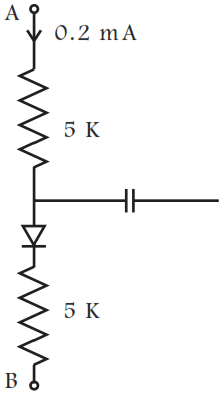
In the circuit shown in Fig., if the diode forward voltage drop is 0.3V, the voltage difference between A and B is:
- A1.3V.
- B2.3V.
- C0.
- D0.5V.
Solution:
If V is the potential difference between A and B, then according to the questions and using Kirchhoff’s law, we have
V - 0.3 = [(5+ 5)103] × (0.2 × 1(10-3))
⇒ V - 0.3 = [(5 + 5)103] × (0.2 × 10-3)
⇒ V - 0.3 = 10 × 103 × 0.2 × 10-3 = 2
⇒ V = 2 + 0.3 = 2.3V
Generate a complete, print-ready paper with questions like this in minutes — across 16+ boards, with answer keys.
What is immaterial for an electric fuse wire
|
(a) Its specific resistance |
(b) Its radius |
|
(c) Its length |
(d) Current flowing through it |
The half life of  is 8 days. Given a sample of at time t = 0, we can assert that
|
(a) No nucleus will decay before t = 4 days |
|
(b) No nucleus will decay before t = 8 days |
|
(c) All nuclei will decay before t = 16 days |
|
(d) A given nucleus may decay at any time after t = 0 |
A photo cell is receiving light from a source placed at a distance of 1 m. If the same source is to be placed at a distance of 2 m, then the ejected electron
|
(a) Moves with one-fourth energy as that of the initial energy |
|
(b) Moves with one-fourth of momentum as that of the initial momentum |
|
(c) Will be half in number |
|
(d) Will be one-fourth in number |
A radioactive substance emits
|
(a) Electromagnetic radiation |
(b) Electrons revolving around the nucleus |
|
(c) Charged particles |
(d) a,c |
If the distance between parallel plates of a capacitor is halved and dielectric constant is doubled then the capacitance
|
(a) Decreases two times |
(b) Increases two times |
|
(c) Increases four times |
(d) Remain the same |
The mutual characteristic of triode is
(a)
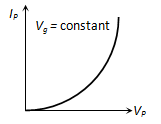
|
(a)
|
(c)
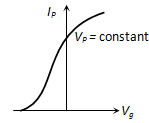
|
(d)
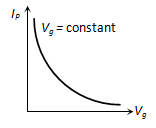
|