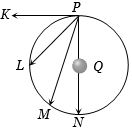
In the figure the charge $Q$ is at the centre of the circle. Work done is maximum when another charge is taken from point $P$ to
Easy
Download our app for free and get started
(a) Work done in moving a charge from $P$ to $L$, $P$ to $M$ and $P$ to $N$ is zero.

Download our appand get started for free
Experience the future of education. Simply download our apps or reach out to us for more information. Let's shape the future of learning together!No signup needed.*
Similar Questions
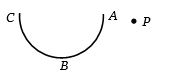
- 1In the following diagram the work done in moving a point charge from point $P$ to point $A$, $B$ and $C$ is respectively as $W_A$, $W_B$ and $W_C$ , thenView Solution
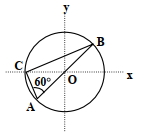
- 2Consider a system of three charges $\frac{\mathrm{q}}{3}, \frac{\mathrm{q}}{3}$ and $-\frac{2 \mathrm{q}}{3}$ placed at points $\mathrm{A}, \mathrm{B}$ and $\mathrm{C}$, respectively, as shown in the figure,View Solution
Take $\mathrm{O}$ to be the centre of the circle of radius $\mathrm{R}$ and angle $\mathrm{CAB}=60^{\circ}$
Figure:$Image$
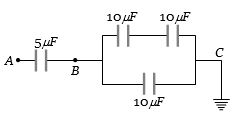
- 3In the given circuit if point $C$ is connected to the earth and a potential of $ + \,2000\,V$ is given to the point $A$, the potential at $B$ is.....$V$View Solution
- 4View SolutionA sheet of aluminium foil of negligible thickness is introduced between the plates of a capacitor. The capacitance of the capacitor
- 5Two capacitors of $1\,\mu F$ and $2\,\mu F$ are connected in series, the resultant capacitance will be.....$\mu \,F$View Solution
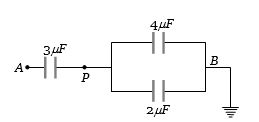
- 6In the figure a potential of $+$ $1200\, V$ is given to point $A$ and point $B$ is earthed, what is the potential at the point $P$....$V$View Solution
- 7$S_1$ and $S_2$ are two equipotential surfaces on which the potentials are not equal. Which of the statement is incorrect ?View Solution
- 8View SolutionA long, hollow conducting cylinder is kept coaxially inside another long, hollow conducting cylinder of larger radius. Both the cylinders are initially electrically neutral.
- 9In a uniform electric field, a cube of side $1\ cm$ is placed. The total energy stored in the cube is $8.85\ \mu J.$ The electric field is parallel to four of the faces of the cube. The electric flux through any one of the remaining two faces is.View Solution
- 10An electron enters between two horizontal plates separated by $2\,mm$ and having a potential difference of $1000\,V$. The force on electron isView Solution