MCQ
In the lowest energy level of hydrogen atom, the electron has the angular momentum
  • A
    $\pi/h$
  • B
    $h/\pi$
  • $h/2\pi$
  • D
    $2\pi/h$

Answer

Correct option: C.
$h/2\pi$
$h/2\pi$

Need a full question paper?

Generate a complete, print-ready paper with questions like this in minutes — across 16+ boards, with answer keys.

Start Generating Free

Similar questions

A potentiometer wire is 100cm long and a constant potential difference is maintained across it. Two cells are connected in series first to support one another and then in opposite direction. The balance points are obtained at 50cm and 10cm from the positive end of the wire in the two cases. The ratio of emf's is:
The area of the coil must be$.......$
Equal charges are given to two spheres of different radii. The potential will (a) Be more on the smaller sphere(b) Be more on the bigger sphere(c) Be equal on both the spheres(d) Depend on the nature of the materials of the spheres


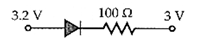
The current in the circuit shown in the figure considering ideal diode is
Image
The equation of a light wave is written as $\text{y}=\text{A}\ \sin(\kappa\text{x}-\omega\text{t}).$ Here, y represents:
  1. Displacement of either particles.
  2. Pressure in the medium.
  3. Density of the medium.
  4. Electric field.
A very thin film in reflected white light appears:
In a potentiometer circuit there is a cell of $\text{e.m.f.}\ 2$ volt, a resistance of $5$ ohm and a wire of uniform thickness of length $1000 \ cm$ and resistance $15$ ohm. The potential gradient in the wire is
Excitation energy of a hydrogen like ion in its excitation state is 40.8 eV. Energy needed to remove the electron from the ion in ground state is:
Mark the correct statements:
  1. The nuclear force between two protons is always greater than the electromagnetic force between them.
  2. The electromagnetic force between two protons is always greater than the gravitational force between them.
  3. The gravitational force between two protons may be greater than the nuclear force between them.
  4. Electromagnetic force between two protons may be greater than the nuclear force acting between them.
Let $I_A $and $I_B$ be moments of inertia of a body about two axes $A$ and $B$ respectively. The axis $A$ passes through the centre of mass of the body but $B$ does not: