Question
In the valance band, the current is due to:

Answer

  1. The presence of holes
Explanation:
In the valence band, current is only due to holes. In the conduction band, current is due to electrons.

Need a full question paper?

Generate a complete, print-ready paper with questions like this in minutes — across 16+ boards, with answer keys.
Start Generating Free

Similar questions

Consider the situation of the previous problem. The force on the central charge due to the shell is:
  1. Towards left.
  2. Towards right.
  3. Upward.
  4. Zero.
Electrical energy is transmitted over large distances at high alternating voltages. Which of the following statements is $($are$)$ correct?
A 4 μF  condenser is connected in parallel to another condenser of 8 μF. Both the condensers are then connected in series with a 12 μF  condenser and charged to 20 volts. The charge on the plate of 4 μF condenser is(a) 3.3 μC(b) 40 μC(c) 80 μC(d) 240 μC
       
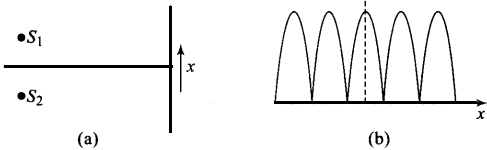
Two source $S_1$ and $S_2$ of intensity $I_1$ and $I_2$ are placed in front of a screen $[$Fig. (a)$]$. The patteren of intensity distribution seen in the central portion is given by Fig. $(b)$.

In this case which of the following statements are true.
An ammeter, suspected to give inaccurate reading, is connected in series with a silver voltameter. The ammeter indicates $0.54 A .$ A steady current passed for one hour deposits $2.0124 \ gm$ of silver. If the $\text{E.C.E.}$ of silver is $1.118 \times 10^{-3} \mathrm{gmC}^{-1},$ then the error in ammeter reading is
Which of the following sets cannot enter into the list of fundamental quantities in any system of units?
  1. Length, mass and velocity.
  2. Length, time and velocity.
  3. Mass, time and velocity.
  4. Length, time and mass.
A boy stands straight infront of a mirror at a distance of $30 \ cm$  away from it. He sees his erect image whose height is  $\frac{1}{5} {th}$ of his real height. The mirror he is using is
'Mirage' is a phenomenon due to(a) Reflection of light(b) Refraction of light(c) Total internal reflection of light(d) Diffraction of light
   
   
Two rails of a railway track insulated from each other and the ground are connected to a milli voltmeter. What is the reading of voltmeter, when a train travels with a speed of $180 \ km/hr$ along the track. Given that the vertical component of earth's magnetic field is $0.2 \times 10^{-4}$ weber $/ m ^2$ and the rails are separated by $1$ metre
The focal length of a concave mirror is 10 cm. On placing an object at 10 cm in front of the mirror, its image will be formed: