MCQ
In the valance band, the current is due to:
  • A
    The presence of electrons
  • B
    The presence of holes
  • C
    The presence of both electrons and holes
  • D
    None of the above

Answer

  1. The presence of holes

Explanation:

In the valence band, current is only due to holes. In the conduction band, current is due to electrons.

Need a full question paper?

Generate a complete, print-ready paper with questions like this in minutes — across 16+ boards, with answer keys.

Start Generating Free

Similar questions

Two resistances R and 2R are connected in parallel in an electric circuit. The thermal energy developed in R and 2R are in the ratio:
  1. 1 : 2
  2. 2 : 1
  3. 1 : 4
  4. 4 : 1
An electromagnetic wave going through vacuum is described by $\text{E}=\text{E}_0\sin(\text{kx}-\omega\text{t}),\text{ B}=\text{B}_0\sin(\text{kx}-\omega\text{t})$ Then:

  1. $\text{E}_0\text{k}=\text{B}_0\omega$

  2. $\text{E}_0\text{B}_0=\omega\text{k}$

  3. $\text{E}_0\omega=\text{B}_0\text{k}$

  4. None of these.

The de-Broglie wavelength of a tennis ball of mass 66 g moving with the velocity of 10 metre per second approximately:
The mobility of free electrons is greater than that of free holes because:
A source of sound moves towards an observer.
  1. The frequency of the source is increased.
  2. The velocity of sound in the medium is increased.
  3. The wavelength of sound in the medium towards the observer is decreased.
  4. The amplitude of vibration of the particles is increased.
Give electronic configuration of silicon.
The graph between the de Broglie wavelength and the momentum of a photon is a:

Two condensers of capacities 1μF  and 2 μF  are connected in series and the system is charged to 120 volts. Then the P.D. on 1 μF  capacitor (in volts) will be

(a) 40  

(b) 60

(c) 80 

(d) 120

The effective resistance between points P and Q of the electrical circuit shown in the figure is

(a) 2Rr/(R + r)

(b) 8R(R + r)/(3R + r)

(c) 2r + 4R

(d) 5R/2 + 2r

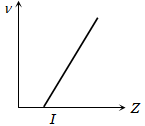
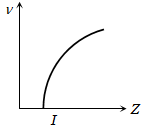
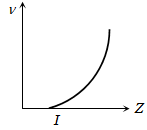
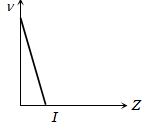
The graph that correctly represents the relation of frequency n of a particular characteristic X-ray with the atomic number Z of the material is

(a)

(b)

(c)

(d)