MCQ
Insulation breakdown may occur at _______?
- AHigh temperature
- BLow temperature
- CAt any temperature
- DDepends on pressure
Explanation:
At high temperatures, electrons of insulators get excited and then the electrons can overcome the large energy band gaps between valence and conduction bands. So a large number of electrons travel to the conduction band and they act as conductor i.e. insulation breakdown occurs.
Generate a complete, print-ready paper with questions like this in minutes — across 16+ boards, with answer keys.
In order to quadruple the resistance of a uniform wire, a part of its length was uniformly stretched till the final length of the entire wire was 1.5 times the original length, the part of the wire was fraction equal to
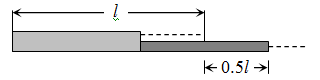
|
(a) 1 / 8 |
(b) 1 / 6 |
(c) 1 / 10 |
(d) 1 / 4 |
A circular coil of diameter 7cm has 24 turns of wire carrying current of 0.75A. The magnetic moment of the coil is
|
(a) 6.9 |
(b) 2.3 |
|
(c) |
(d) |
Three observers A, B and C measure the speed of light coming from a source to be  and
and  . The observer A moves towards the source, the observer C moves away from the source with the same speed. The observer B stays stationary. the surrounding space is vacuum every where. Then
(a) 
|
(b) 
|
(c) 
|
(d) 
|
1A current flows through an infinitely long straight wire. The magnetic field produced at a point 1 metres away from it is
|
(a) 2 |
(b) |
(c) 2 |
(d) 2π |
Time period of a freely suspended magnet does not depend upon
| (a) Length of the magnet |
| (b) Pole strength of the magnet |
| (c) Horizontal component of earth's magnetic field |
| (d) Length of the suspension thread |
The radius of hydrogen atom in its ground state is 5.3  . After collision with an electron it is found to have a radius of 21.2
  . What is the principal quantum number n of the final state of the atom
|
(a) n = 4 |
(b) n = 2 |
(c) n = 16 |
(d) n = 3 |
An AIR station is broadcasting the waves of wavelength 300 metres. If the radiating power of the transmitter is 10 kW, then the number of photons radiated per second is
|
(a) 1.5 |
(b) 1.5 |
(c) 1.5 |
(d) 1.5 |
Material A has critical angle  and material B has critical angle
  . Then which of the following is true
(i) Light can be totally internally reflected when it passes from B to A
(ii) Light can be totally internally reflected when it passes from A to B
(iii) Critical angle for total internal reflection is 
(iv) Critical angle between A and B is 
|
(a) (i) and (iii) |
(b) (i) and (iv) |
(c) (ii) and (iii) |
(d) (ii) and (iv) |




