MCQ
${K_\alpha }$characteristic $X- $ ray refers to the transition
  • $n = 2$ to $n = 1$
  • B
    $n = 3$ to $n = 2$
  • C
    $n = 3$ to $n = 1$
  • D
    $n = 4$ to $n = 2$

Answer

Correct option: A.
$n = 2$ to $n = 1$
a
$K _{ a }$ characteristic X-ray refers to the transition from $n =2$ to $n =1$.

Need a full question paper?

Generate a complete, print-ready paper with questions like this in minutes — across 16+ boards, with answer keys.

Start Generating Free

Similar questions

In a triclinic crystal system
In a double slit experiment the angular width of a fringe is found to be $0.2^o $on a screen placed $1\, m$ away. The wavelength of light used is $600\, nm$. What will be the angular width of the fringe if the entire experiment apparatus is immersed in water? Take refractive index of water to be $4/3$.......$^o$
The work function of a substance is $4.0 \,eV$. The longest wavelength of light that can cause photoelectron emission from this substance is approximately ......... $nm$
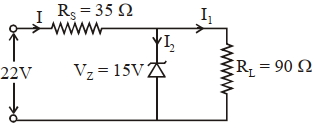
The value of power dissipated across the zener diode $\left( V _{ z }=15 V \right)$ connected in the circuit as shown in the figure is $x \times 10^{-1}$ watt. 

The value of $x ,$ to the nearest integer, is ..............
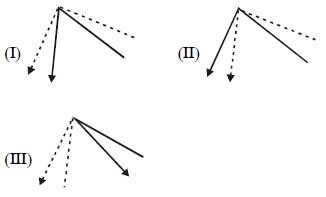
Each of these diagrams is supposed to show two different rays being reflected from the same point on the same plane mirror. Which one of the following is correct ?
For protecting a sensitive equipment from external magnetic field, it should be:
Which among the following is denoted by $\delta$?
A photoelectric material having work-function $\phi_0$ is illuminated with light of wavelength $\lambda\left(\lambda<\frac{\mathrm{hc}}{\phi_0}\right)$. The fastest photoelectron has a de Broglie wavelength $\lambda_d$. A change in wavelength of the incident light by $\Delta \lambda$ results in change $\Delta \lambda_{\mathrm{d}}$ in $\lambda_{\mathrm{d}}$. then the ratio $\Delta \lambda_{\mathrm{d}} / \Delta \lambda$ is proportional to
For a given triode μ = 20. The load resistance is 1.5 times the anode resistance. The maximum gain will be
A current of $0.1 A$ circulates around a coil of $100$ turns and having a radius equal to $5\ cm$. The magnetic field set up at the centre of the coil is $(m_0= 4π × 10^{-7}$ weber/amp-metre$)$