Question
Match the following
  Column I   Column II
a. Chlamydomonas i. Moss
b. Cycas ii. Pteridophyte
c. Selaginella iii. Algae
d. Sphagnum iv. Gymnosperm

Answer

  Column I   Column II
a. Chlamydomonas iii. Algae
b. Cycas iv. Gymnosperm
c. Selaginella ii. Pteridophyte
d. Sphagnum i. Moss

Need a full question paper?

Generate a complete, print-ready paper with questions like this in minutes — across 16+ boards, with answer keys.

Start Generating Free

Similar questions

Write any four differences between sympathetic and parasympathetic nervous system. Make a labelled diagram showing the nerve endings and synapses.
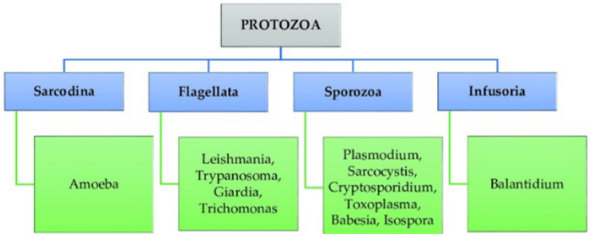
Describe briefly the four major groups of Protozoa.
Bryophyta (bryophytes) A division of plants which for some authors includes the mosses (Musci) and liverworts (Hepaticae), but is now often taken to include only the mosses; liverworts having been assigned divisional status as Hepatophyta. Bryophytes differ from algae in that the multicellular gametangium is surrounded by a protective jacket of sterile cells; gametangia of algae are usually unicellular and never have a protective jacket of sterile cells. Although bryophytes lack differentiated water-conducting vessels, and rely largely or entirely on water absorbed from rain falling on the plants, or from a moist atmosphere, some larger species may have simple water-conducting cells. They lack true roots, but possess root-like rhizoids which anchor them to a substrate and which can absorb water and minerals. The plants all show a heteromorphic alternation of generations, with a green vegetative gametophyte (the familiar moss or liverwort plant) and a sporophyte which typically takes the form of a (usually stalked) capsule and which is partially or wholly parasitic on the gametophyte. Most bryophytes are land plants and are found worldwide in a range of habitats. They are known from Devonian rocks, but there is no evidence to link them with either the green algae or the more advanced pteridophytes.

(1) A characteristic feature of bryophytes is:
(a) a dominant and parasitic sporophyte
(b) a dominant and spore-producing gametophyte
(c) a small sporophyte phase, which is dependent on the gametophyte
(d) sporophytes stay for a longer duration.

(2) Find the true statement about bryophytes:
(a) they have chloroplasts
(b) they have archegonia
(c) they are thalloid
(d) all of the above.

(3) Among the following which is not characteristics feature of bryophyte:
(a) Motile sperms
(b) Presence of archegonium
(c) Water essential for fertilization
(d) Independent sporophyte

(4) Bryophytes differ from pteridophytes in:
(a) Swimming antherozoids
(b) An independent gametophyte
(c) Archegonia
(d) Lack of vascular tissue

(5) In bryophytes, antherozoids are-
(a) Biflagellate
(b) Multiflagellate
(c) Sometimes biflagellate and sometimes multiflagellate.
(d) Biflagellate in a few species and multiflagellate in the rest.
Can you identify the correct sequence of taxonomical categories?
  1. Species → Order → Phylum → Kingdom
  2. Genus → Species → Order → Kingdom
  3. Species → Genus → Order → Phylum
Describe the structure of chloroplast graphically.
Polysaccharides or the macro molecules consisting of long chains of sugar. Only carbohydrates they are not sweet and are insoluble in water. The two ends of the polysaccharide chain are called reducing and non-reducing ends. Based upon their monomeric units these are homo polysaccharides or heteropolysaccharides. Depending upon their location polysaccharides play multiple functions in living world few examples of polysaccharides include Cellulose, chitin, inulin etc.

(1) All the listed polysaccharides are homopolymers except
(a) Starch (b) glycogen (c) Chitin (d) Cellulose

(2) Inulin is a polymer of
(a) glucose (b) fructose (c) glucose and sucrose (d) fructose and galactans

(3) Murein is a heteropolysaccharide like
(a) araban (b) xylan (c) hyaluronic acid (d) agar

(4) A polysaccharide found in the exoskeleton of crabs is
(a) Cellulose (b) pectin (c) murine (d) chitin

(5) The right end of the polysaccharide chain is called
(a) reducing end (b) non-reducing end (c) right end (d) none of these
For the classification of housefly, correctly match the terms given in Column-I with the terms given in Column-II.
Column-IColumn-II
1. Family(i) Arthropoda
2. Order(ii) Insecta
3. Class(iii) Muscidae
4. Phylum(iv) Diptera
Briefly describe any four valves found in the human heart. Make labelled diagram of a cross section of a human heart.