Question
Describe briefly the four major groups of Protozoa.

Answer

The four major groups of Protozoa are:
  1. Amoeboid protozoans: These organisms live in fresh water, sea water or moist soil. They move and capture their prey by putting out pseudopodia (false feet) as in Amoeba. Marine forms have silica shells on their surface. Some of them such as Entamoeba are parasites.
  1. Flagellated protozoans: The members of this group are either free-living or parasitic. They have flagella. The parasitic forms cause diaseases such as sleeping sickness. Example: Trypanosoma.
  1. Ciliated protozoa or ciliates: They are aquatic individuals that form a large group of protozoa. Their characteristic features are the presence of numerous cilia on the entire body surface and the presence of two types of nuclei. All the cilia beat in the same direction to move the water laden food inside a cavity called gullet. Example: Paramoecium, Vorticella,etc.
  1. Sporozoans: They include disease causing endoparasites and other pathogens. They are uninucleate and their body is covered by a pellicle. They do not possess cilia or flagella. They include the malaria causing parasite Plasmodium.

Need a full question paper?

Generate a complete, print-ready paper with questions like this in minutes — across 16+ boards, with answer keys.

Start Generating Free

Similar questions

Write four differences between lined and unlined sutures.
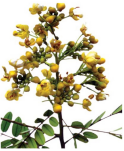
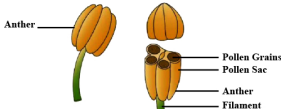
The androecium is composed of stamens. Each stamen that represents the male reproductive organ consists of a stalk or a filament and an anther. Each anther is usually bilobed and each lobe has two chambers, the pollen-sacs. Stamens of flowers may be united with other members such as petals or among themselves. The stamens may be epipetalous or epiphyllous. A flower is a modified shoot wherein the shoot apical meristem changes to floral meristem. Internodes do not elongate and the axis gets condensed. The apex produces different kinds of floral appendages laterally at successive nodes instead of leaves. The arrangement of flowers on the floral axis is termed an inflorescence.
Image

i. Observe the figure and mention what is androecium composed of. (1)
ii. The pollen grains are produced in pollen-sacs. What is a sterile stamen is called? (1)
iii. Is salvia and mustard show variation in the length of filaments within a flower? (2)

OR

Mention statement justifies that the given figure is racemose inflorescence. (2)
Image
Describe the structure of chloroplast graphically.
Bryophyta (bryophytes) A division of plants which for some authors includes the mosses (Musci) and liverworts (Hepaticae), but is now often taken to include only the mosses; liverworts having been assigned divisional status as Hepatophyta. Bryophytes differ from algae in that the multicellular gametangium is surrounded by a protective jacket of sterile cells; gametangia of algae are usually unicellular and never have a protective jacket of sterile cells. Although bryophytes lack differentiated water-conducting vessels, and rely largely or entirely on water absorbed from rain falling on the plants, or from a moist atmosphere, some larger species may have simple water-conducting cells. They lack true roots, but possess root-like rhizoids which anchor them to a substrate and which can absorb water and minerals. The plants all show a heteromorphic alternation of generations, with a green vegetative gametophyte (the familiar moss or liverwort plant) and a sporophyte which typically takes the form of a (usually stalked) capsule and which is partially or wholly parasitic on the gametophyte. Most bryophytes are land plants and are found worldwide in a range of habitats. They are known from Devonian rocks, but there is no evidence to link them with either the green algae or the more advanced pteridophytes.

(1) A characteristic feature of bryophytes is:
(a) a dominant and parasitic sporophyte
(b) a dominant and spore-producing gametophyte
(c) a small sporophyte phase, which is dependent on the gametophyte
(d) sporophytes stay for a longer duration.

(2) Find the true statement about bryophytes:
(a) they have chloroplasts
(b) they have archegonia
(c) they are thalloid
(d) all of the above.

(3) Among the following which is not characteristics feature of bryophyte:
(a) Motile sperms
(b) Presence of archegonium
(c) Water essential for fertilization
(d) Independent sporophyte

(4) Bryophytes differ from pteridophytes in:
(a) Swimming antherozoids
(b) An independent gametophyte
(c) Archegonia
(d) Lack of vascular tissue

(5) In bryophytes, antherozoids are-
(a) Biflagellate
(b) Multiflagellate
(c) Sometimes biflagellate and sometimes multiflagellate.
(d) Biflagellate in a few species and multiflagellate in the rest.
Write any four differences between Agnatha and Gnathostomata.
Give a brief account of viruses with respect to their structure and nature of genetic material. Also name four common viral diseases.
Write differences between Cell Wall and Plasma Membrane.
Differentiate between male frog and female frog.