Question
Materials which allow only larger currents to flow through them are:

Answer

  1. Semi-conductors
Explanation:
Semiconductors in their natural state are poor conductors because a current requires the flow of electrons, and semiconductors have their valence band filled, preventing the entry flow of new electrons.
Thus semi-conductors allows a large current to pass through them.

Need a full question paper?

Generate a complete, print-ready paper with questions like this in minutes — across 16+ boards, with answer keys.
Start Generating Free

Similar questions

The path of an electron in a uniform magnetic field may be:
A charged particle moving in a uniform magnetic field and losses 4% of its kinetic energy. The radius of curvature of its path changes by:
The capacity of a spherical conductor in $\text{MKS}$ system is
For a given material, the energy and wavelength of characteristic $X-$rays satisfy:
An electron is ejected from the surface of a long, thick straight conductor carrying a current, initially in a direction perpendicular to the conductor. The electron will:
The light rays having photons of energy 1.8 eV are falling on a metal surface having a work function 1.2 eV. What is the stopping potential to be applied to stop the emitting electrons(a) 3 eV(b) 1.2 eV(c) 0.6 eV  (d) 1.4 eV
       
The reason for shining of air bubble in water is(a) Diffraction of light(b) Dispersion of light(c) Scattering of light(d) Total internal reflection of light
   
   
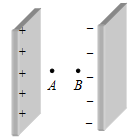
Two protons $A$ and $B$ are placed in space between plates of a parallel plate capacitor charged upto $V$ volts $($See fig.$)$ Forces on protons are $F_A$  and $F_B,$ then
One end of a metal rod is dipped in boiling water and the other is dipped in melting ice:
  1. All parts of the rod are in thermal equilibrium with each other.
  2. We can assign a temperature to the rod.
  3. We can assign a temperature to the rod after steady state is reached.
  4. The state of the rod does not change after steady state is reached.
The e.m.f. of a standard cell balances across 150 cm length of a wire of potentiometer. When a resistance of 2 Ω is connected as a shunt with the cell, the balance point is obtained at 100 cm. The internal resistance of the cell is(a) 0.1 Ω(b) 1 Ω(c) 2 Ω(d) 0.5 Ω