Question
Mention three important features of fossils which help in the study of evolution.

Answer

Fossils are remains or impressions of past organisms that are found in the rocks. Fossils of lower strata belong to early periods while those of upper strata are of later periods. Arranging the fossils stratumwise will indicate the occurrence of different forms of life at different times. It is found that the early fossils generally belong to simple organisms. Complexity and elaboration increased gradually with evolution. Evolution has never been linear or straight. A number of variants or branches appeared, some of which were more complex while others were less complex. Fossils indicate the path of evolution of different groups.They can indicate the phylogeny of some organisms, e.g, Horse, Elephant.
Some fossils have characteristics intermediate between two groups, e.g., toothed bird Archaeopteryx. They indicate how one group has evolved from another.

Need a full question paper?

Generate a complete, print-ready paper with questions like this in minutes — across 16+ boards, with answer keys.
Start Generating Free

Similar questions

  1. Suggest an explanation for the fact that the chemicals produced by endocrine glands arc usually in the form of small molecules.
  2. Write any three endocrine glands and chemically produced by them.
With a schematic diagram, explain the overall process of respiration in animals.
i. Draw two structural isomers of butane.
ii. Draw the structures of propanol and propanone.
iii. Name the third homologue of: a. alcohols
b. aldehydes
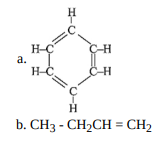
iv. Name the following:

Image
v. Show the covalent bond formation in nitrogen molecule.
The organisms A, B and C can obtain their food in three different ways. Organism A derives its food from the body of another living organism which is called its D, without killing it. The organism B takes in the solid food by the process of ingestion, digests a part of this food and throws out undigested food in the process called E. The organism C obtains its food from dead and decaying plants.
  1. What is the mode of nutrition of (i) organism A (ii) organism B, and (iii) organism C?
  2. What is the organism like D called?
  3. Name the process E.
  4. Give one example each of organisms like A, B and C.
  5. What is the general name of three modes of nutrition exhibited by organisms A, B and C?
  1. Draw a sectional view of the human heart and label on it, Aorta, Right Ventricle and Pulmonary Veins.
  2. State the functions of the following components of transport system:
  1. Blood.
  2. Lymph.
Draw a labelled diagram of the human digestive system. With the help of this diagram, describe the process of digestion of food in man (humans).
Mita observed that her grandmother was preparing a family tree. On enquiring why it was done, she explained that it was necessary to know our roots as we have inherited many traits from our ancestors. She also mentioned that now everybody wants to live in a nuclear family and joint families have disappeared. Read the given passage and answer the following questions:
i. Name the mammal with whom human shows maximum similarity in terms of evolutionary?
ii. Mita has hazel colored eyes which match with her mother's eyes. Suggest a reason for this similarity in eye color between Mita and her mother.
iii. What values do you think children would learn in a joint family?
Explain the significance of peristalsis.
Describe how washing soda is produced starting from sodium chloride (common salt). Write equations of all the reactions involved.
Analyse the following observation table showing variation of image distance (v) with object distance (u) in case of a convex lens and answer the questions that follow, without doing any calculations:
S. No.
Object distance u (cm)
Image distance v (cm)
1
-90
+18
2
-60
+20
3
-30
+30
4
-20
+60
5
-18
+90
6
-10
+100
  1. What is the focal length of the convex lens? Give reason in support of your answer.
  2. Write the serial number of that observation which is not correct. How did you arrive at this conclusion?
  3. Take an appropriate scale to draw ray diagram for the observation at S. No. 4 and find the approximate value of magnification.