Question
Mention three limitations of the CAS (Computerised Accounting System).

Answer

Despite many advantages offered by a computerised accounting system it is not free from limitations. Various limitations of a computerised accounting system are as follows:
  1. Staff Opposition: Introduction of computers lead to a lot of retrenchrnent as well as complication of activities which result in resistance of the staff.
  2. High Cost of Training: The sophisticated computerised accounting packages generally require specialised staff personnel, which leads to heavy amount of cost of training
  3. Adverse effects on health: The excessive use of computers may lead to various health problems like eye strains, back aches, muscular pains etc.
  4. Security Problems: Fraud and embezzlements are usually committed on a computerised accounting system through alteration of data. People responsible for tampering of data cannot be located in a computerised set up whereas the same can be easily done in case of manual records.
  5. System Problems: System failure due to hardware failures, attack by viruses, system down etc. are the usual problems faced by a computerised system.

Need a full question paper?

Generate a complete, print-ready paper with questions like this in minutes — across 16+ boards, with answer keys.
Start Generating Free

Similar questions

What do you understand by multi-valued attribute? How is it different from complex and composite attribute? Illustrate by giving suitable example.
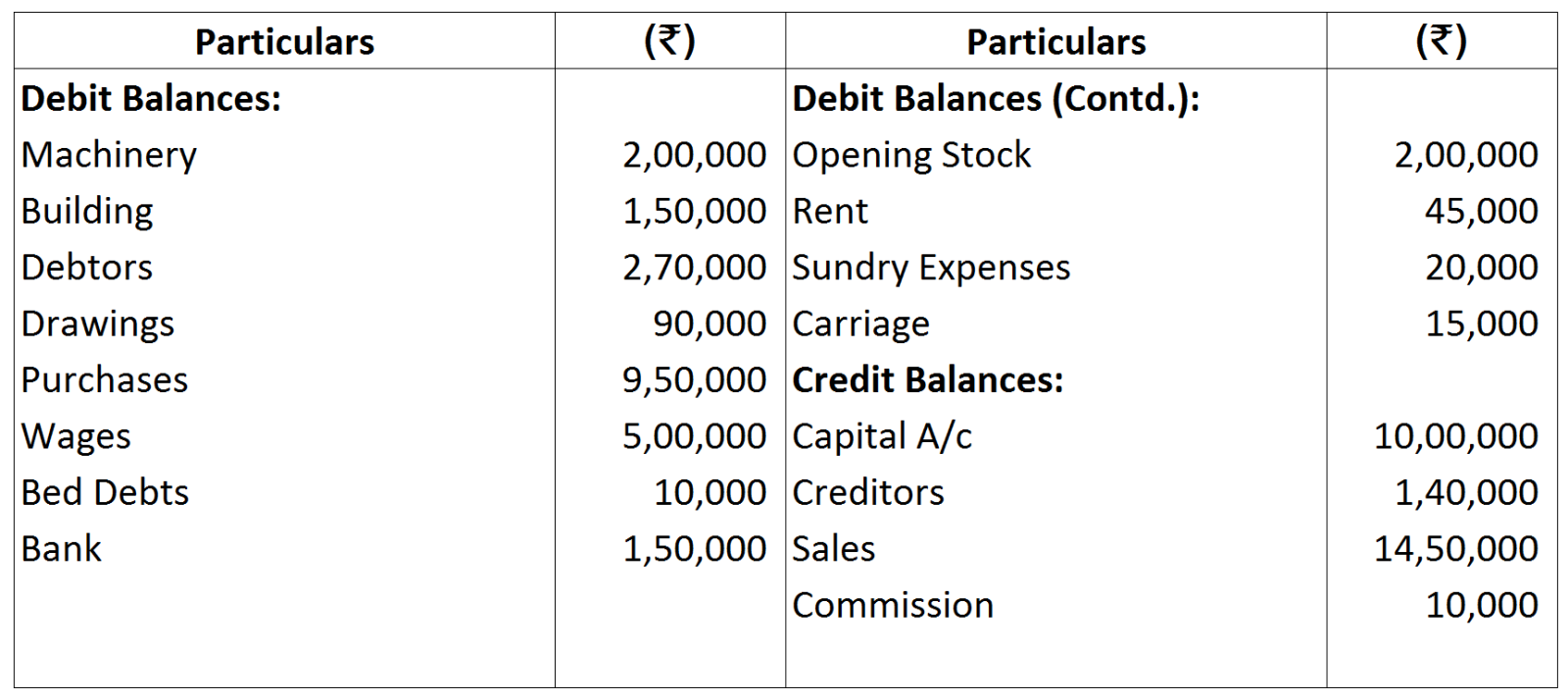
From the following balances, prepare Trading and Profit and Loss Account and the Balance Sheet:

Closing Stock was of ₹ 70,000 but its net realisable value was estimated at ₹ 60,000.
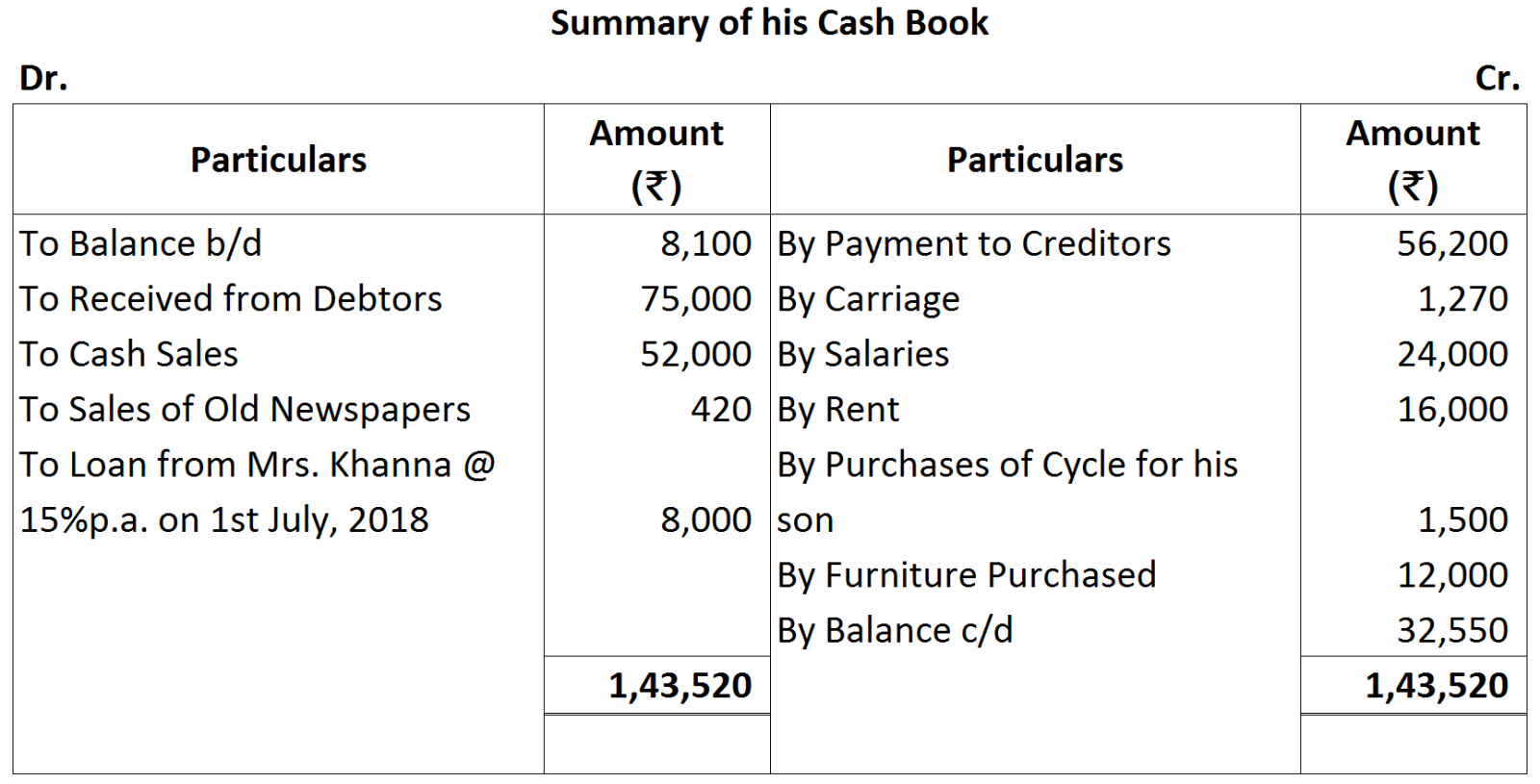
Mukesh Khanna has not kept proper books. However, he gives you the following information relating to the year $2018-19:$
The following balances existed on $1^{st}$ April, $2018 -$ Debtors $₹\ 24,200;$ Furniture $₹\ 18,000$; Stock $₹\ 30,000;$ Creditors $₹\ 18,000.$ The following balances existed on $31st$ March, $2019 -$ Debtors $₹\ 20,800;$ Furniture $₹\ 30,000;$ Stock $₹\ 35,950;$ Creditors $₹\ 34,600$. Adjustments:
  1. Depreciate Furniture by $10\%.$
  2. Provide upto-date interest on Mrs. Khanna's Loan.
Prepare Trading and Profit and Loss A/c for the year ending $31^{st}$ March, $2019$ and a Balance Sheet as at that date.
What is meant by a ‘statement of affairs’? How can the profit or loss of a trader be ascertained with the help of a statement of affairs?
Enter the following transactions in the Cash Book of Chandrika of Chandigarh:
2019  
Jan. 1 Chandrika commences business with cash 1,00,000
Jan. 3 She opened a Bank Current Account with her Savings Account cheque 19,00,000
Jan. 4 She receives cheque from Kirti & Co. on account 60,000
Jan. 7 She pays Kirti & Co.'s cheque into Bank  
Jan. 10 She advanced Ratan & Co. by cheque 35,000
Jan. 12 Tripathi & Co. pays into her Bank A/c 47,500
Jan. 15 She receives cheque from Warsi and allows him discount ₹ 3,500 45,000
Jan. 20 She receives cash ₹ 7,500 and cheque ₹ 10,000 from Kalyan against credit balance  
Jan. 25 She pays into Bank, including cheques received on 15th and 20th January 1,00,000
Jan. 27 She pays by cheque for purchases of ₹ 27,500 plus CGST and SGST @ 6% each  
Jan. 28 Cheque received from Warsi was dishonoured  
Jan. 30 She pays sundry expenses in cash 50
Jan. 30 She pays John & Co. in cash and is allowed discount ₹ 3,500 37,500
Jan. 31 She pays office rent ₹ 20,000 plus CGST and SGST @ 6% each by cheque  
Jan. 31 She draws a cheque for office use 40,000
Jan. 31 She pays staff salaries by cheque 30,000
Jan. 31 She pays cash for stationery ₹ 2,500 plus CGST and SGST @ 6% each  
Jan. 31 She purchases goods for cash ₹ 12,500 plus CGST and SGST @ 6% each  
Jan. 31 She pays Jagpal by cheque for commission ₹ 30,000 plus CGST and SGST @ 6% each  
Jan. 31 She receives cheque for commission of ₹ 50,000 plus CGST and SGST @ 6% each from Raghubir & Co. and pays the same into Bank  
Jan. 31 Cash sales ₹ 45,000 plus CGST and SGST @ 6% each  
Prepare Bank Reconciliation Statement as on 30th September, 2016 from the following particulars:
 
 
(i)
Bank Balance as per Pass Book.
10,000
(ii)
Cheque deposited into bank but no entry was passed in Cash Book.
500
(iii)
Cheque received and entered in Cash Book but not sent to bank.
1,200
(iv)
Insurance premium paid directly by the bank.
800
(v)
Bank charges entered twice in the Cash Book.
20
(vi)
Cheque received entered twice in Cash Book.
1,000
(vii)
Bill discounted dishonoured not recorded in the cash book.
5,000
On $1^{st}$ April $2014$, Mr, Ghosh started business with a capital of ₹ $5,00,000$. He kept his books on single entry basis. Soon after he purchased furniture for ₹ $40,000$ and purchased goods for ₹ $3,00,000$. During the year he borrowed ₹ $1,00,000$ from his brother and introduced further capital of his own amounting to ₹ $80,000$.
On $31^{st}$ March, $2015$, there were sundry debtors amounting to ₹ $2,20,000$ and creditors amounted to ₹ $1,40,000$. Stock was valued at ₹ $4,50,000$. Cash in hand ₹ $15,400$ and Bank Overdraft ₹ $40,000$.
During the year Mr. Ghosh withdrew ₹ $2,000$ per week for his family expenses. You are informed that included in sundry debtors is an irrecoverable amount of ₹ $5,000$. He also took goods from the business for his personal use amounting to ₹ $4,000$.
You are required to calculate his profit or loss during the year.
Write a detailed note on Transaction Processing System (TPS).
X bought a machine for ₹ 25,000 on which he spent ₹ 5,000 for carriage and freight. ₹ 1,000 for brokerage of the middleman, ₹ 3,500 for installation and ₹ 500 for an iron pad. The machine is depreciated @ 10% p.a. on Written Down Value basis. After three years, the machine was sold to Y for ₹ 30,500 and ₹ 500 was paid as commission to the broker through whom the sale was effected. Find out the profit and loss on sale of machine.
Following balances are taken from the books of Niranjan. Prepare Trading and Profit and Loss Account and Balance Sheet for the year ended 31st March, 2019:
(iamge)
Adjustments:
  1. Closing Stock ₹ 7,50,000.
  2. Depreciate Machinery by 10% and Furniture by 20%.
  3. Wages ₹ 50,000 and salaries ₹ 20,000 are outstanding.
  4. Write off ₹ 50,000 as further Bad Debts and create 5% Provision for Doubtful Debts. Also, create a reserve for discount on Debtors @ 2%.
  5. Investments were made on 1st July, 2018 and no interest has been received so far.