Question
Name the logic gate whose repetitive use can make digital circuits.

Answer

The repeated use of NAND or NOR gates alone can give all basic gates.

Need a full question paper?

Generate a complete, print-ready paper with questions like this in minutes — across 16+ boards, with answer keys.
Start Generating Free

Similar questions

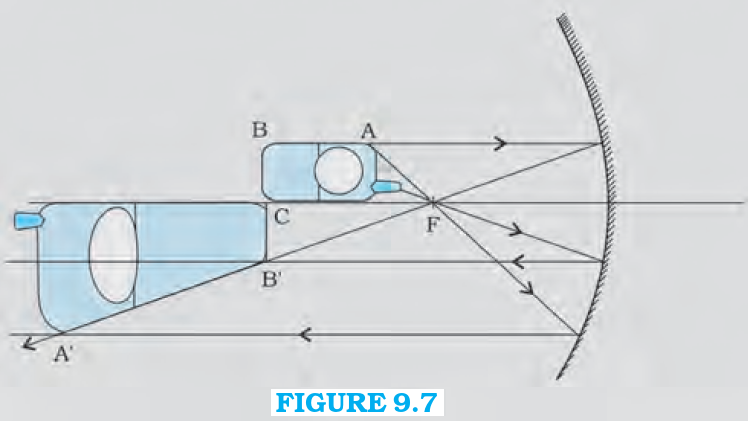
A mobile phone lies along the principal axis of a concave mirror, as shown in Fig. 9.7. Show by suitable diagram, the formation of its image. Explain why the magnification is not uniform. Will the distortion of image depend on the location of the phone with respect to the mirror?
Image
An object having a velocity $4.0\ m/s$ is accelerated at the rate of $1.2\ m/s^2$ for $5.0s.$ Find the distance travelled during the period of acceleration.
In a transistor:
  1. The emitter has the least concentration of impurity.
  2. The collector has the least concentration of impurity.
  3. The base has the least concentration of impurity.
  4. All the three regions have equal concentrations of impurity.
For a transistor amplifier, the voltage gain,
  1. Remains constant for all frequencies.
  2. Is high at high and low frequencies and constant in the middle frequency range.
  3. Is low at high and low frequencies and constant at mid frequencies.
  4. None of the above.
In a P-N junction, what is the potential in the P-part near the junction plane?
Define the term ‘dielectric constant’ of a medium in terms of capacitance of a capacitor.
Light is incident normally on a small plane surface. If the surface is rotated by an angle of $30^\circ$ about the incident light, does the illuminance of the surface increase, decrease or remain same? Does your answer change if the light did not fall normally on the surface?
What is the principal of conservation of charge ?
A room is illuminated by an extended source. The illuminance at a particular portion of a wall can be increased by:
  1. Moving the source.
  2. Rotating the source.
  3. Bringing some mirrors in proper positions.
  4. Changing the colour of the source.
For the telescope described in, what is the separation between the objective lens and the eyepiece?