MCQ
Newton postulated his corpuscular theory on the basis of
  • A
    Newton’s rings
  • B
    Colours of thin films
  • Rectilinear propagation of light
  • D
    Dispersion of white light

Answer

Correct option: C.
Rectilinear propagation of light
c
(c)Newton first law of motion states that every particle travels in a straight line with a constant velocity unless disturbed by an external force. So the corpuscles travels in straight lines.

Need a full question paper?

Generate a complete, print-ready paper with questions like this in minutes — across 16+ boards, with answer keys.
Start Generating Free

Similar questions

A particular hydrogen like ion emits radiation of frequency $2.92 \times 10^{15}\, {Hz}$ when it makes transition from ${n}=3$ to ${n}=1 .$ The frequency in ${Hz}$ of radiation emitted in transition from ${n}=2$ to ${n}=1$ will be : (in $\,\times 10^{15}$)
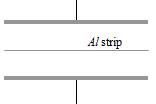
As shown in the figure, a very thin sheet of aluminium is placed in between the plates of the condenser. Then the capacity
The magnetic potential at a point on the axial line of a bar magnet of dipole moment $M$ is $V$. What is the magnetic potential due to a bar magnet of dipole moment $\frac{M}{4}$ at the same point
In an $ac$ circuit, the instantaneous voltage $e(t)$ and current $I(t)$ are given by $e(t)$ = $5[cos\ \omega t + \sqrt 3\ sin\ \omega t]\ volt$ $i (t)$ = $5[sin(\omega t +\frac {\pi}{4})]\ amp$ then
A long straight wire is placed along the axis of a circular ring of radius $R$. The mutual inductance of this system is.
Image
$12$ signals each band limited to $5\, kHz$ are to be transmitted by frequency-division multiplexer. If $AM-SSB$ modulation guard band of $1\, kHz$ is used then the bandwidth of multiplexed signal is.......$ kHz$
10 wires (same length, same area, same material) are connected in parallel and each has 1 Ω resistance, then the equivalent resistance will be
The curves (a), (b) (c) and (d) show the variation between the applied potential difference (V) and the photoelectric current (i), at two different intensities of light ($I_1>I_2$). In which figure is the correct variation shown 
Which of the field patterns given below is valid for electric field as well as for magnetic field?
When a charged particles moves in a uniform magnetic field in a direction perpendicular to the field, then the path of the particle will be: