Question
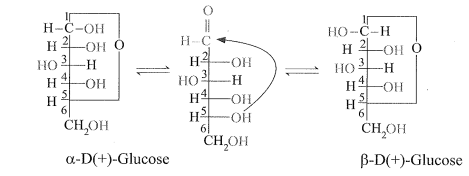
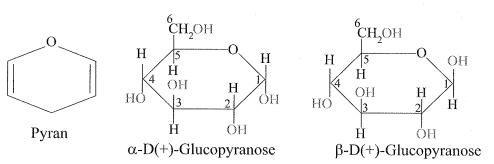
Note on: Cyclic structure of glucose.

Need a full question paper?

Generate a complete, print-ready paper with questions like this in minutes — across 16+ boards, with answer keys.
Start Generating Free

Similar questions

Write the structures of compounds $A, B$ and $C$ in the following reactions:
  1. $\text{CH}_3-\text{COOH}\xrightarrow{\text{ }\text{ }\text{ }\text{NH}_3/\triangle\text{ }\text{ }\text{ }}\text{A}\xrightarrow{\text{ }\text{ }\text{ }\text{Br}_2/\text{KOH(aq)}\text{ }\text{ }\text{ }}\text{B}\xrightarrow{\text{ }\text{ }\text{ }\text{CHCL}_3+\text{alc.KOH}\text{ }\text{ }\text{ }}\text{C}$
  1. $\text{C}_6\text{H}_5\text{N}_2^+\text{BF}_4^-\xrightarrow[\triangle]{\text{NaNO}_2/\text{Cu}\text{ }\text{ }}\text{A}\xrightarrow{\text{ }\text{ }\text{ }\text{Fe}/\text{HCL}\text{ }\text{ }\text{ }}\text{B}\xrightarrow{\text{ }\text{ }\text{ }\text{CH}_3\text{COCL}/pyridine\text{ }\text{ }\text{ }}\text{C}$
Write the Nernst equation and emf of the following cells at $298\ K:$
$Pt(s) | Br_2(l) | Br^– (0.010 M) || H^+ (0.030 M) | H_2(g) (1\ bar)|Pt(s).$
Calculate the standard cell potentials of galvanic cell in which the following reactions take place:
$Fe^{2+}(aq) + Ag^+ (aq) \rightarrow Fe^{3+}(aq) + Ag(s)$
Calculate the $\triangle_\text{r}\text{G}^\ominus$ and equilibrium constant of the reactions.
Discuss the formation of amine compounds by reduction of nitrile and amide compounds.
Compare the chemistry of actinoids with that of the lanthanoids with special reference to: Chemical reactivity
The halides of transition elements become more covalent with increasing oxidation state of the metal.
  1. Write the electronic configuration of the element with atomic number $102$.
  2. What is lanthanoid contraction? What is its effect on the chemistry of the elements which follow the lanthanoids?
The rate constant for a first order reaction is $60s^{-1}.$ How much time will it take to reduce the concentration of the reactant $\frac{1}{10}$th its initial value?
Give information about $\ce{C-O-H}$ bond angle in alcohol, phenol and ether with suitable example.
Explain chemical properties of $\ce{KMnO _4}$