Question
Obtain a relation for the distance travelled by an object moving with a uniform acceleration in the interval between 4th and 5th second.

Answer

Using the equation of motion $\text{s}=\text{ut}+\frac{1}{2}\text{at}^{2}$ Distance travelled in 5 seconds, $\text{s}=\text{u}\times5+\frac{1}{2}\text{a}\times5^{2}$ or $\text{s}=5\text{u}+\frac{25}{2}\text{a}$ Similary, distance travelled in 4seconds, $\text{s}=4\text{u}+\frac{16}{2}\text{a}$ Distance travelled in the interval between 4th and 5th seconds$=(\text{s-s'})=(\text{u}+\frac{9}{2}\text{a})\text{m}$

Need a full question paper?

Generate a complete, print-ready paper with questions like this in minutes — across 16+ boards, with answer keys.
Start Generating Free

Similar questions

Which contains more molecules, $10g$ of sulphur dioxide $(SO_2)$ or $10g$ of oxygen $(O_2)?$
$($Atomic masses: $S = 32u; O = 16u)$
Describe components of phloem. Define translocation.
How will you separate camphor, common salt and iron nails from their mixture?
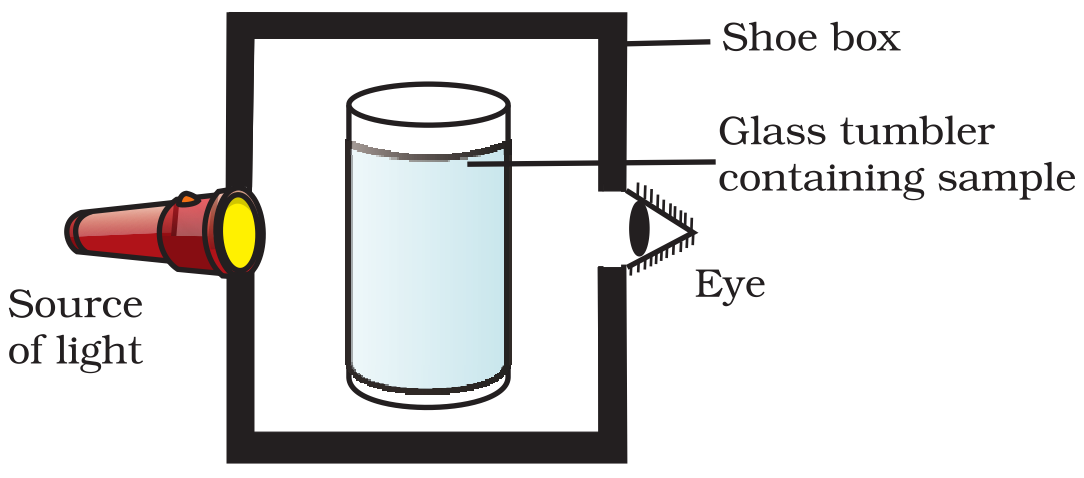
A group of students took an old shoe box and covered it with a black paper from all sides. They fixed a source of light $($a torch$)$ at one end of the box by making a hole in it and made another hole on the other side to view the light. They placed a milk sample contained in a beaker/ tumbler in the box as shown in the they were amazed to see that milk taken in the tumbler was illuminated. They tried the same activity by taking a salt solution but found that light simply passed through it?
  1. Explain why the milk sample was illuminated. Name the phenomenon involved.
  2. Same results were not observed with a salt solution. Explain.
  3. Can you suggest two more solutions which would show the same effect as shown by the milk solution?
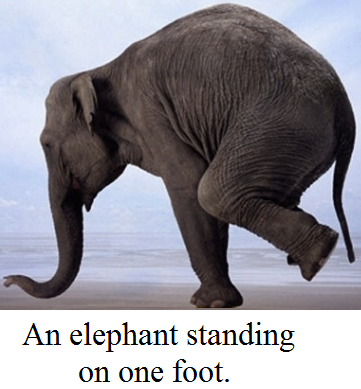
An elephant weighing $40,000N$ stands on one foot of area $1000\ cm^2$ whereas a girl weighing $400N$ is standing on one ‘stiletto’ heel of area $1\ cm^2$.
  1. Which of the two, elephant or girl, exerts a larger force on the ground and by how much?
  2. What pressure is exerted on the ground by the elephant standing on one foot?
  3. What pressure is exerted on the ground by the girl standing on one heel?
  4. Which of the two exerts larger pressure on the ground: elephant or girl?
  5. What is the ratio of pressure exerted by the girl to the pressure exerted by the elephant?
The atom of an element $X$ contains $17$ protons, $17$ electrons and $18$ neutrons whereas the atom of an element $Y$ contains $11$ protons, $11$ electrons and $12$ neutrons.
  1. What type of ion will be formed by an atom of element $X$ ? Write the symbol of ion formed.
  2. What will be the number of $(i)$ protons $(ii)$ electrons, and $(iii)$ neutrons, in the ion formed from $X$ ?
  3. What type of ion will be formed by an atom of element $Y$ ? Write the symbol of ion formed.
  4. What will be the number of $(i)$ protons $(ii)$ electrons, and $(iii)$ neutrons, in the ion formed from $Y$ ?
  5. What is the atomic mas of $(i) X$, and $(ii)\  Y$ ?
  6. What could the elements $X$ and $Y$ be?
How long will it take a force of $10N$ to stop a mass of $2.5\ kg$ which is moving at $20\ m/s?$
What is fractional distillation? What is the use of fractionating column in fractional distillation?
What are the postulates of Bohr’s model of an atom?
Draw a well labelled diagram of animal cell and mention one function of the main cell organelles.