MCQ
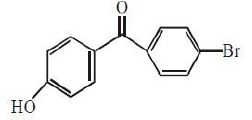
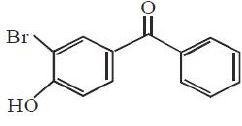
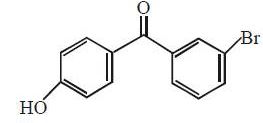
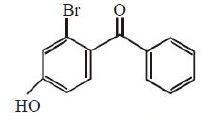
$p-$ Hydroxybenzophenone upon reaction with bromine in carbon tetrachloride gives
  • A

  • B

  • C


Answer

Correct option: D.

d

Need a full question paper?

Generate a complete, print-ready paper with questions like this in minutes — across 16+ boards, with answer keys.
Start Generating Free

Similar questions

The physical quantity that has the same dimensional formula as pressure is :
The workdone by a gas molecule in an isolated system is given by, $W =\alpha \beta^{2} e ^{-\frac{ x ^{2}}{\alpha kT }},$ where $x$ is the displacement, $k$ is the Boltzmann constant and $T$ is the temperature, $\alpha$ and $\beta$ are constants. Then the dimension of $\beta$ will be
A convex lens of focal length $84 cm$ is in contact with a concave lens of focal length $12 cm.$ The power of combination (in diopters) is
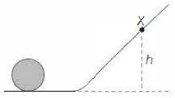
A solid sphere rolls without slipping, first horizontally and then up to a point $X$ at height $h$ on an inclined plane before rolling down, as shown in the figure below. The initial horizontal speed of the sphere is
The excess of pressure inside a soap bubble is twice the excess pressure inside a second soap bubble. The volume of the first bubble is $n$ times the volume of the second where $n$ is
A body of mass $1 \ kg$ begins to move under the action of a time dependent force $\overrightarrow {\;F\;} = (2t\hat i + 3{t^2}\hat j$) $N$ where $\hat i$ and $\hat j$ are unit vectors along $x$ and $y$ axis. What power will be developed by the force at the time $t?$
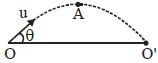
A projectile is thrown at an angle '$\theta '$ to the horizontal from $O$ and it hits the ground at $O'$. During the entire motion (select the wrong statement)
Three blocks $A, B$ and $C $ weighing $1, 8$ and $27\, kg$ respectively are connected as shown in the figure with an inextensible string and are moving on a smooth surface. ${T_3}$ is equal to $36\, N$. Then ${T_2}$ is ........ $N$
If body having initial velocity zero is moving with uniform acceleration $8\,\,m/{\sec ^2}$ the distance travelled by it in fifth second will be.........$metres$
Two identical capacitors are connected in parallel across a potenial difference $V$. After they are fully charged, the positive plate of first capacitor is connected to negative plate of second and negative plate of first is connected to positive plate of other. The loss of energy will be