Question
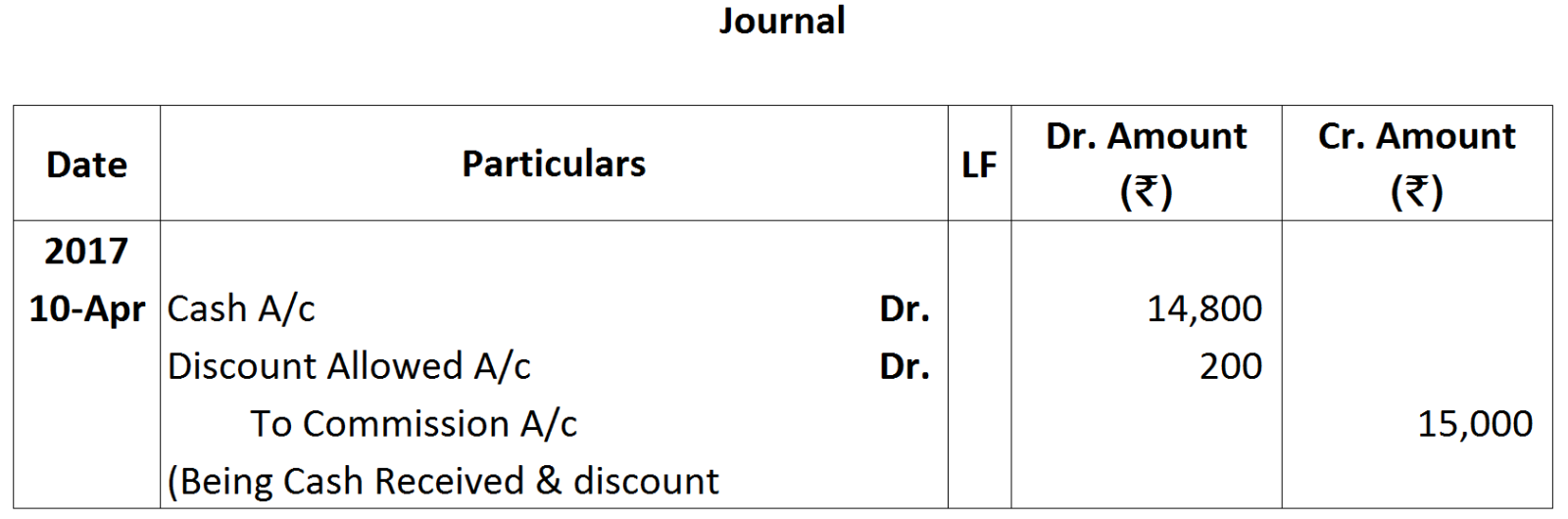
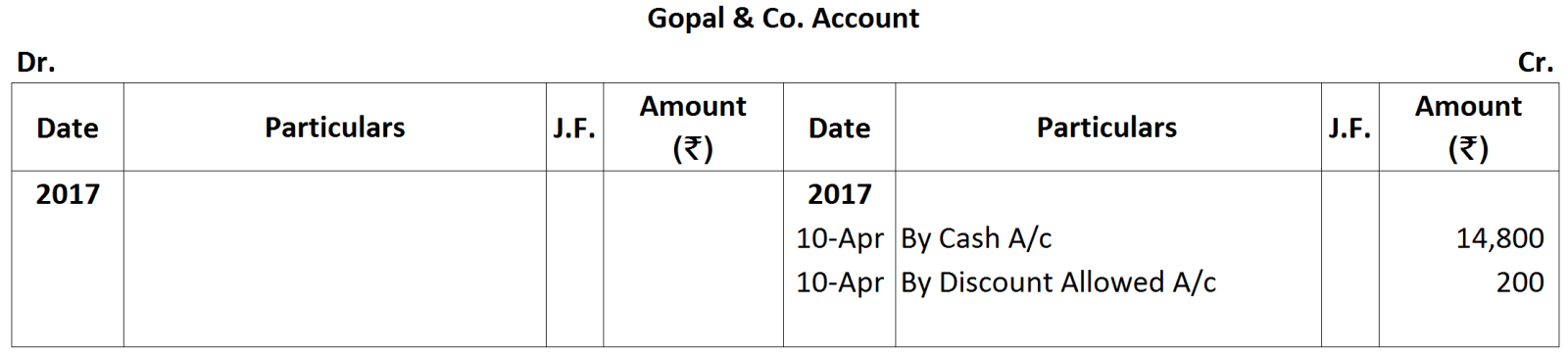
Prepare a Compound Entry with the help of imaginary figures and show its posting.


Generate a complete, print-ready paper with questions like this in minutes — across 16+ boards, with answer keys.
|
2019
|
|
₹
|
|
April 1
|
Commenced business with cash
|
1,50,000
|
|
April 2
|
Opened a bank account with PNB
|
50,000
|
|
April 3
|
Purchased furniture
|
20,000
|
|
April 7
|
Bought goods for cash from M/s. Rupa Traders, Delhi
|
30,000
|
|
April 8
|
Purchased goods from M/s. Hema Traders, Chandigarh
|
42,000
|
|
April 10
|
Cash sales
|
30,000
|
|
April 14
|
Sold goods on credit to M/s. Gupta Traders, Kolkata
|
12,000
|
|
April 16
|
Rent paid
|
4,000
|
|
April 18
|
Paid Electricity expenses
|
1,000
|
|
April 20
|
Received cash from Gupta Traders
|
12,000
|
|
April 22
|
Goods returned to Hema Traders
|
2,000
|
|
April 23
|
Cash paid to Hema Traders
|
40,000
|
|
April 25
|
Bought postage stamps
|
100
|
|
April 30
|
Paid salary to Mohan
|
4,000
|
|
2017
|
|
₹
|
|
April 2
|
Bought goods of the list price of ₹ 6,000 from Khanna Brothers less 15% trade discount and 2% cash discount and paid 40% price at the same time.
|
|
|
April 3
|
Received a draft from Mohan in full settlement and deposited it into Bank
|
|
|
April 5
|
Purchased goods from Suresh of the list price of ₹ 8,000 at 20% trade discount and paid him by cheque.
|
9,750
|
|
April 8
|
Sold goods and received a cheque
|
25,000
|
|
April 10
|
Deposited the above cheque into Bank
|
12,000
|
|
April 12
|
Sohan deposited in our Bank A/c
|
4,000
|
|
April 16
|
Paid Income Tax by Cheque
|
5,600
|
| April 20 | Received a cheque from Sohan and sent to Bank | 7,800 |
| Discount allowed | 200 | |
|
April 21
|
Withdrew from Bank−for office
|
2,000
|
|
for private use
|
4,000
|
|
|
April 23
|
Sent a cheque to X in full settlement of his A/c
|
4,900
|
|
April 27
|
Cheque of Sohan returned by the bank as dishonoured.
|
|
|
April 28
|
Dinesh was declared insolvent and a payment of 60 paise in a ₹ received from his estate by a Cheque
|
|
|
April 30
|
Bank allowed Interest
|
350
|
|
Paid for Rent by cheque
|
1,500
|
|
|
Paid for traveling expenses by cheque
|
500
|