MCQ
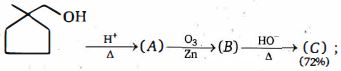
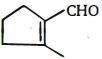
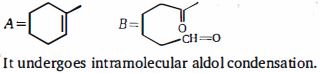
Product $(C)$ is
- A

- B

- ✓
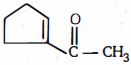
- D
Generate a complete, print-ready paper with questions like this in minutes — across 16+ boards, with answer keys.
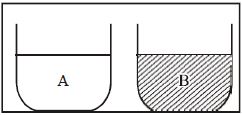
(Rounded-off to the nearest integer)
[Given $K _{ b }$ for $\left.\left( H _{2} O \right)=0.52\, K\, kg\, mol ^{-1}\right]$
$Image$
$1.$ Which one of the following reagents is used in the above reaction?
$(A)$ aq. $\mathrm{NaOH}+\mathrm{CH}_3 \mathrm{Cl}$
$(B)$ aq. $\mathrm{NaOH}+\mathrm{CH}_2 \mathrm{Cl}_2$
$(C)$ aq. $\mathrm{NaOH}+\mathrm{CHCl}_3$
$(D)$ aq. $\mathrm{NaOH}+\mathrm{CCl}_4$
$2.$ The electrophile in this reaction is
$(A)$ : $\mathrm{CHCl}$ $(B)$ ${ }^{+} \mathrm{CHCl}_2$
$(C)$ $\mathrm{CCl}_2$ $(D)$. $\mathrm{CCl}_3$
$3.$ The structure of the intermediate $I$ is
$Image$
Give the answer question $1, 2$ and $3.$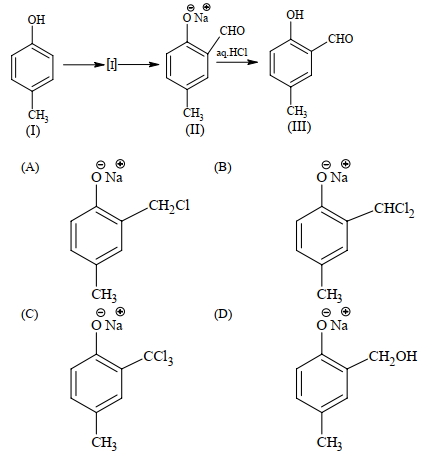
$(i) \,\,\begin{array}{*{20}{c}}
{C{H_3}\,\,\,\,\,\,\,\,\,\,\,} \\
{|\,\,\,\,\,\,\,\,\,\,\,\,\,\,\,\,\,\,} \\
{C{H_3} - C - CH - C{H_3}} \\
{\,\,\,\,\,|} \\
{\,\,\,\,\,\,\,\,\,\,\,\,OH}
\end{array}\,\xrightarrow{{{H^ + }/heat}}\,\,\mathop A\limits_{[Major\,product]} \, + \,\mathop B\limits_{[Minor\,product]} $
$(ii)\,\, A\xrightarrow[{in\,\,absence\,\,\,of\,peroxide}]{{HBr,\,dark}}\,\,\mathop C\limits_{[Major\,product]} \, + \,\mathop D\limits_{[Minor\,product]} $
the major products $(A)$ and $(C)$ are respectively